TITAN exists to turn Poland’s misplaced carbon into renewable molecules, gas, power and industrial resilience.
Developed by Syngas Project sp. z o.o. in Warsaw, TITAN is a full-stack carbon fermentation platform. It combines Hydrogen Producer Gas with targeted microbial fermentation to convert forest residues and renewable carbon streams into useful products for the AI Carbon economy.
TITAN One is the first project in a planned rollout of ten TITAN platforms in Poland. The programme goal is clear: to build the platform capacity required to support 1 GW of LRNG and 1 million litres per day of SAF by 2035.
Phase One is focused on two convergence pathways.
The methanogenic pathway converts carbon-rich gas into renewable methane, creating LRNG for gas security, dispatchable energy and industrial use.
The acetogenic pathway converts carbon-rich gas into 2G ethanol, creating the alcohol intermediate required for downstream SAF production.
Aerobic fermentation will be added in Phase One (Part Two), expanding TITAN from renewable fuels and gas into a wider platform for chemicals, materials and nutrients.
This is the meaning of Swing–Swing.
TITAN is not designed as a single-output plant. It is designed to route carbon intelligently. When Poland needs renewable gas, TITAN can swing towards methane. When aviation and refinery markets need SAF intermediates, TITAN can swing towards ethanol. As the platform develops, it can swing again into higher-value products, materials and biological outputs.
BRAD is the intelligence layer across this system.
BRAD is not a separate product or marketing gimmick. It is the operational intelligence that supports feedstock understanding, logistics, gas quality, fermentation control, energy routing, reporting and future optimisation across the TITAN platform.
Syngas Project is now preparing TITAN One for EPC award. The objective is not to describe a distant concept. The objective is to deliver the first full-scale Polish platform, then repeat it.
TITAN exists because Poland has the carbon, the industrial need, the logistics base and the strategic requirement to build its own renewable molecule infrastructure.
The future is not only digital.
The future is physical, carbon-based and biological.
TITAN is being built for that future.
O TITAN
TITAN powstał po to, aby przekształcać rozproszone strumienie węgla w Polsce w odnawialne molekuły, gaz, energię oraz nową odporność przemysłową.
Platforma rozwijana przez Syngas Project sp. z o.o. w Warszawie łączy technologię Hydrogen Producer Gas z ukierunkowaną fermentacją mikrobiologiczną, aby przetwarzać pozostałości leśne i odnawialne strumienie węgla w produkty dla gospodarki AI Carbon.
TITAN One jest pierwszym projektem w planowanym wdrożeniu dziesięciu platform TITAN w Polsce. Cel programu jest jasny: stworzenie zdolności produkcyjnych wspierających 1 GW LRNG oraz 1 milion litrów SAF dziennie do roku 2035.
Pierwsza faza koncentruje się na dwóch ścieżkach konwergencji.
Ścieżka metanogenna przekształca gaz bogaty w węgiel w odnawialny metan, tworząc LRNG dla bezpieczeństwa gazowego, stabilnej energetyki oraz zastosowań przemysłowych.
Ścieżka acetogenna przekształca gaz bogaty w węgiel w etanol 2G, stanowiący kluczowy półprodukt do produkcji SAF.
Fermentacja tlenowa zostanie dodana w Fazie Drugiej, rozszerzając TITAN z platformy paliw i gazów odnawialnych do szerszej platformy chemikaliów, materiałów i składników biologicznych.
To właśnie oznacza Swing–Swing.
TITAN nie został zaprojektowany jako instalacja jednego produktu. Został zaprojektowany jako inteligentna platforma kierowania węglem. Gdy Polska potrzebuje odnawialnego gazu, TITAN może zwiększyć produkcję metanu. Gdy rynek lotniczy i rafineryjny potrzebuje półproduktów SAF, TITAN może zwiększyć produkcję etanolu. Wraz z rozwojem platformy możliwe będzie dalsze przejście do produktów o wyższej wartości, materiałów i zaawansowanych produktów biologicznych.
BRAD stanowi warstwę inteligencji całego systemu.
BRAD nie jest osobnym produktem ani marketingowym dodatkiem. Jest systemem inteligencji operacyjnej wspierającym analizę surowców, logistykę, kontrolę jakości gazu, sterowanie fermentacją, zarządzanie energią, raportowanie oraz przyszłą optymalizację całej platformy TITAN.
Syngas Project przygotowuje obecnie TITAN One do przyznania kontraktu EPC. Celem nie jest przedstawienie odległej wizji. Celem jest dostarczenie pierwszej pełnoskalowej polskiej platformy, a następnie jej powielanie.
TITAN istnieje dlatego, że Polska posiada zasoby węgla, zaplecze przemysłowe, logistykę oraz strategiczną potrzebę budowy własnej infrastruktury odnawialnych molekuł.
Przyszłość nie będzie wyłącznie cyfrowa.
Przyszłość będzie fizyczna, oparta na węglu i biologii.
TITAN powstaje właśnie dla tej przyszłości.
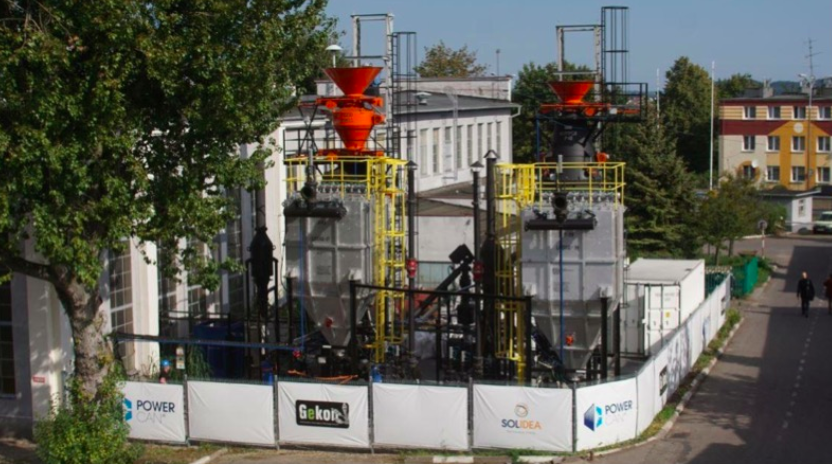
The Syngas Project Team design and build
Hydrogen Producers’ Gas + Microbial Fermentation Plants
for next-generation fuels, chemicals and materials