TITAN 2026: Swing–Swing Platform
Building Europe’s Molecule Sovereignty at Industrial Scale
Syngas Project introduces TITAN as a repeatable industrial platform designed to replace imported LNG and aircraft fuel with locally produced renewable molecules. Built around Hydrogen Producer Gas and fermentation capacity, TITAN delivers RNG and 2G ethanol today, with expansion into full FCMN over time.
The platform is engineered as a cookie-cutter rollout model: standardised, scalable and designed for rapid deployment across rail-connected sites. TITAN is not a one-off plant. It is infrastructure for building national and European molecule capacity.
Building Resilience in the FCMN Supply Chain
From Local Carbon to Strategic Molecules
Syngas Project converts local carbon resources into fuels, chemicals, materials and nutrients through a single integrated platform. Using non-merchantable forest residues, TITAN produces Hydrogen Producer Gas and upgrades it through targeted fermentation into market-ready molecules.
This is not waste-to-energy. It is carbon recycling for molecular resilience, replacing fragile imports with domestic production capacity.
Europe’s Molecular Capacity Challenge
The Problem Is Not Technology. It Is Capacity
Europe has focused on electrification, but molecules remain heavily import dependent. Gas, fuels and chemicals are exposed to geopolitical risk because domestic production capacity has not been built at scale.
TITAN addresses this directly. It is an HPG-to-fermentation capacity platform, designed to convert local carbon into multiple molecules through methanogenic and acetogenic pathways. European FCMN sovereignty depends on building this type of infrastructure—at scale, not pilot level.
TITAN: Our Flagship Biotech Platform
One Gas Platform. Two Fermentation Systems. Multiple Molecules
TITAN converts Hydrogen Producer Gas into renewable methane and ethanol using two proven biological pathways. Methanogenic fermentation produces RNG for gas infrastructure and LRNG export. Acetogenic fermentation produces 2G ethanol for fuels, including SAF, and chemical markets.
The platform is designed around gas capacity, not fixed outputs. This allows flexible allocation between products and enables future expansion into proteins, nutrients and advanced materials without changing the core system.
TITAN: How It Works
From Forest Residue to Market-Ready Molecules
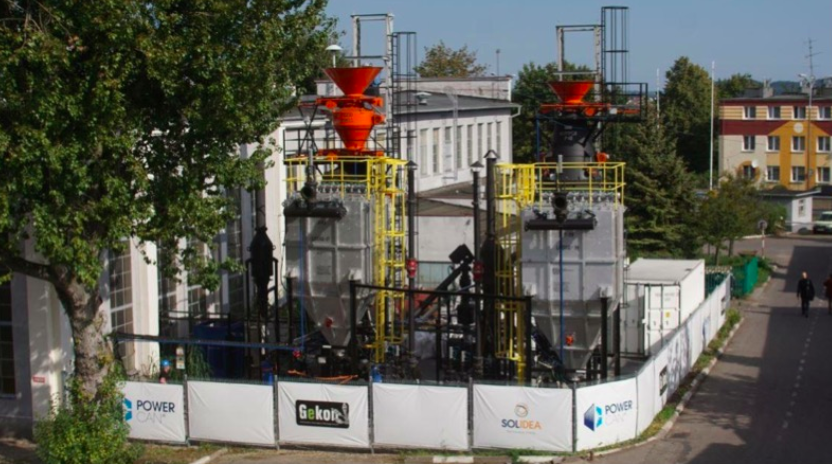
TITAN begins with non-merchantable forest residues, which are converted into Hydrogen Producer Gas through gasification and conditioning. This gas becomes the central feedstock for biological conversion.
Through microbial fermentation, carbon is upgraded into RNG and ethanol, then conditioned to meet market specifications and exported through existing infrastructure. The result is a continuous industrial process that turns local biomass into high-value, transportable molecules.
TITAN Swing–Swing Platform
One site, two primary outputs
TITAN is designed to operate as a Swing–Swing platform. The same Hydrogen Producer Gas backbone can support RNG production, 2G ethanol production, or a higher-RNG operating mode when market conditions require it. CHP remains a reserve and balancing function, not the primary value case.
Flexible production, stronger resilience
This flexibility is central to the business model. TITAN is not locked into one product, one offtake route or one market cycle. It can respond to demand for RNG, ethanol and future FCMN products while maintaining the same core industrial platform.
Secure Local Biomass Supply
Non-merchantable forest residues
TITAN is built around non-merchantable forest residues left after normal harvesting. This means the platform does not compete with timber markets and does not depend on imported feedstock.
Regional supply, industrial logistics
Feedstock is gathered through established forestry operations and moved through short-haul road and rail logistics. The supply model is conservative, local and contract-ready, giving TITAN the operating base needed for repeatable industrial deployment.
Platform Efficiency
Maximum value from carbon
TITAN is designed to extract value across multiple pathways. RNG, ethanol and biochar are produced from one integrated HPG-to-fermentation system, with heat, gas and process energy managed across the platform.
Integrated performance
The platform targets high overall efficiency because it does not rely on a single output. Carbon, gas, heat and by-products are allocated across the system, creating stronger performance than a conventional single-product energy plant.
Income Performance
Multiple revenue streams
TITAN is designed around diversified molecule income. RNG provides one primary revenue stream, ethanol provides a second, and biochar adds further value from the same biomass input.
Revenue first, scale second
The model is built to prove strong operating income at site level before scaling nationally. Each repeat platform carries the same commercial logic: one integrated plant, multiple products and practical routes to market.
Financial Performance
Bankable infrastructure
TITAN is designed as bankable infrastructure, not experimental technology. The platform combines proven industrial systems, controlled operating costs and multiple product revenues to support strong EBITDA and debt service coverage.
Best-in-class delivery team
Syngas Project is building TITAN with leading technical, operational and delivery partners. The rollout model is designed so that once the first platform is proven, the same structure can be repeated across suitable sites with increasing speed and confidence.
TITAN Dispatch
Real products need real routes to market
TITAN is designed around dispatch from the beginning. RNG is buffered, upgraded and exported as LRNG for pipeline and marine-ready markets. Ethanol is dispatched by rail and road tanker into fuel and chemical markets. CO₂ can be loaded through the same modular gantry system where offtake is available.
This matters because TITAN is not only a production platform. It is a delivery platform. The molecule is made, upgraded, loaded and moved through practical industrial logistics.
Financing Strategy
Cookie-cutter platform, cookie-cutter finance
TITAN is structured as repeatable infrastructure. The first platform proves the design, the operating model and the commercial case. Once that model is proven, the same financing and delivery logic can be applied to further sites.
This is the strength of the cookie-cutter approach. Standardised design supports standardised finance, faster procurement and disciplined rollout.
TITAN One
The first full-scale platform
TITAN One is the first full-scale deployment of the platform. It brings together HPG production, RNG fermentation, ethanol fermentation, dispatch infrastructure and operating systems on one integrated site.
The purpose of TITAN One is not only to produce molecules. It is to prove the platform at commercial scale, demonstrate EBITDA performance and create the reference model for the national rollout.
Scaling TITAN
From one cluster to a national platform
TITAN is designed to scale in two directions. It can grow upwards by adding further clusters on the same site, and onwards by repeating the same platform at new sites.
A full rollout creates a network of HPG-to-fermentation platforms capable of producing RNG, ethanol and future FCMN products across Poland. This is how TITAN moves from one project to national molecule capacity.
TITAN Platform Sites
Rail-connected, zoned and ready to scale
TITAN sites are selected for logistics, feedstock access, zoning and dispatch. The platform is built around rail-connected industrial locations with access to existing gas, fuel and export infrastructure.
This site logic is critical. TITAN is not looking for perfect greenfield theory. It is designed for real industrial corridors where feedstock, logistics, permits and offtake routes can work together.
TITAN Value Upside
Designed around capacity, not fixed products
TITAN is built around HPG capacity. That matters because the platform is not limited to one fixed output. As fermentation performance improves, the same infrastructure can produce more value from the same carbon flow.
Biology improves over time
The first products are RNG, ethanol and biochar. The upside comes from continuous improvement in methanogenic, acetogenic and future aerobic pathways. Better microbes, better gas contact and better operating data can increase value without rebuilding the whole platform.
ASMARA
The urban carbon platform
ASMARA extends Syngas Project’s platform logic from forest residues to sorted municipal waste and RDF. It converts urban carbon into clean synthesis gas for engine-duty power and heat.
Same logic, different feedstock
TITAN is the rural biomass platform. ASMARA is the urban waste platform. Together they create a wider carbon recycling model that can serve both forest regions and cities.
BRAD
Intelligence built into the platform
BRAD is the digital twin and world-model layer behind TITAN and ASMARA. It supports design, build, operations, optimisation and future scientific development.
Built to learn and improve
BRAD connects historical industrial knowledge, project delivery data, operating performance and live science monitoring. The purpose is simple: design better, build faster, operate smarter and improve continuously.
Current Status
Pre-FID execution readiness
Syngas Project has completed the core platform definition and is preparing the final workstreams needed to move TITAN toward construction award readiness.
Ready to activate delivery
The next stage is about execution: finalising the pricing book, completing technical workstreams, refreshing approvals, securing the delivery base and moving the first TITAN projects toward full readiness.
FCMN Resilience
Fuels, chemicals, materials and nutrients
FCMN defines the long-term purpose of the platform. TITAN begins with RNG and ethanol, but every cluster is designed to add wider resilience across fuels, chemicals, materials and nutrients.
Sovereignty through production
Every TITAN cluster adds domestic molecule capacity. That means stronger supply chains, lower import dependency, more industrial competitiveness and greater resilience for Poland and Europe.

The Syngas Project Team design and build
Hydrogen Producers’ Gas + Microbial Fermentation Plants
for next-generation fuels, chemicals and materials