

Warsaw 06:05:2026 10.44 AM Steve Walker
For more than a century, heavy industry has been built around combustion.
We burn carbon to create heat. We use heat to create motion, electricity, pressure and industrial chemistry. This model shaped the modern world. Steel, cement, chemicals, refining, transport and power generation all grew from the age of combustion.
But combustion has limits.
Combustion is efficient at releasing energy, but inefficient at preserving molecular value. Once carbon is burned, most of its industrial usefulness disappears into the atmosphere as carbon dioxide, low-grade heat and emissions.
The next industrial era will increasingly focus on something different.
Not burning molecules.
Building them.
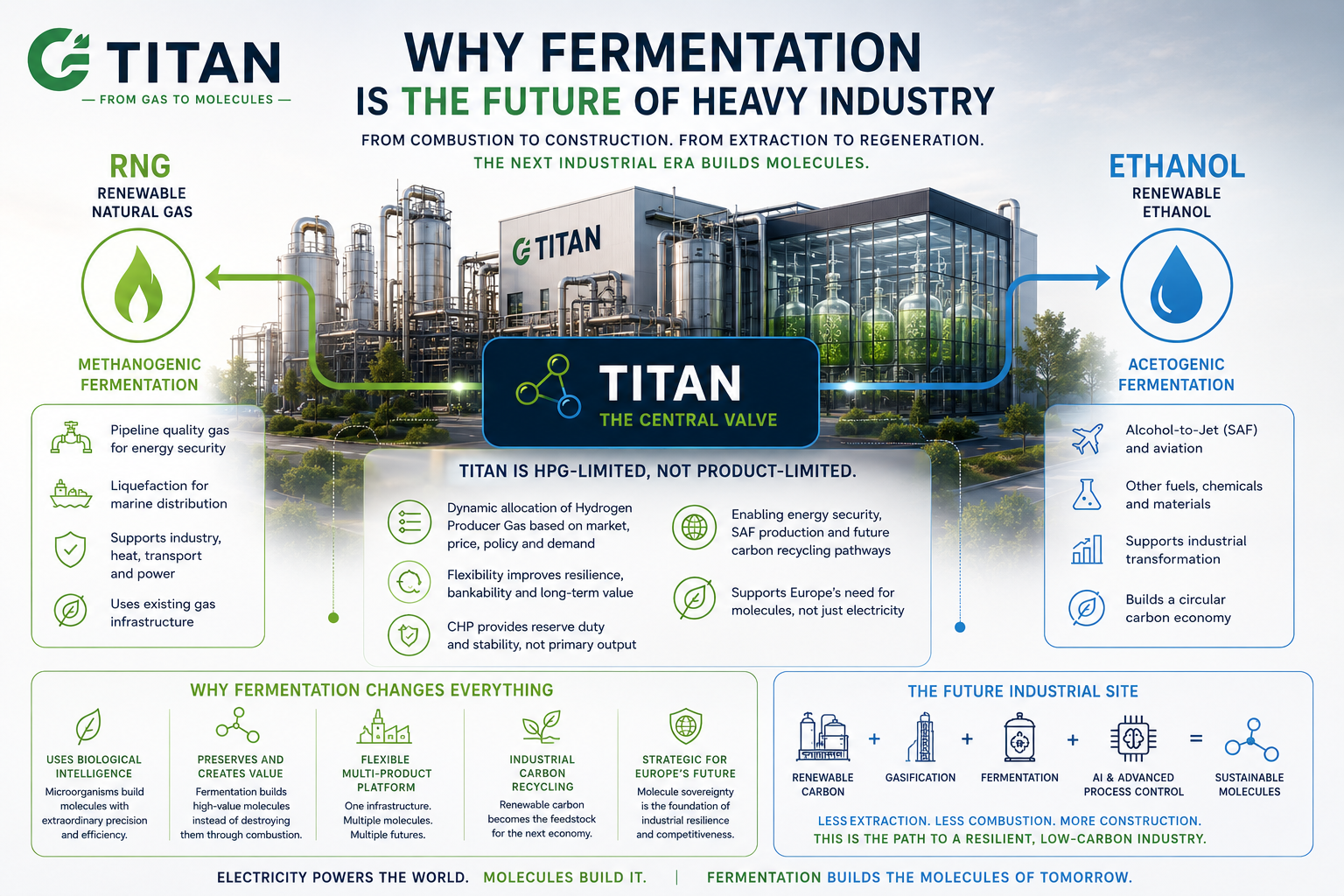
This is where fermentation becomes important.
Fermentation is often misunderstood because most people associate it with beer, wine or food production. In reality, fermentation is one of the most powerful industrial manufacturing systems ever developed. Modern fermentation can produce fuels, chemicals, proteins, pharmaceuticals, materials and industrial gases at enormous scale.
Microorganisms are not primitive chemistry.
They are molecular factories.
Inside every fermentation system, biology performs highly selective chemical conversion using carbon, hydrogen and energy. Instead of forcing reactions through extremely high temperatures and pressures, fermentation allows living systems to assemble molecules with extraordinary precision.
This changes industrial logic completely.
Traditional heavy industry relies on thermal force. Fermentation relies on biological intelligence developed through evolution over billions of years.
The future of heavy industry will increasingly combine both systems.
Thermal systems will continue to play an important role in areas such as gasification, metals, ceramics and high-temperature process industries. But fermentation will increasingly take over the role of precision molecule manufacturing.
This transition has already begun.
Around the world, industrial fermentation is moving beyond food and pharmaceuticals into energy, aviation fuel, chemicals, plastics and advanced materials. The growth of Sustainable Aviation Fuel alone is accelerating investment into fermentation technologies capable of converting renewable carbon into ethanol and other intermediates.