
Przewiń w dół, aby zobaczyć polską wersję.
Europe does not lack carbon.
It lacks controlled renewable carbon.
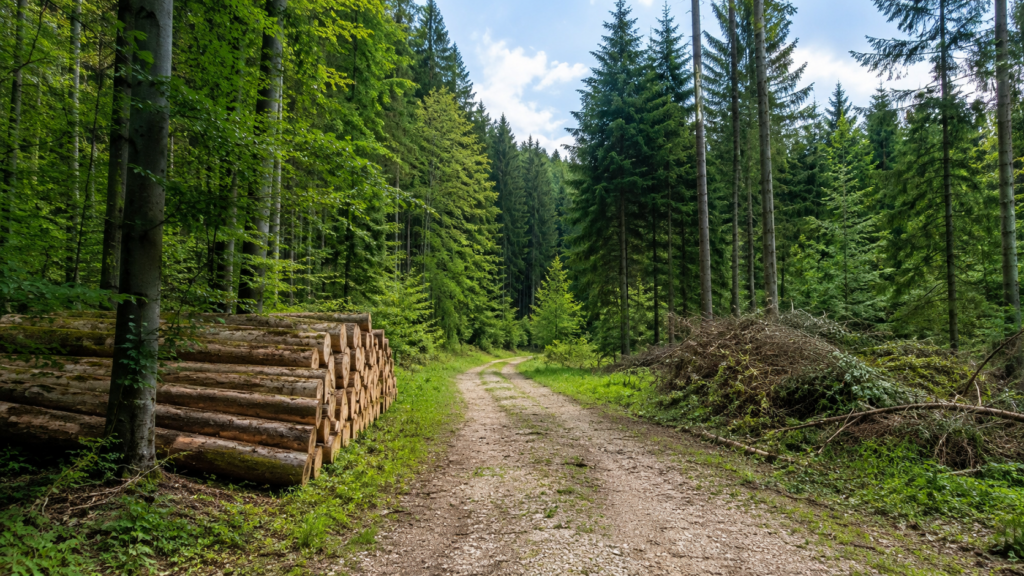
Every year, forests produce large volumes of material that never becomes merchantable timber. Branches, tops, twisted wood, undersized stems, storm residues and other low-value material are often difficult to recover economically. Some of this material is left on the forest floor. Some is recovered for low-value uses. Much of it is treated as a logistical problem rather than an industrial opportunity.
TITAN sees this material differently.
Forest residue is not waste. It is renewable carbon. It is local, physical, measurable and already present inside the European landscape. When collected responsibly, it can support a new generation of industrial molecule production without competing directly with food crops or high-value timber markets.
This distinction matters.
Europe’s energy debate has focused heavily on electrons. Wind, solar and grid expansion are essential, but they do not solve the molecule problem. Aviation fuel, industrial gas, chemicals, materials and many liquid fuels still depend on carbon-based molecules. The question is not whether Europe needs carbon. It does. The question is where that carbon should come from.
Today, too much of Europe’s molecule economy still depends on imported fossil carbon.
TITAN offers a different route.
The platform converts forest residue into Hydrogen Producer Gas, creating a controlled gas-phase feedstock for targeted microbial fermentation. From there, carbon can be converted into renewable methane, 2G ethanol and, in future, wider fuels, chemicals, materials and nutrients.