AQUIS AD – The Platform

Warsaw 03:08:2026 Steve Walker


Europe’s New Methane Economy: Keeping Anaerobic Digestion Firmly in the Loop

Europe is building a new renewable methane economy. Energy security, industrial competitiveness and climate policy are now pushing Member States to increase domestic gas production and reduce their dependence on imported fossil fuels. Under REPowerEU, the European Union is targeting 35 billion cubic metres of annual biomethane production by 2030, requiring an estimated €37 billion of investment. Renewable methane is therefore moving from the margins of waste management into the centre of European energy infrastructure. (Energy⁠)

Anaerobic digestion, or AD, provides the established foundation for this expansion. It converts wet biological materials—including food waste, manure, agricultural residues and sewage-derived feedstocks—into biogas. This gas can be used for electricity and heat or upgraded into biomethane for grid injection, transport, industry and marine applications.

AD consequently has substantial policy and investment tailwinds. It manages wet organic materials effectively, produces dispatchable renewable gas and can be deployed locally throughout Europe.

However, the sector also faces important downstream headwinds.

These headwinds do not arise because AD has become less relevant. They arise because European authorities are increasingly examining what remains after wastewater treatment, filtration and digestion. Microplastics, nanoplastics and per- and polyfluoroalkyl substances—PFAS—may be removed from water, but they can subsequently become concentrated in filters, sewage sludge, biosolids and digestate.

Capture is not the same as destruction.

When these materials are land-spread, landfilled or transferred into another unmanaged waste stream, the contaminants may be redistributed rather than eliminated. The future challenge for AD is therefore not simply to increase gas production. It is to demonstrate that its downstream materials can be managed safely within a tightening European regulatory environment.

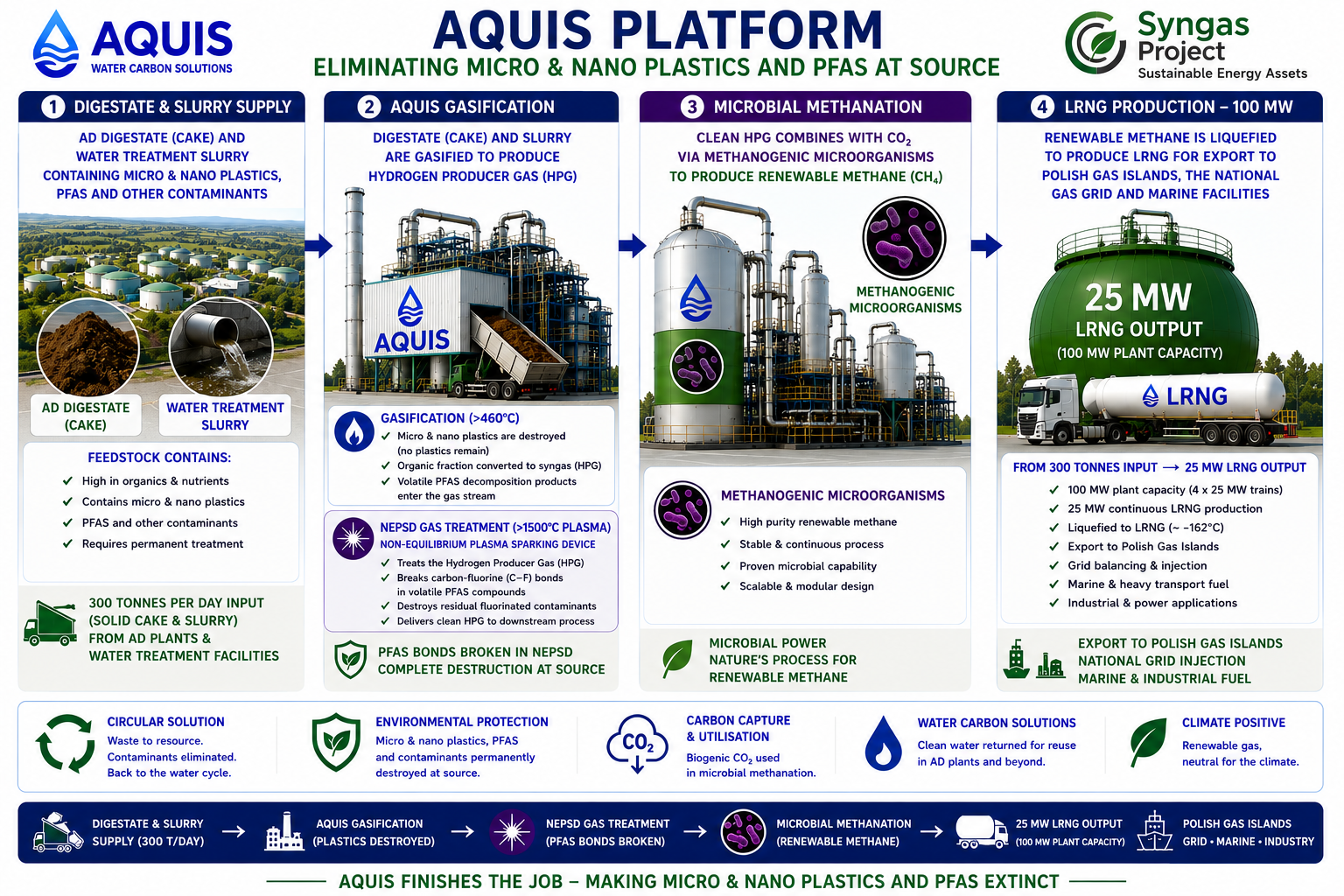
This is the challenge that Syngas Project intends to deflect through AQUIS.
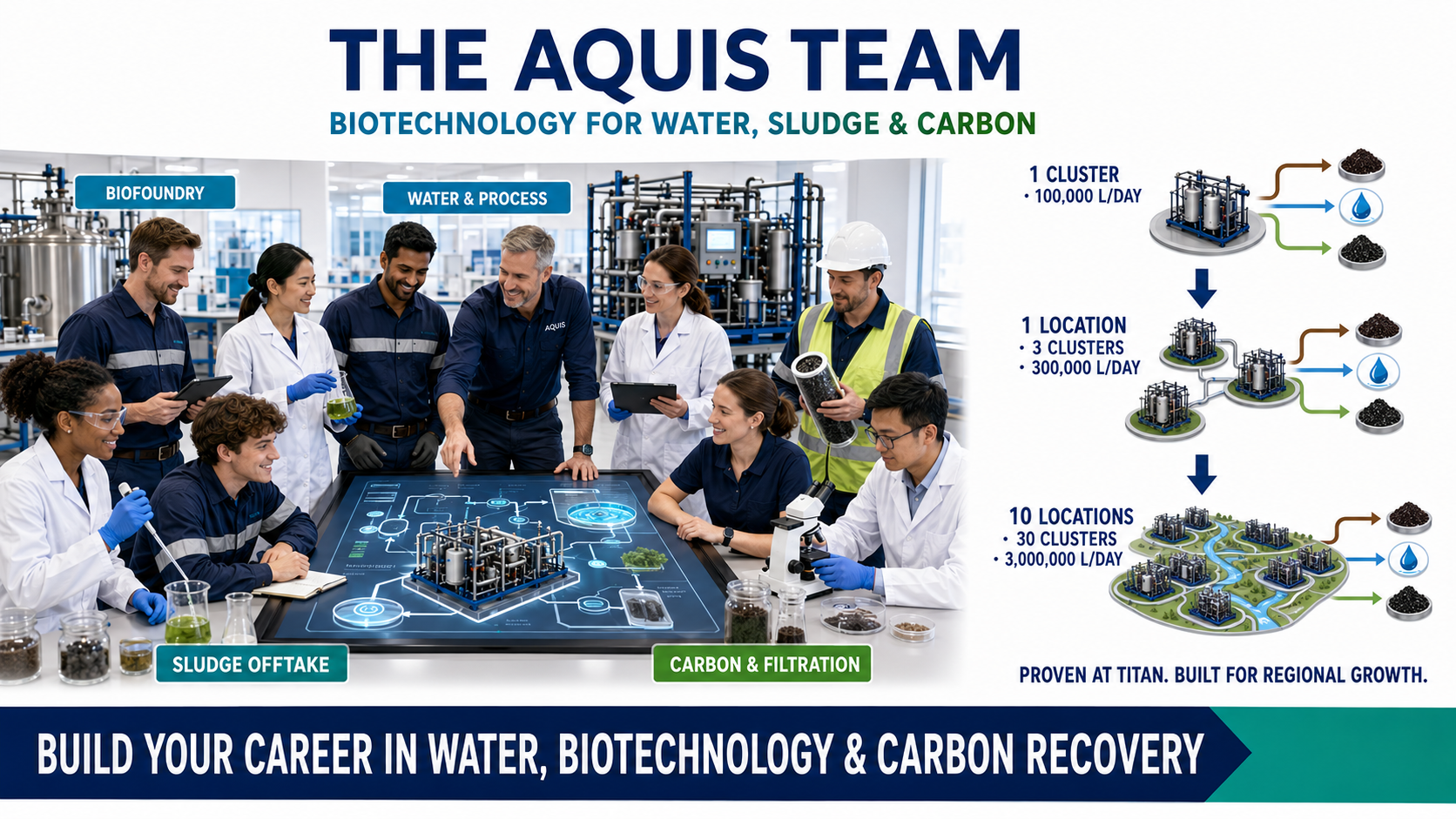
Meet the AQUIS Team

The AQUIS Team

A Career with a Mission: Making Microplastics, Nanoplastics and PFAS Extinct

Some careers provide employment. Others provide the opportunity to build an industry and confront a problem that humanity cannot afford to ignore.

AQUIS offers both.

We are bringing together water professionals, microbiologists, engineers, laboratory specialists, environmental-service providers and commercial leaders around one clear mission:

To remove microplastics, nanoplastics and PFAS from the public water cycle—making water safer for people and for the microbial systems on which our future will depend.

This is a worthy calling and an expanding business opportunity.

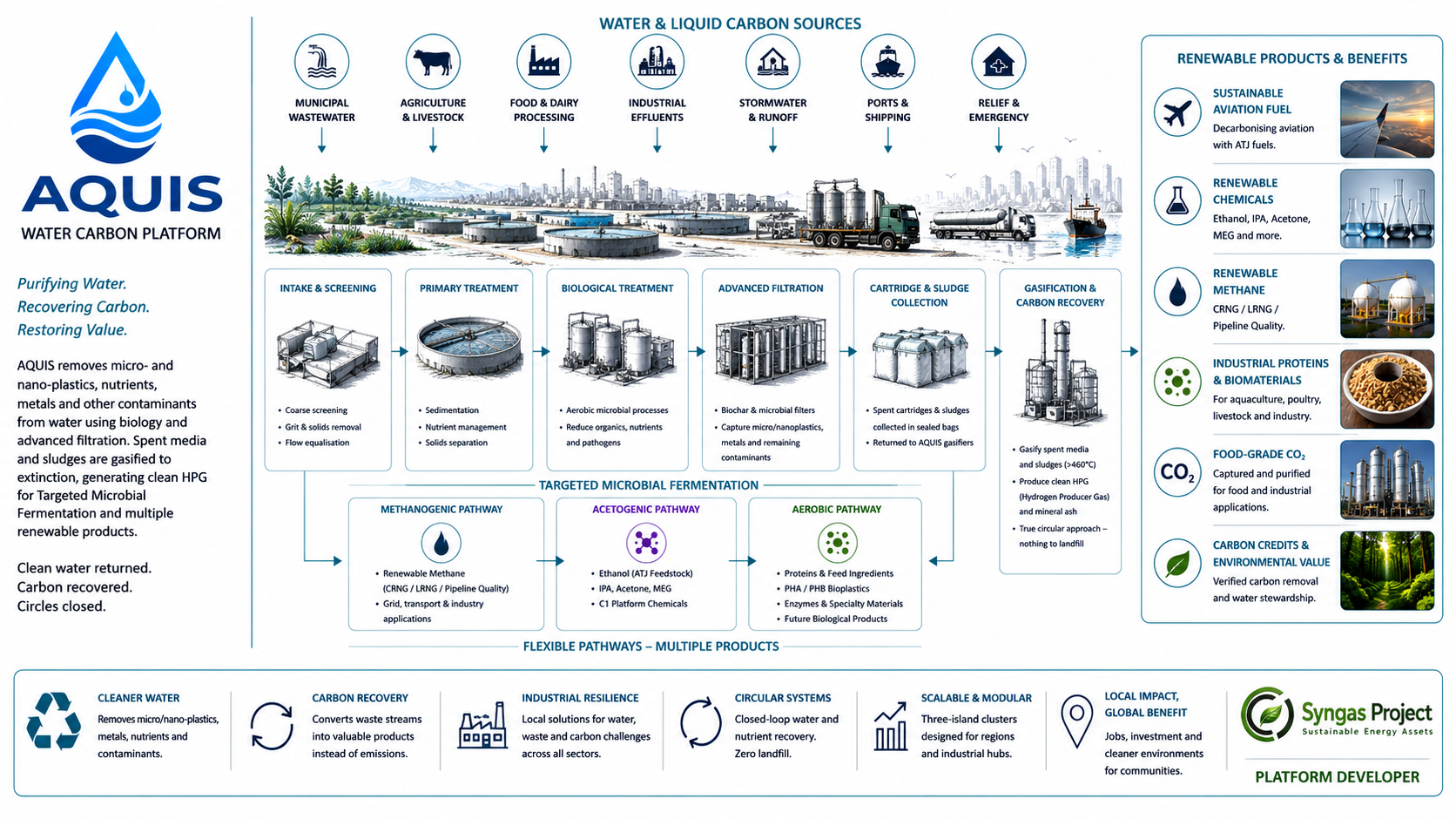
AQUIS will begin by protecting the water and fermentation biology within TITAN. With every new TITAN cluster, the AQUIS water jurisdiction expands. The knowledge, microbial products, filtration systems and trained teams developed at home can then be deployed across regional public-water, wastewater, sludge and anaerobic-digestion markets.

Three major threats

The AQUIS Team is organised around three persistent threats:

  • Microplastics
  • Nanoplastics
  • PFAS

These pollutants are different, but they share one dangerous characteristic: capturing them does not automatically make them disappear.

When they are removed from water, they become concentrated in another material—sewage sludge, AD digestate, spent filtration media, activated carbon or another treatment residue.

If that material is landfilled or spread on land, the contamination has been moved—not eliminated.

AQUIS is being built to complete the entire chain.

The journey from microplastic to nanoplastic

Microplastics do not remain the same size forever.

As plastic particles travel through water, wastewater, biological treatment, pumping, mixing, digestion and the wider environment, they can weather, weaken and fragment. Larger particles become microplastics. Microplastics can then fragment further into nanoplastics.

Nanoplastics are not a separate problem appearing from nowhere. They can be the next stage in the continuing breakdown of plastic already travelling through the system.