Warsaw 01:02:2023 8.15 AM Steve Walker
The Anaerobic Dark Side
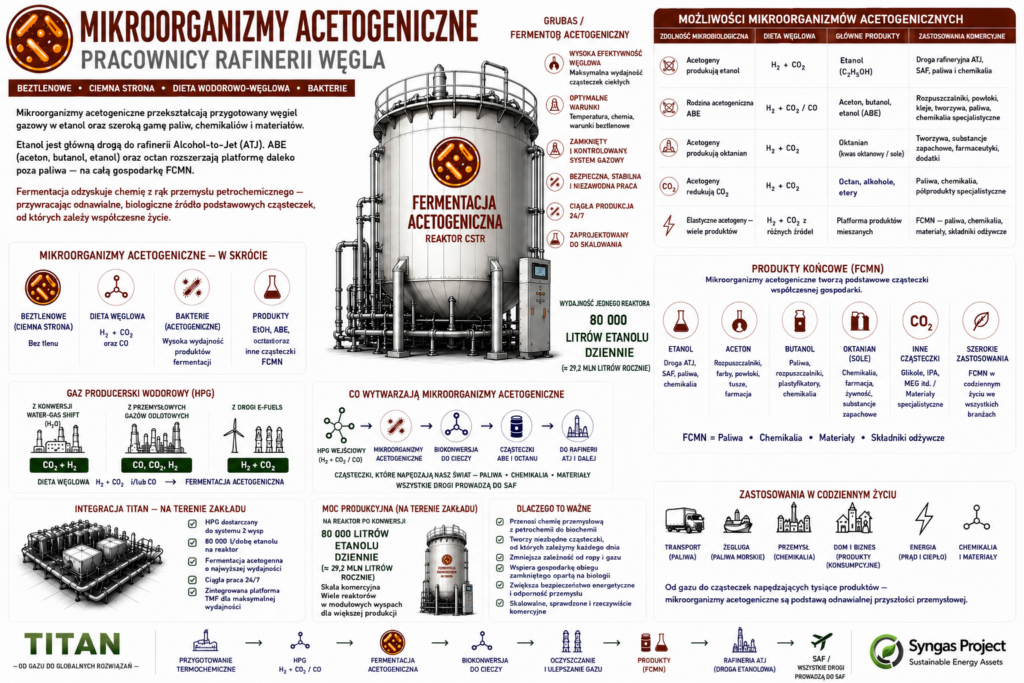
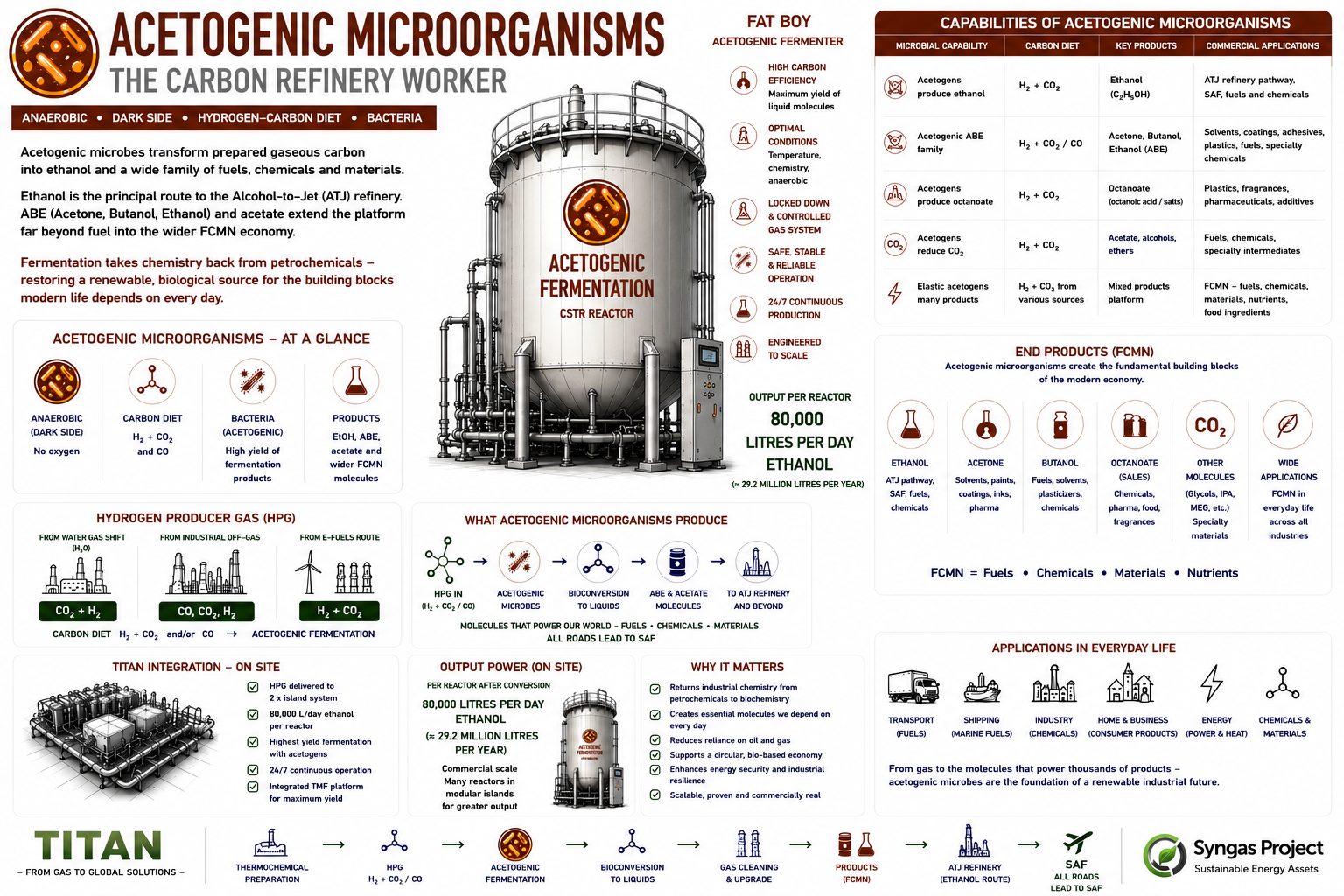
Acetogenic microbes are bacteria. Within Targeted Microbial Fermentation, they belong to the anaerobic Dark Side because they work without oxygen.
These workers produce more microbial biomass than Methanogenic Archaea, but biomass remains a secondary outcome. Their commercial purpose is to convert a clean, single-carbon gaseous diet into valuable liquid molecules.
Their carbon diet is based principally on carbon monoxide and carbon dioxide, supported by hydrogen. These gaseous molecules provide the carbon and energy required to manufacture ethanol and wider chemical intermediates.
The principal TITAN Acetogenic outcome is second-generation ethanol — 2G Ethanol.
Different Acetogenic Microbial Capabilities can also support pathways to acetone, butanol, acetate, acetic acid, isopropanol, 2,3-butanediol and other industrial molecules.
This does not mean that one worker produces every product simultaneously.
The target molecule depends on the selected microbial strain, commercial licence, reactor protocol, gas composition, operating conditions and downstream recovery system.
Syngas Project supplies their food in controlled industrial conditions. Hydrogen Producer Gas is prepared thermochemically, buffered, monitored and conditioned before entering the Acetogenic Fat Boy Tank.
The published TITAN Acetogenic route typically excludes the Water-Gas Shift. The HPG passes directly through buffering, monitoring and conditioning before fermentation.
Acetogenic workers generally produce more liquid broth than Methanogenic workers. This is why their industrial fermentation vessels are represented as Fat Boy Tanks: similar industrial height, but wider and designed around gas-to-liquid biological conversion.
Impurity tolerance varies between workers. The contracted Microbial Capability therefore defines the exact HPG specification and operating limits.
Acetogenic workers are particularly well suited to:
- clean TITAN HPG gas trains;
- conditioned industrial gases and off-gases;
- hydrogen–carbon e-fuel environments;
- second-generation ethanol production;
- Alcohol-to-Jet refinery supply; and
- fuels, chemicals and materials manufacturing.
The detailed strains, commercial licences, reactor internals, sparger technology and operating protocols remain protected under contractual arrangements with specialist Handlers and Biofoundries.