
Warsaw 02:05:2026: 12:13 PM Steve Walker
Artificial intelligence is beginning to change chemistry faster than most people realise.
For decades, discovering new materials, biological pathways and industrial compounds was slow, expensive and uncertain. Research teams could spend years testing molecules, enzymes and formulations with limited success.
That is changing rapidly.
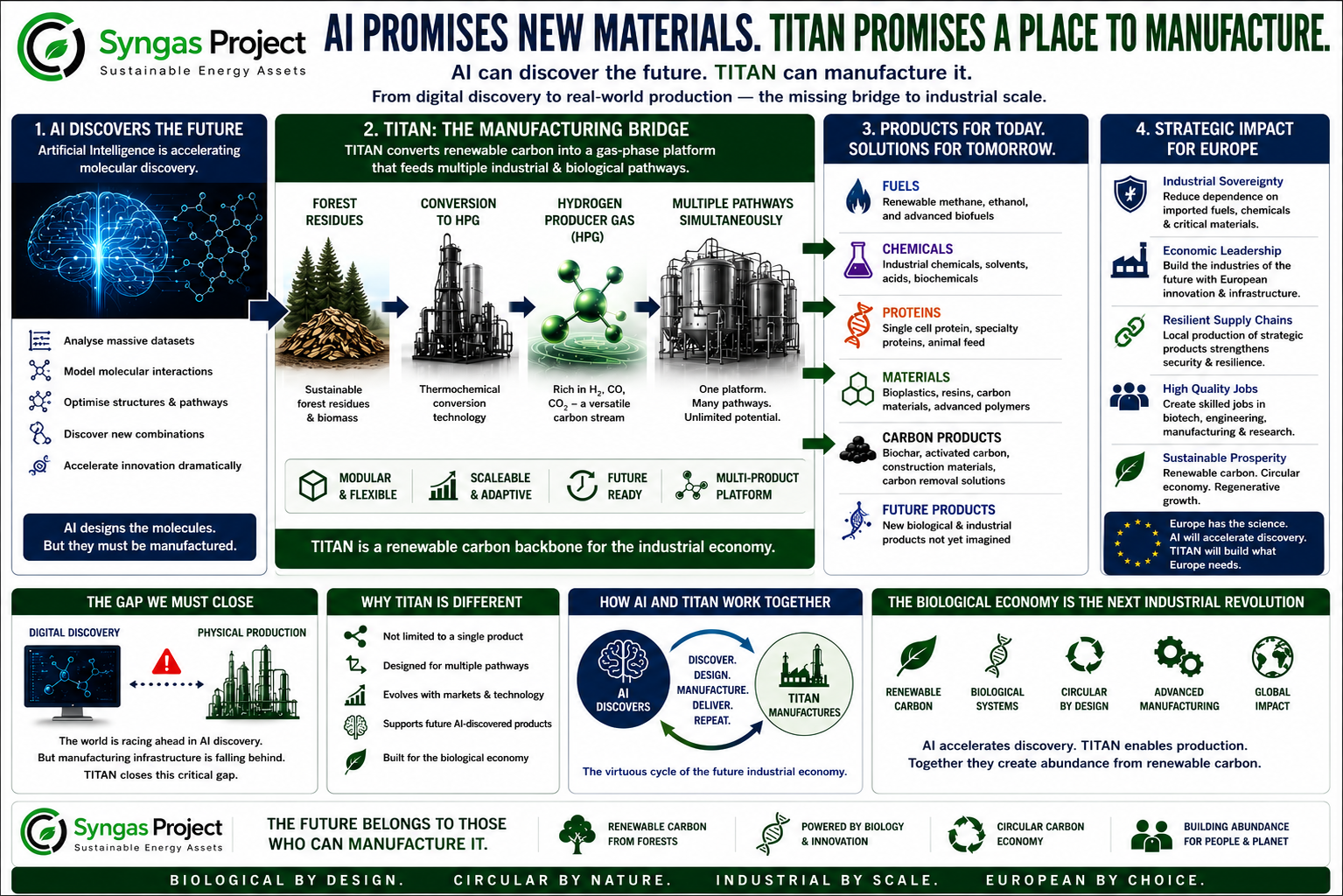
Artificial intelligence can now analyse enormous quantities of chemical, biological and material data simultaneously. It can model interactions, optimise molecular structures and identify entirely new combinations far faster than traditional research methods.
The implications are enormous.
AI may help discover:
New fuels.
New plastics.
New proteins.
New medicines.
New industrial chemicals.
New biological materials.
New agricultural systems.
New carbon products.
Governments and technology companies are investing billions into this transition because whoever controls the next generation of materials and molecules may help define the next industrial economy.
But there is a problem.
Discovery alone does not create industry.
A molecule discovered by artificial intelligence still needs to be manufactured physically, economically and at scale.
This is where the conversation becomes industrial rather than digital.
The world is rapidly building artificial intelligence systems capable of designing future products. But the physical infrastructure capable of manufacturing those products is developing far more slowly.
This creates a growing gap between digital discovery and real-world production.