
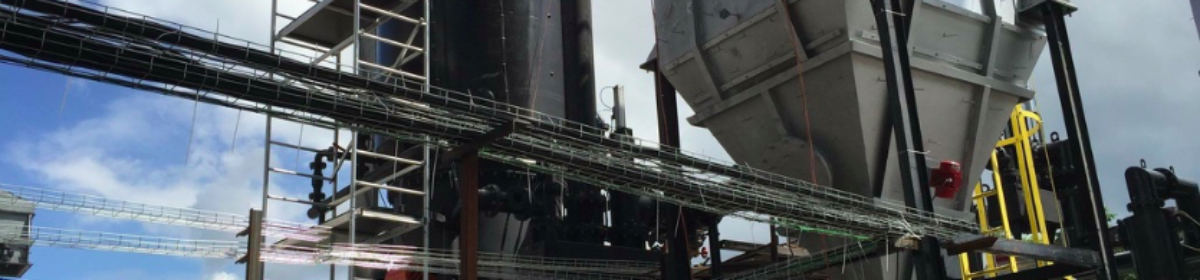
This is where the next industrial transition begins.
The future is not only renewable energy.
The future is renewable molecules.
And that changes everything.
For years the global energy conversation behaved as if electrification alone would solve industrial civilisation.
But electrification solves only part of the equation.
Electricity is excellent for information systems, lighting, mobility, electronics and efficient motors.
It is far less effective for dense transport fuels, high-temperature industrial systems, aviation, maritime logistics and large-scale molecular manufacturing.
This matters because modern civilisation is not simply an electrical system.
It is a molecular system.
The world economy is built from carbon molecules.
Fuels.
Plastics.
Solvents.
Synthetic materials.
Lubricants.
Industrial gases.
Proteins.
Chemicals.
Even the digital economy itself depends on physical molecular supply chains.
Data centres require cooling fluids.
Semiconductor manufacturing requires specialty gases and solvents.
AI infrastructure depends on polymers, insulation systems, advanced materials and logistics networks.
Artificial intelligence may begin in silicon.
But it finishes in chemistry.
And chemistry requires carbon management.
This is why renewable electricity was only Phase One.
Phase Two is renewable molecular infrastructure.
The transition now underway is not simply about generating clean power.
It is about redesigning how civilisation manages carbon itself.
For more than 150 years industrial systems were designed around extraction and combustion.
Dig carbon out of the ground.
Burn it once.
Release it.
Repeat.
That model worked when carbon was cheap, abundant and largely ignored as a strategic resource.
But the economics of the modern world are changing rapidly.
Today intelligence is becoming inexpensive.
AI systems can optimise logistics, chemistry, fermentation, routing, maintenance and industrial control at scales impossible only a decade ago.
At the same time carbon is becoming increasingly valuable.
Not only because of climate pressure.
But because carbon is industrial capability itself.
The future economy will compete for usable carbon streams.
Forest residues.
Agricultural residues.
Municipal waste.
Industrial gases.
Wastewater carbon.
Captured process emissions.
The countries and industries capable of recovering, routing and upgrading carbon efficiently may become the dominant industrial systems of the next generation.
This is where fermentation becomes strategically important.
Most people still associate fermentation with brewing, food production or pharmaceuticals.
But industrial fermentation is rapidly becoming something far larger.
It is becoming programmable molecular manufacturing.
Fermentation allows carbon to be redirected rather than destroyed.
Instead of burning carbon once for temporary heat, carbon can be transformed into multiple high-value outputs:
renewable methane,
renewable liquid natural gas,
ethanol,
sustainable aviation fuel,
solvents,
proteins,
industrial chemicals,
future materials,
and potentially entirely new classes of biological manufacturing.
The same carbon stream can produce different outcomes depending on market demand, microbial pathways and process optimisation.
This changes the nature of infrastructure itself.
Traditional industrial plants were static.
Future carbon platforms are adaptive.
One day a platform may prioritise renewable methane.
Another day aviation fuel intermediates.
Another day industrial chemicals or proteins.
The infrastructure becomes flexible because the carbon is being managed intelligently rather than simply burned.
This is one of the reasons the TITAN platform was never designed as a conventional biomass energy plant.
Electricity generation is only one layer of the system.
The larger objective is carbon orchestration.
TITAN combines hydrogen producer gas, fermentation, energy recovery, carbon routing and future AI optimisation into a scalable industrial platform capable of evolving over time.
The important word is platform.
Platforms evolve.
A furnace does not.
The first renewable era focused primarily on replacing fossil electricity generation.
The next era focuses on controlling molecular flows across entire industrial ecosystems.
This includes:
renewable gas for grid stability,
renewable liquid fuels for aviation and shipping,
circular chemical manufacturing,
carbon-negative agriculture,
industrial carbon recovery,
programmable fermentation systems,
and intelligent feedstock management.
The implications are enormous.
Because once carbon becomes manageable, waste itself changes meaning.
Municipal waste stops being a disposal problem.
Agricultural residues stop being low-value by-products.
Industrial emissions stop being unavoidable losses.
They become feedstocks.
Resources.
Strategic industrial assets.
This is why the future industrial map of Europe may look very different from the past.
The next major industrial corridors may not form around oil fields.
They may form around carbon recovery systems.
Rail infrastructure.
Fermentation capacity.
District heating systems.
Forestry logistics.
Waste management integration.
Renewable gas corridors.
Industrial biology clusters.
This is especially important for Central Europe.
Countries such as Poland already possess many of the ingredients required for Phase Two:
engineering capability,
rail infrastructure,
industrial land,
district heating networks,
forestry systems,
chemical heritage,
and highly skilled industrial labour.
What is missing is deployment-scale fermentation infrastructure.
The countries that build this infrastructure first may gain advantages far beyond energy production alone.
They may secure long-term industrial resilience.
Because renewable molecules are not only an energy story.
They are a manufacturing story.
A sovereignty story.
A logistics story.
A strategic capability story.
This is also why the transition beyond combustion is accelerating faster than many people realise.
AI systems naturally favour optimisation.
And optimisation increasingly points away from wasteful linear combustion systems.
Burning complex carbon once for temporary heat begins to look increasingly inefficient in a world capable of directing carbon through multiple productive pathways.
The more intelligent industrial systems become, the more valuable carbon preservation becomes.
In many ways civilisation is now entering the early stages of a new industrial architecture.
The first industrial age was powered by combustion.
The next industrial age may be powered by carbon control.
Renewable energy opened the door.
Renewable molecules may redefine the entire building.
And the infrastructure required for that future is already beginning to emerge.
Not as theory.
Not as laboratory science.
But as scalable industrial systems capable of transforming how civilisation manufactures energy, fuels, chemicals and materials in the decades ahead.
The race is no longer only for renewable electricity.
The race is for the platforms capable of directing carbon intelligently.
Because renewable energy was only Phase One.
The molecular economy is Phase Two.