Warsaw 01:05:2026 Steve Walker
For more than three decades, parts of the South American copper industry have quietly demonstrated something extraordinary.
Microbes can recover real industrial value.
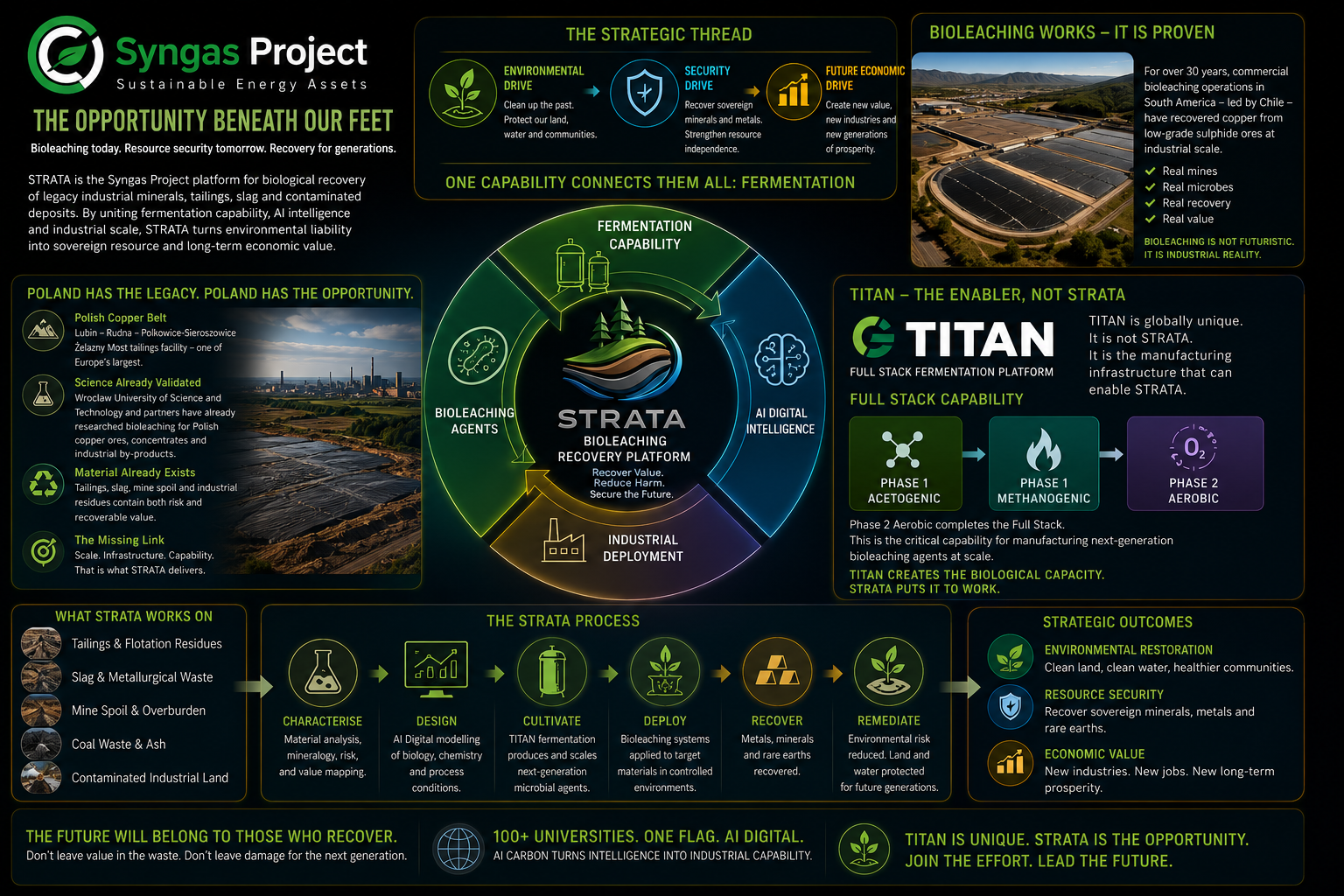
In Chile and other major copper regions, biological leaching has been used commercially to help recover copper from low-grade sulphide ores that conventional processing may struggle to justify economically. What was once considered marginal material became economically recoverable because biological workers helped unlock the metal.
That matters because it proves something important.
Bioleaching is not speculative science.
It is already industrial reality.
The process itself is deceptively simple. Carefully selected microorganisms are cultivated and introduced into mineral environments where they help oxidise sulphide minerals and mobilise metals. In practical terms, biology helps release value from material that older industrial systems may leave behind.
For years, this capability was viewed as a niche mining technique.
Today it looks much larger than that.
Because the world is beginning to realise that the industrial age left behind more than pollution.
It left behind inventories.
Tailings.
Slag heaps.
Mine spoil.
Ash deposits.
Metallurgical waste.
Industrial residues.
Some contain environmental risk. Some contain recoverable metals. Many contain both.
This is where STRATA begins.
Poland Carries the Same Legacy
Poland understands heavy industry.
Coal.
Steel.
Copper.
Smelting.
Rail.
Chemicals.
Industrial growth built modern Poland, but industrial growth also left behind material that still shapes landscapes and communities today.
The Polish Copper Belt remains one of Europe’s most important copper-producing regions. Facilities such as Żelazny Most demonstrate the sheer scale of legacy mineral and flotation material already accumulated over decades of industrial production.
The important point is this:
the material already exists.
And researchers already know biology can interact with it.