Denmark demonstrates what is possible
Denmark is already demonstrating the potential scale of a renewable methane economy. In 2023, biomethane represented almost 40% of the gas entering the Danish gas system. Around 80% of Danish biogas was being upgraded and injected into the gas grid, rather than used directly for electricity generation. Denmark expects its gas consumption to be supplied entirely by green gas by 2030. (ens.dk)
This is an important achievement, but Denmark also points towards the next stage of methane production, 100%+ Danish Biogas.
Large offshore wind resources can be used to generate renewable electricity. Electrolysers then convert water into renewable hydrogen and oxygen. That hydrogen can be combined with biogenic carbon dioxide to manufacture e-methane.
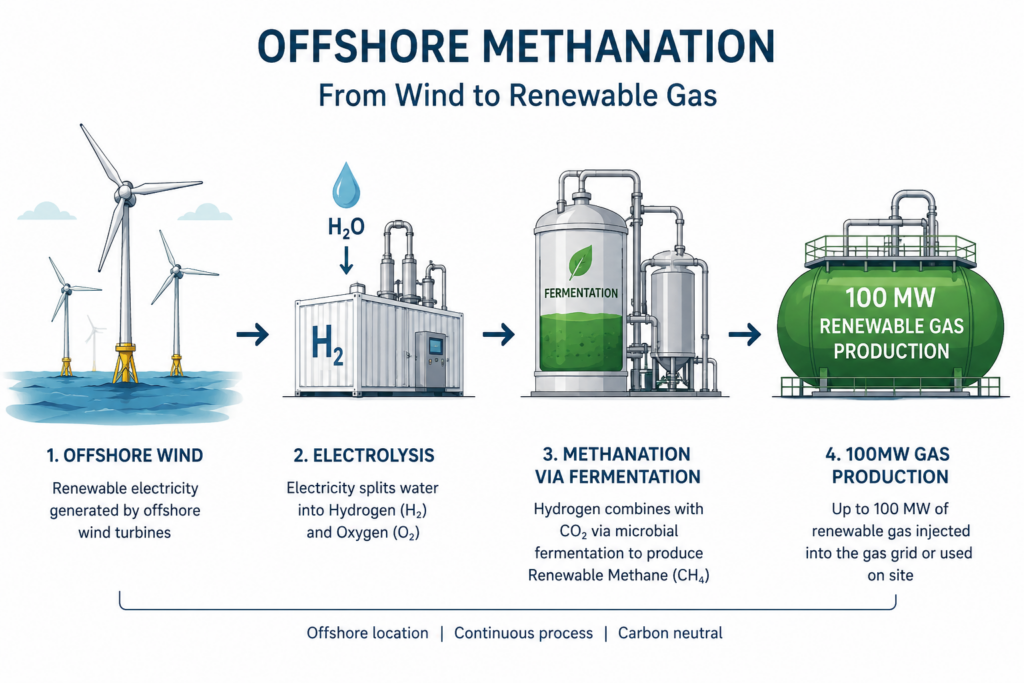
Syngas Project describes this emerging route as Offshore Methanation.
It is an electricity-derived e-fuel pathway: renewable power produces hydrogen, hydrogen is combined with biogenic carbon dioxide, and the resulting methane can be liquefied as renewable LNG (LRNG) or introduced into existing gas infrastructure.
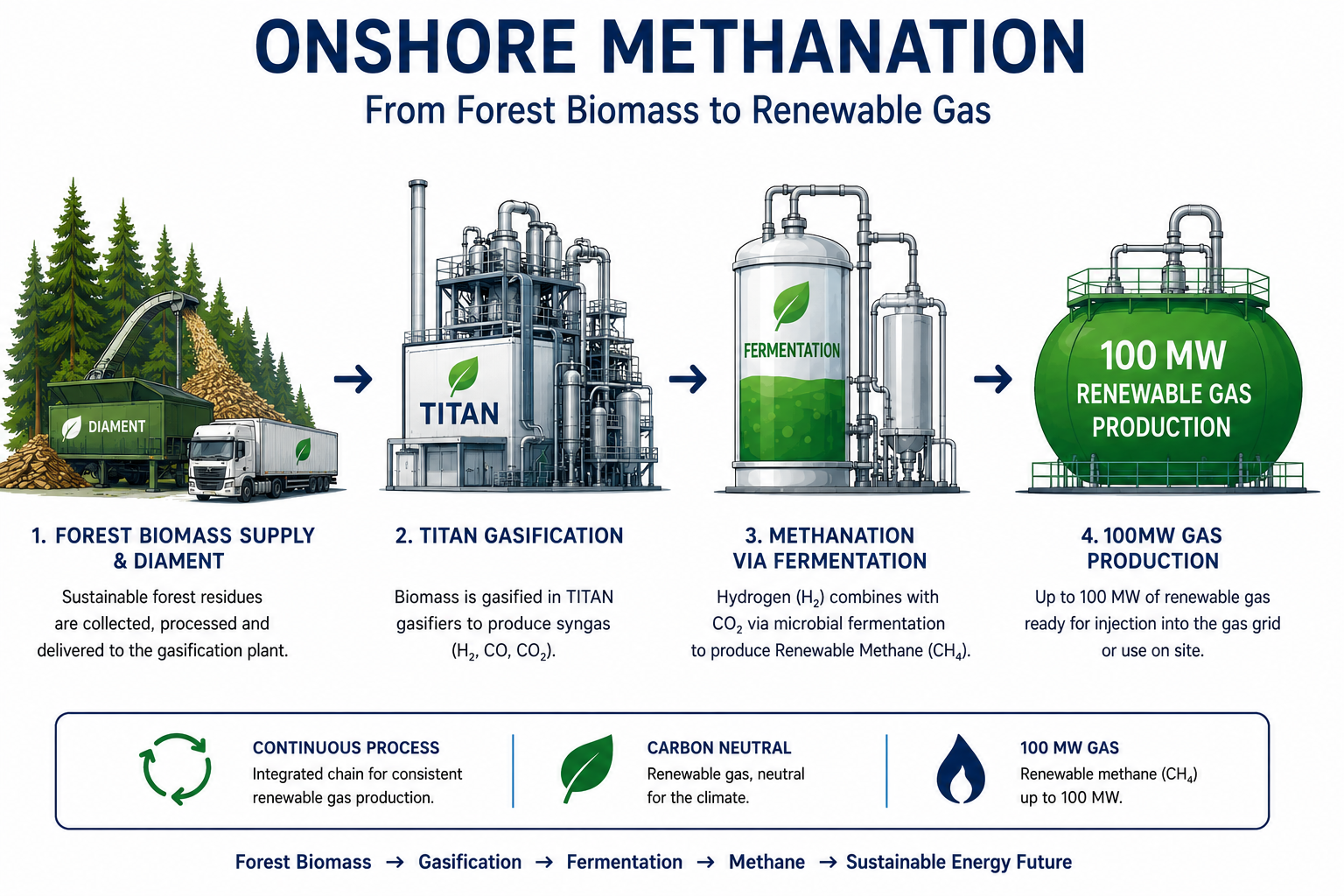
Syngas Project is developing the complementary land-based route: Onshore Methanation.
Instead of producing hydrogen through electrolysis, Onshore Methanation converts dry renewable carbon into a clean, hydrogen-rich gas feedstock. Forest residues and other suitable dry materials are prepared, gasified and conditioned through water-gas shift to produce Hydrogen Producer Gas, or HPG.
HPG is not conventional raw syngas. It is a controlled gaseous feedstock prepared for targeted microbial fermentation.
Methanogenic archaea convert the carbon and hydrogen contained in HPG into renewable methane. Syngas Project organises this capability into standard 25 MW fermentation trains. Four trains create a 100 MW methane installation.
This allows an onshore circular-carbon platform to mirror the industrial scale emerging in offshore renewable-hydrogen development while operating continuously and independently of variations in wind generation.
Offshore and onshore methanation are natural partners
The relationship between Offshore Methanation and Onshore Methanation is more than a comparison between two competing production systems. Their inputs and outputs are highly complementary.
Offshore electrolysis produces renewable hydrogen together with oxygen. Offshore e-methane production subsequently requires a dependable supply of biogenic carbon dioxide.
Onshore gasification requires oxygen within the wider process system. Methanogenic and acetogenic fermentation also generate recoverable biogenic carbon dioxide at scale.
The relationship can therefore be expressed simply:
Offshore Methanation produces oxygen and requires biogenic carbon dioxide. Onshore Methanation requires oxygen and produces biogenic carbon dioxide.
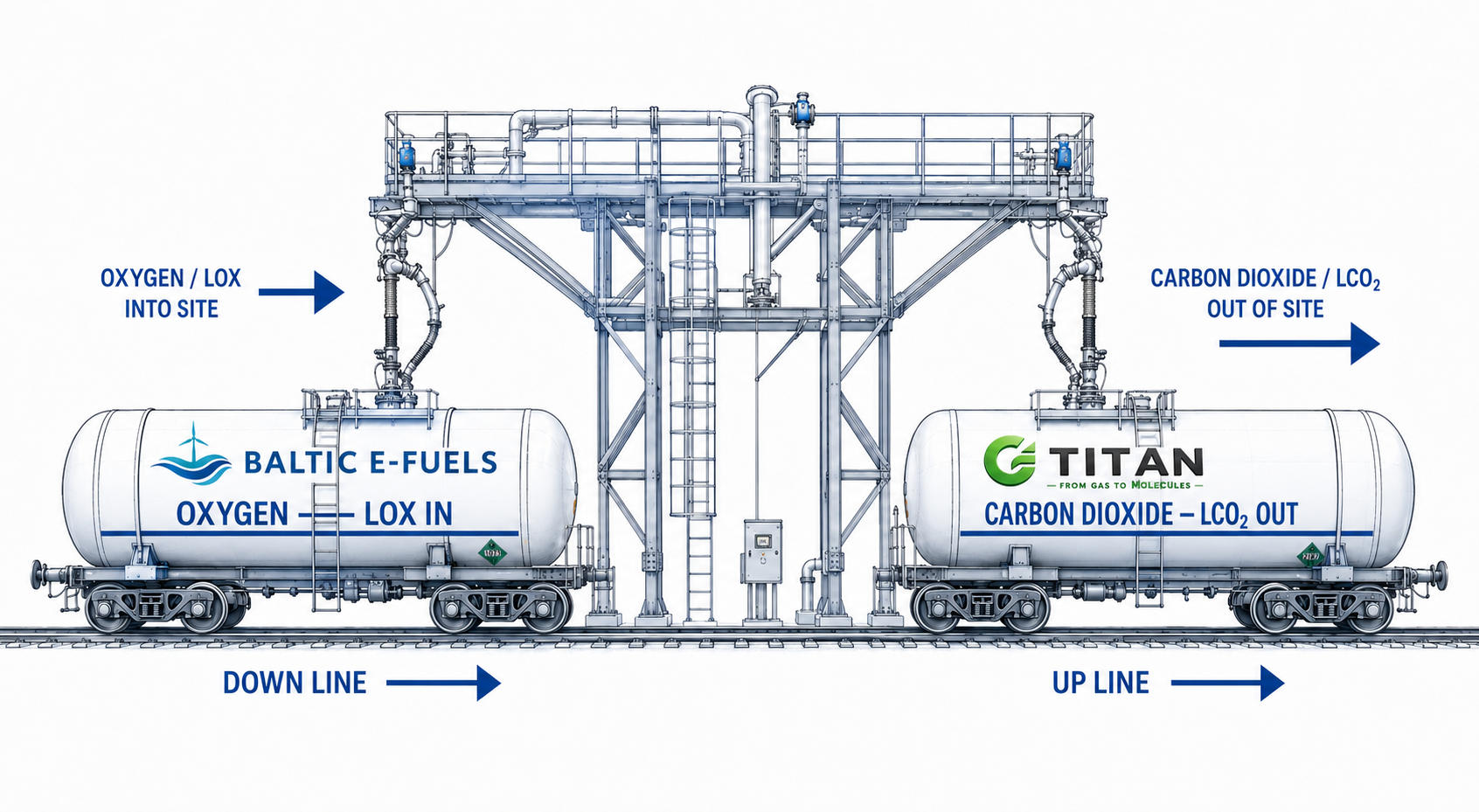
Working together, the two routes can form a more efficient European renewable-gas system.
Offshore wind contributes renewable electricity and hydrogen. Onshore platforms contribute biogenic carbon dioxide, continuous gas production, dry-carbon conversion, additional renewable fuels and established logistics.
AD remains firmly within this system because it continues to provide the preferred route for wet biological feedstocks. Offshore Methanation manages renewable electricity and captured carbon dioxide. Onshore Methanation manages dry renewable and recovered carbon. AD manages wet carbon.
Each pathway addresses a different resource class.
The purpose is not to remove practical AD from the market. It is to connect AD with complementary technologies that expand renewable methane production while addressing the environmental limitations emerging downstream.
Methane should be identified by its production route
Syngas Project uses the description Methane Gas RNG for renewable methane produced from HPG through targeted methanogenic fermentation.
This distinguishes the product from upgraded AD biomethane and from e-methane produced through an electricity-derived offshore pathway. The final methane molecule may be chemically comparable, but the production routes, feedstocks, operating characteristics and associated products are different.
Onshore Methanation begins with dry carbon. The material is converted into synthesis gas, shifted and conditioned into HPG and delivered to methanogenic fermentation. The resulting renewable methane is upgraded initially as CRNG and can then be liquefied as LRNG.
LRNG can be transported by road, rail or marine tanker to industrial users, transport markets, marine terminals or regional regasification islands. This is particularly relevant to Poland, where distributed gas networks, Baltic ports, rail infrastructure and regional industrial centres provide several practical routes to market.
Poland already uses distributed LNG regasification stations to serve locations outside the main transmission network. This creates a ready delivery concept for domestically manufactured LRNG: renewable methane can be produced continuously at an integrated platform, transported in liquid form and regasified close to the point of consumption.
Syngas Project’s planned rollout combines this constant methane capability with second-generation ethanol production for sustainable aviation fuel through the alcohol-to-jet pathway.
The programme is built around Swing, Swing, Swing production flexibility.
Methanogenic fermentation produces renewable methane. Acetogenic fermentation produces 2G ethanol and can support other renewable chemicals. Full-stack aerobic fermentation, introduced in later phases, will cultivate specialised microbial workers for water treatment, environmental recovery, feed ingredients and materials.
The first rollout programme targets one gigawatt of constant Methane Gas RNG production in tandem with major 2G ethanol capacity. This creates a national renewable-fuels system rather than an isolated gas project.
Strong AD tailwinds meet growing downstream headwinds
The European policy environment strongly supports biomethane expansion. However, another policy trend is developing in parallel: increased control over persistent contaminants in water, sludge and soil.
Wastewater treatment plants can remove a large proportion of microplastics from water, but much of the captured material then accumulates in sewage sludge. The European Environment Agency identifies land application of sludge as an important route by which microplastics can enter terrestrial and aquatic ecosystems. (eea.europa.eu)
PFAS follows a similar route.
PFAS can enter wastewater through industrial activity, textiles, consumer goods and many everyday products. Some PFAS remains in treated water, while some becomes associated with sewage sludge. The European Environment Agency identifies contaminated sludge, compost, irrigation and soil additives among the pathways through which PFAS can enter European soils. Landfills can also become secondary sources through leachate and other releases. (eea.europa.eu)
Evidence from long-term sludge application studies has also shown increasing concentrations of PFAS and other persistent substances in treated agricultural soils. (eea.europa.eu)
The present European sewage-sludge regime largely focuses on regulated heavy metals. It does not yet provide comprehensive controls for microplastics, PFAS, pharmaceuticals and several other emerging pollutants. (eea.europa.eu)
That regulatory gap is beginning to close.
The revised Urban Wastewater Treatment Directive entered into force on 1 January 2025. Its scope now explicitly includes microplastics in urban wastewater and sludge, alongside tighter treatment, monitoring and environmental-performance requirements. (EUR-Lex)
From January 2026, Member States also began harmonised monitoring of PFAS in drinking water against new European limit values. (Environment)
The direction of travel is clear. Europe is moving towards greater measurement, registration and control of where persistent contaminants are found and where they ultimately go.
This creates the downstream headwind for AD.
Digestate remains a valuable source of nutrients and organic material when its composition is suitable. However, unrestricted land application will face increasing scrutiny where feedstocks or treatment systems create a risk of PFAS or micro- and nanoplastic contamination.
The question will no longer be limited to how much renewable gas an AD facility produces. It is how is the digestate managed
Regulators, water authorities, farmers, investors and the public will increasingly ask:
What happened to the contaminants captured within the process?
Conventional filtration can become a one-way street
Water filtration provides an essential public service. It removes contaminants from treated water and protects downstream users.
However, filtration alone does not destroy the contaminants.
Micro- and nanoplastics and PFAS may become trapped within filter media, activated carbon, sludge or other treatment residues. The water becomes cleaner, but the contaminants remain physically present in a concentrated secondary material.
The treatment authority must then decide what to do with that material.
Where filters and contaminated residues are landfilled, land-spread or sent through a process that does not permanently break down the contaminants, the result can become a one-way street. Pollution is transferred from water into soil, landfill, sludge or another waste-management system.
The treatment has changed the contaminant’s location without resolving its existence.
A circular economy cannot be complete when persistent contaminants are repeatedly circulated between water, sludge, soil, landfill and food-production systems.
AQUIS EPS is being developed to close this missing final stage.
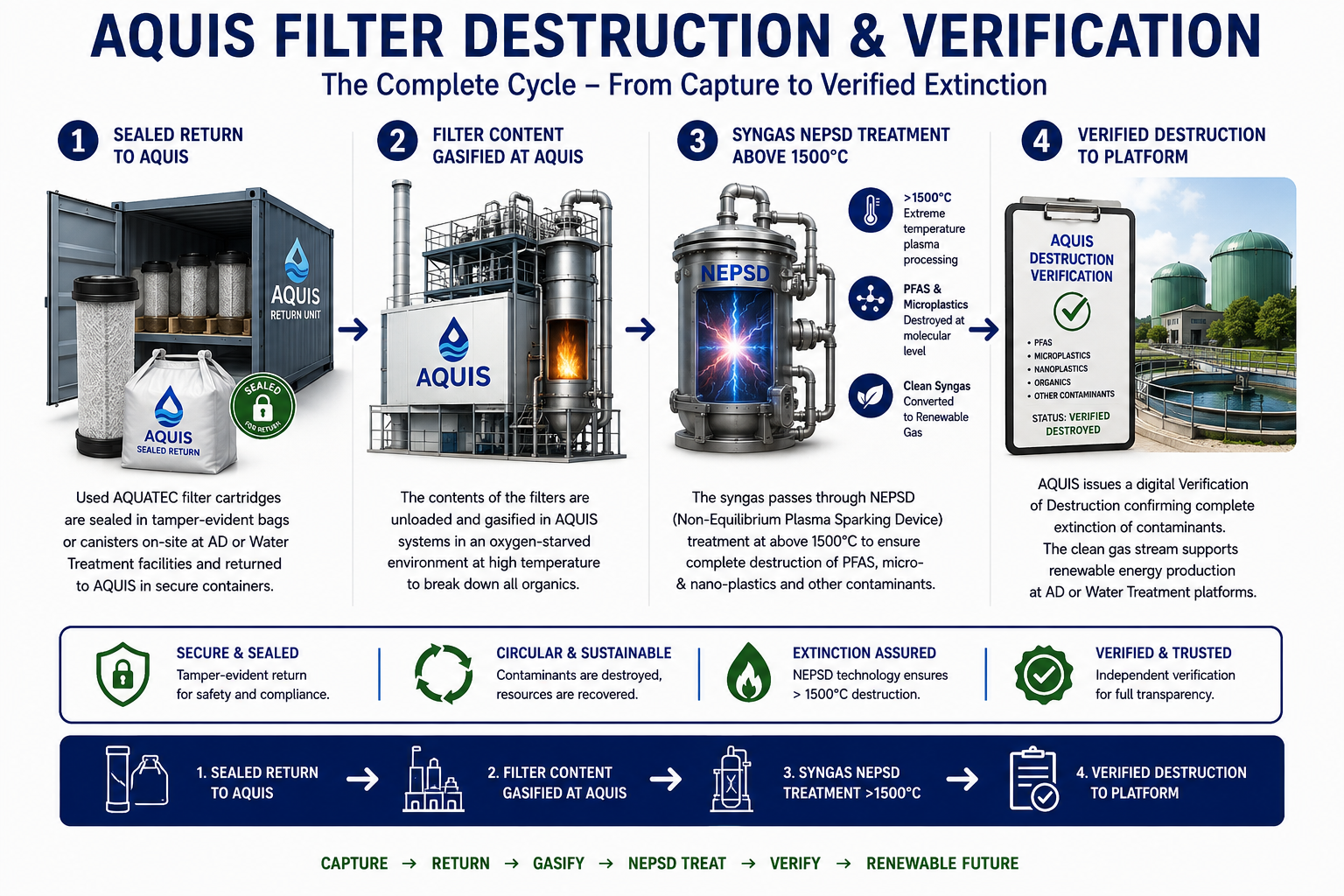
AQUIS changes the status of the spent filter
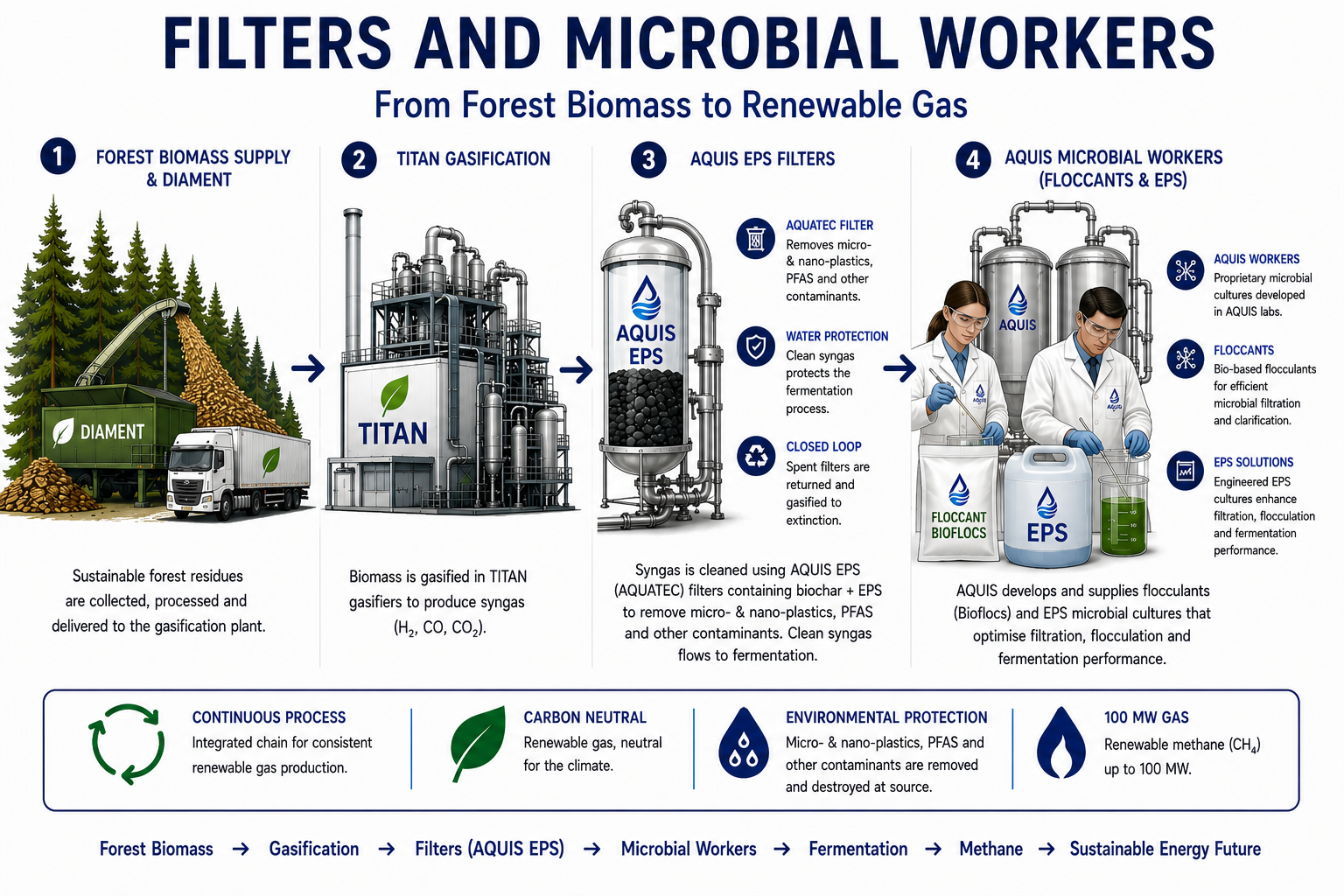
AQUIS EPS combines biochar-based filtration with a managed return pathway.
The filter captures micro- and nanoplastics and assists in removing PFAS and other persistent substances during water processing. Applications may include wastewater treatment, industrial water, AD-related treatment systems and specialised water-protection duties.
The critical difference comes after filtration.
The spent filter is not abandoned as a waste product for the water authority to manage. It is sealed, recorded and returned to an AQUIS platform. The filter becomes part of an integrated environmental service rather than an isolated consumable.
At the AQUIS platform, the returned biochar media and captured contaminants are introduced into controlled gasification.
The carbon contained in the filter becomes a process feedstock. Entrapped micro- and nanoplastics are subjected to the controlled gasification environment and converted into gaseous intermediates rather than redistributed through landfill or agricultural land.
PFAS-derived compounds entering the gas stream then require a further dedicated treatment stage.
That stage is NEPSD.
From GlidArc to GATO and NEPSD
NEPSD is the latest stage in a Polish gas-treatment development pathway that progressed from GlidArc principles to the NFOŚiGW-sponsored GATO system trialled at Rumia.
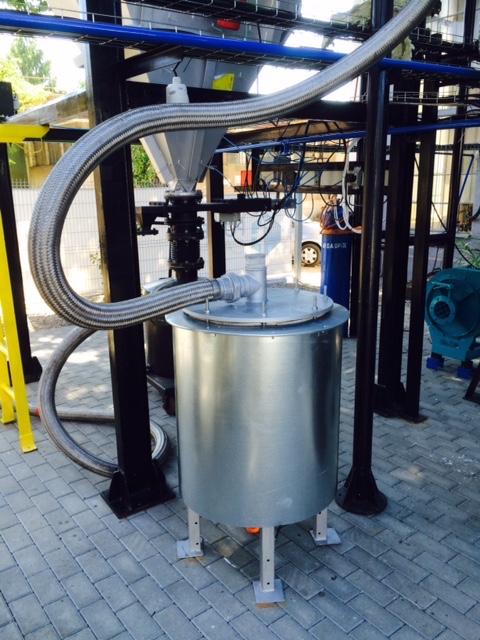
NEPSD is the next-generation treatment stage intended for persistent gaseous contaminants, including PFAS-derived compounds released during controlled gasification.
Its position after gasification is important.
AQUIS does not attempt to plasma-treat the original volume of wastewater. Filtration first captures and concentrates the contaminants. Gasification converts the complete contaminated filter into a controlled gaseous stream. NEPSD then treats the difficult gaseous intermediates within a smaller and more manageable process flow.
The intended sequence is:
Capture. Seal. Return. Gasify. Treat. Measure. Verify. Register.
The objective is not simply to make PFAS disappear from the original water sample. It is to break the persistent molecular structure, capture the resulting fluorine species safely and verify the complete pathway through analysis and mass balance.
Syngas Project intends to document this through an auditable extinction register. The register will follow the returned filter from its point of use through gasification, gas treatment and final management of the resulting products.
AQUIS therefore moves the water-treatment model from contaminant capture towards verified contaminant extinction.
NFOŚiGW’s place in the development pathway
Poland’s National Fund for Environmental Protection and Water Management—NFOŚiGW—has an important place in this technology history.
NFOŚiGW sponsored GATO, which was trialled by the Syngas Project team as part of the Rumia pilot programme. The current commercial platform represents the next level of development from those earlier Polish trials.
The connection should be recognised clearly.
Public environmental funding helped establish the pilot-stage knowledge from which the present gas-treatment and fermentation programme developed. Syngas Project is now seeking to carry that work from pilot demonstration towards commercial deployment in renewable gas, sustainable aviation fuel feedstock and environmental contaminant treatment.
The first commercial phase is already in procurement, although the programme timetable has been affected by the timing of its public-finance process. Phase 1 establishes the primary gasification, HPG, methanogenic and acetogenic infrastructure. Phase 2 expands methanogenic capacity and introduces full-stack aerobic fermentation for producing specialised microbial workers at industrial scale.
These microbial capabilities are intended to support future treatment of MNPs, PFAS and other persistent contaminants across water, gas and recovered-material systems.
NFOŚiGW’s earlier involvement therefore forms part of a continuous Polish innovation story: from the Rumia pilot and GATO to commercial HPG production, targeted microbial fermentation, AQUIS EPS and NEPSD.
AQUIS strengthens AD rather than replacing it
AQUIS is not an argument against anaerobic digestion.
It is an enabling platform designed to protect AD as environmental standards develop.
AD should continue doing what it does well: managing wet biological feedstocks and producing renewable gas. AQUIS can support upstream water treatment, capture persistent contaminants and provide a controlled return route for spent filters.
In future phases, digestate that cannot be used safely or economically on land may also be redirected into the wider Syngas Project platform system for additional treatment and resource recovery.
This creates a practical division of responsibility.
AD operators produce renewable gas and manage wet organic resources. AQUIS manages the digestate, specialised contaminant capture, returned filter media, gasification and subsequent gas treatment. CUMULUS addresses gaseous contaminants. TITAN and the other Syngas Project platforms provide additional conversion capacity and product flexibility.
The result keeps practical AD firmly in the loop.
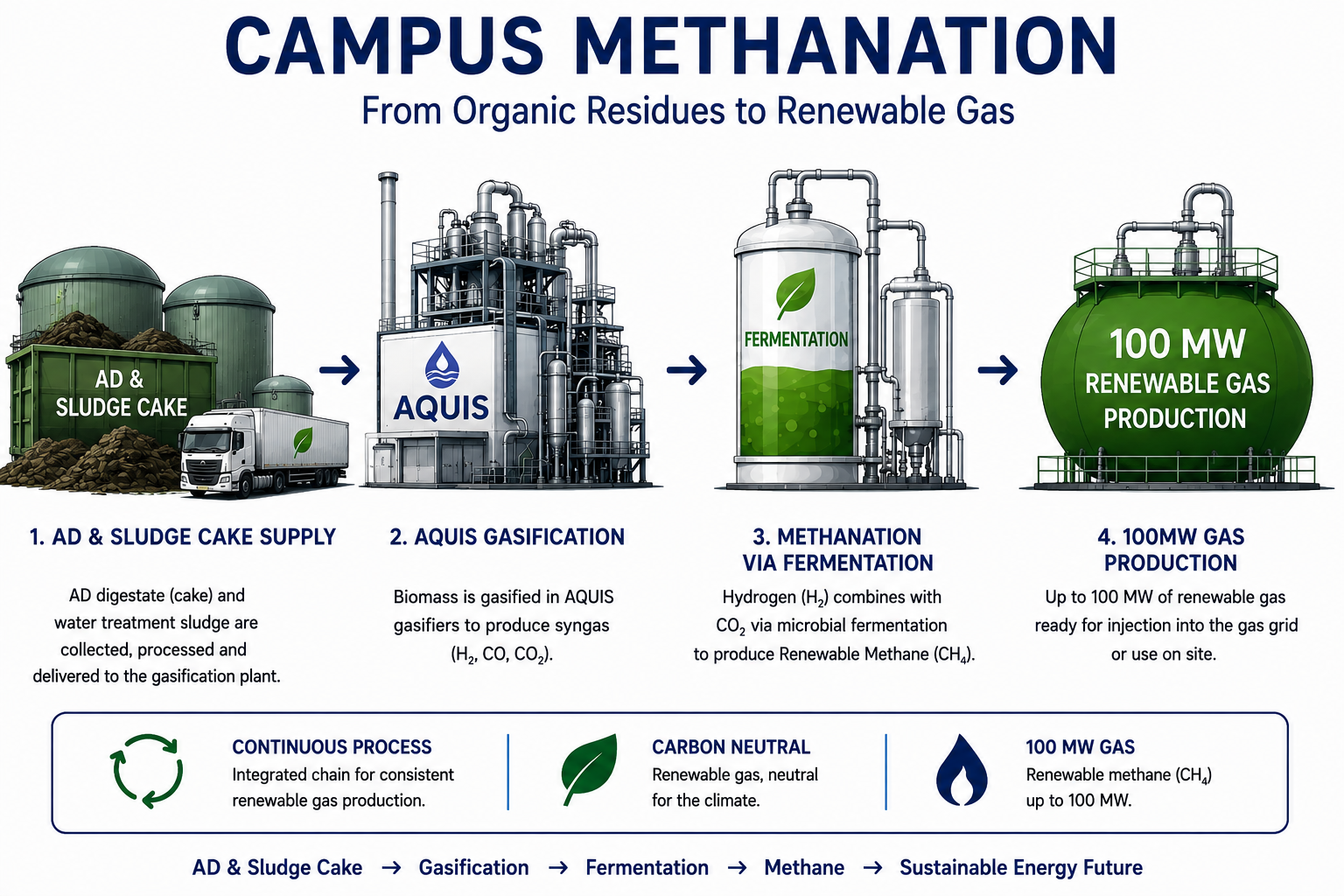
Below, we take a typical AD digestion unit circa 1MW with approximately 320 tonnes of suspended solids. Dewater after 25 days as cake at circa <20% moisture, resulting in 20,000 nm3/hr HPG, which we gasify at the AQUIS platform; that process is managed within 24 hours; the gas is run through the NEPSD unit before methanogenic fermentation, where it produces circa 25MW gross power every hour for 24 hours. The net energy is measured in LRNG, ready to be shipped to a degasification island for local pipeline distribution or a marine terminal.
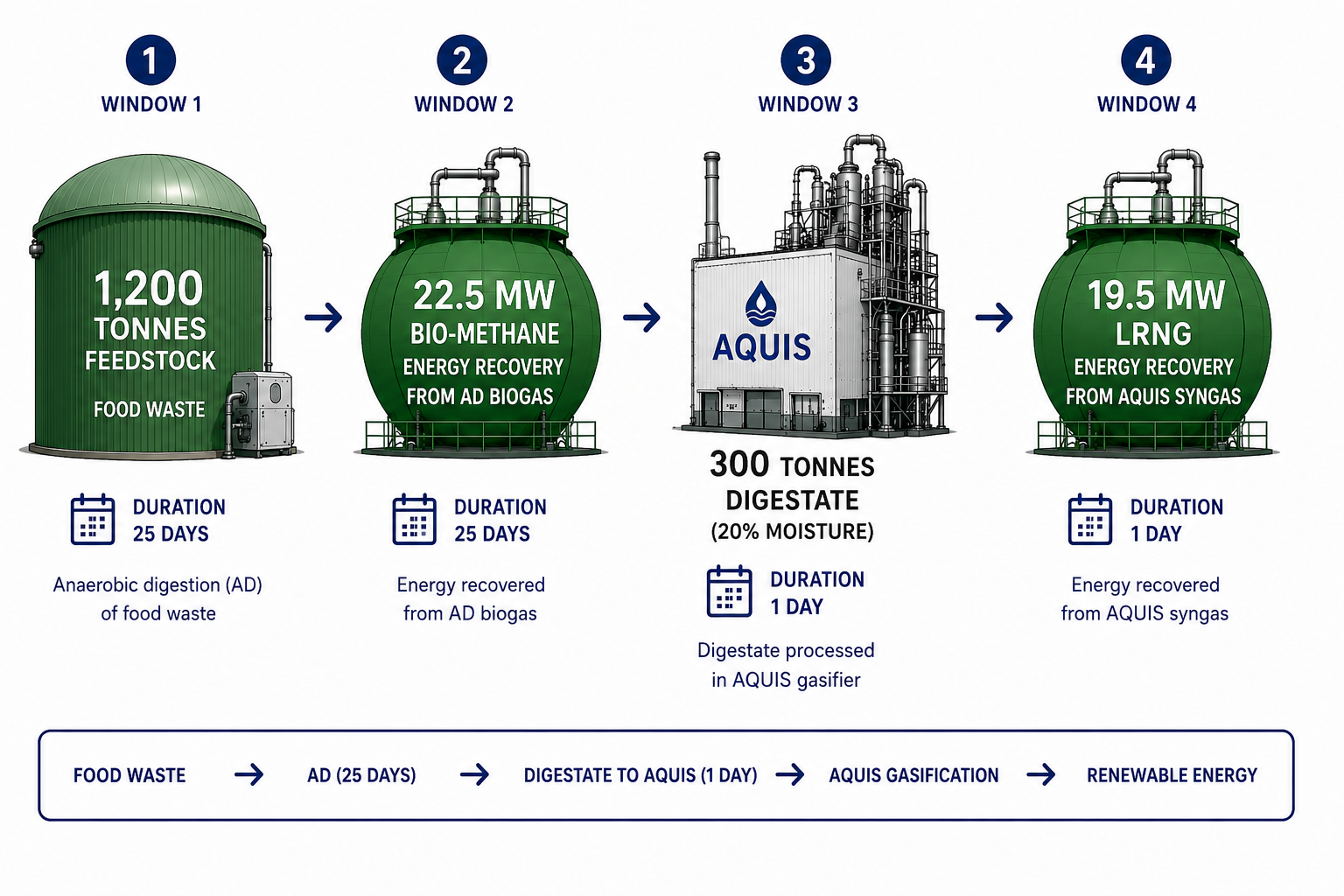
The 1MW AD Digestion unit, including 320 tonnes of food waste solids suspended in water for digestion, approximately 1200 tonnes, was conducted over 25 days; the gas was collected. Over 24 hours, the process delivered 22.5MW per hour, equivalent to bio-methane. The digestate was then dewatered and gasified as a cake at AQUIS over 24 hours, and after its own parasitic load and gas process, AQUIS delivered 19.5MW RNG for tanking as pipeline- and Marine ready LRNG
The next European methane economy
Europe’s renewable methane future will not be delivered by one technology.
Wet biological materials will continue to support anaerobic digestion. Offshore renewable electricity will produce hydrogen and e-methane. Dry renewable and recovered carbon will support gasification and Onshore Methanation. Biogenic carbon dioxide and oxygen can move between complementary industrial systems.
CRNG and LRNG can supply transport, regional gas networks, marine users and industry. Acetogenic fermentation can produce 2G ethanol for alcohol-to-jet SAF. Aerobic fermentation can manufacture microbial capabilities for water, materials and environmental recovery.
AQUIS provides the environmental protection layer connecting these systems.
It recognises that filtration is only the first step. A captured contaminant is still a contaminant. A filter is not a permanent solution when its contents are subsequently landfilled or returned to agricultural soil. Renewable gas cannot be considered fully circular if its downstream residues continue circulating persistent pollution.
The new methane economy must account not only for carbon and energy, but also for plastics, fluorine and the final destination of every concentrated contaminant.
Syngas Project’s proposition is therefore straightforward:
Keep anaerobic digestion firmly in the loop. Connect it with Offshore and Onshore Methanation. Capture persistent contaminants before they are redistributed. Return the filters. Gasify the entrapped MNPs. Process the PFAS-derived gas through NEPSD. Measure the outcome and register verified extinction.
That is the role of AQUIS.
It does not remove the need for AD or conventional water treatment. It provides the missing infrastructure required to help both sectors expand safely, transparently and at European scale.