Warsaw 20:08:2026 Steve Walker
HPG TECHNOLOGY — OPEN KIMONO
TITAN | ANKUR PG2200 | Hydrogen Producer Gas
1. HPG Technology at a Glance
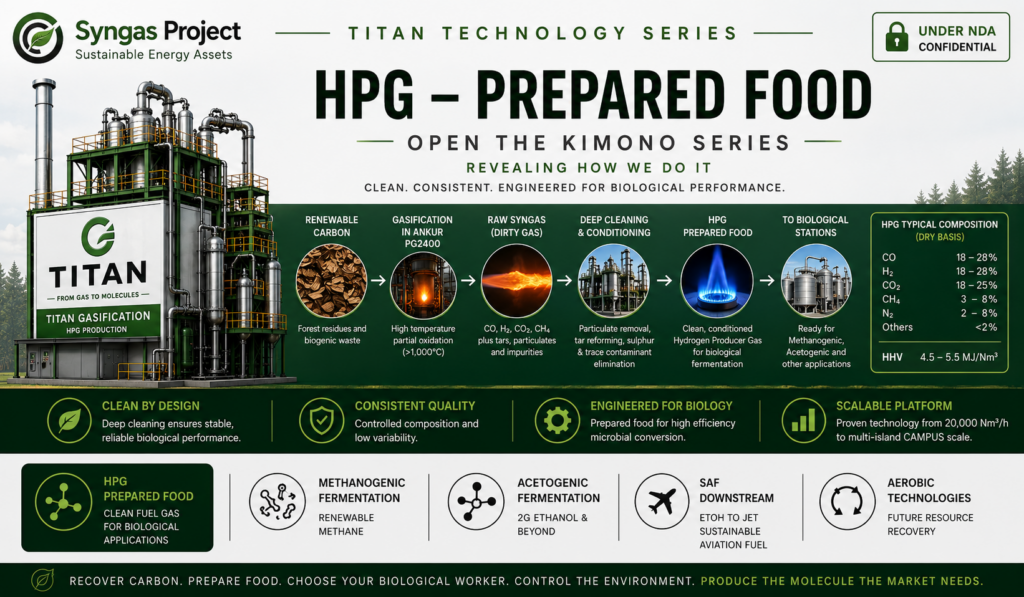
TITAN converts prepared forest residues into Hydrogen Producer Gas (HPG) using modular ANKUR PG2200 gasifiers.
Each TITAN island contains six PG2200 gasifiers arranged as three pairs.
Two islands form one TITAN cluster, giving twelve PG2200 gasifiers per cluster.
TITAN is developed one cluster per phase, with a maximum build-out of three clusters:
1 island = 6 PG2200
1 cluster = 2 islands = 12 PG2200
1 phase = 1 cluster
Maximum TITAN = 3 clusters = 6 islands = 36 PG2200
The operating philosophy is deliberately conservative.
TITAN operates its gasifiers within their optimum operational envelope rather than continuously at maximum capability. The installed design envelope provides additional gas-manufacturing capacity when required and enables individual gasifiers to be rotated offline for cleaning and maintenance while the remaining units maintain HPG production.
TITAN HPG — Design Basis
| Parameter | TITAN Basis |
| Technology provider | ANKUR Scientific |
| Production gasifier | PG2200 |
| Gasifiers per island | 6 |
| Island arrangement | 3 pairs × 2 PG2200 |
| Islands per cluster | 2 |
| Gasifiers per cluster | 12 |
| Clusters per phase | 1 |
| Maximum TITAN build-out | 3 clusters |
| Maximum TITAN islands | 6 |
| Maximum PG2200 gasifiers | 36 |
| Training gasifier | 1 × PG350 — Sector 3 |
| Gas treatment | ANKUR Ultra Clean Gas Mode |
| Primary feedstock | Prepared forest residues |
| Nominal biomass consumption | ~420 t/day |
| Preferred biomass-energy input | ~70 MW |
| Peak design envelope | ~100 MW |
| Conditioned HPG at header box | 51.5 MW |
| Nominal conditioned HPG flow | 20,000 Nm³/h |
| Biochar design basis | ~30 t/day per cluster |
| Downstream conversion | Acetogenic + Methanogenic |
| Design philosophy | Optimum operation + substantial headroom |
The difference between the preferred operating point and the installed design envelope is intentional.
It provides flexibility for feedstock variation, gasifier rotation, cleaning, maintenance, operating reserve and increased HPG manufacture when required.
2. ANKUR Technology Pedigree
ANKUR has developed and supplied modular gasification systems since 1986.
TITAN therefore starts with an established gasification platform and integrates it into a larger HPG production, gas-cleaning, energy-recovery and microbial-conversion system.
ANKUR Experience
| Position | Basis |
| Established | 1986 |
| Gasification experience | 40 years |
| Successfully gasified feedstocks | 50+ |
| Geographic operating experience | Four continents |
| Serviced installations | 1,500+ |
| TITAN production platform | PG2200 |
| TITAN production configuration | 6 PG2200 per island |
| TITAN cluster configuration | 12 PG2200 |
| TITAN training platform | PG350 |
The PG2200 provides TITAN with a repeatable modular production unit rather than requiring development of a single very large bespoke gasification reactor.
The architecture is deliberately repetitive.
Pair → island → cluster → phase → TITAN.
The same gasification module is repeated as TITAN expands.
3. Syngas Project — Direct Gasification Experience
TITAN is not Syngas Project’s first physical experience with ANKUR gasification technology.
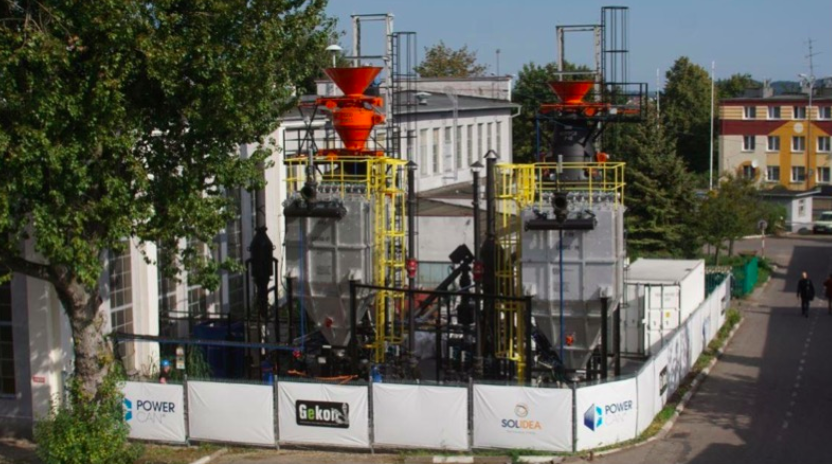
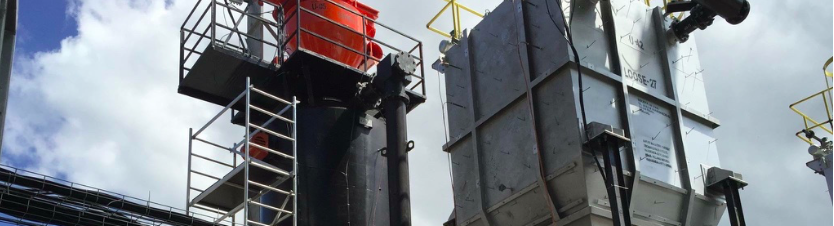
Syngas Project previously built, installed, commissioned and operated two full-size ANKUR gasifiers at RUMIA, Poland.
RUMIA Experience
| Activity | Syngas Project Position |
| Full-size ANKUR gasifiers | 2 |
| Construction | Direct experience |
| Mechanical installation | Direct experience |
| Electrical installation | Direct experience |
| Commissioning | Direct experience |
| Firing | Direct experience |
| Producer-gas operation | Direct experience |
| Gas measurement | Direct experience |
| Maintenance | Direct experience |
| Polish operating conditions | Direct experience |
| Packing / stuffing documentation | Retained |
| Installation documentation | Retained |
| Photographic evidence | Retained |
RUMIA provides direct construction and operating experience behind the present TITAN design.
Producer-gas measurements obtained during this work also provide a practical comparison with the representative European forest-residue gas data used for TITAN.
4. Modular Construction and Rapid Installation
The PG2200 is designed for manufacture, packing, transportation, rapid assembly and replication.
Syngas Project retains the ANKUR packing, stuffing and erection arrangements used during its previous gasifier programme.
Installation
| Installation Item | Practical Position |
| Transport | Modular packed equipment |
| Unpacking | Defined sequence |
| Mechanical assembly | Repeatable |
| Foundation | Prepared holding-down bolts |
| Positioning | Conventional lifting and positioning |
| Mechanical installation | Less than one week per gasifier with an experienced team |
| Electrical installation | Principal local-team programme variable |
| Instrumentation | Standard installation and commissioning |
| Replication | Repeated installation sequence |
ANKUR’s own test facilities demonstrate this modularity particularly clearly.
A gasifier selected for testing can be taken from storage, positioned on the test bed, assembled, connected and brought into operation rapidly.
Factory Sequence
Select gasifier → move from storage → position on test stand → assemble → connect mechanical services → complete electrical and instrumentation connections → load feedstock → fire gasifier → establish producer-gas operation
In practical demonstrations experienced by the project team, a gasifier selected the previous day could be installed on the test bed and fired the following morning.
The installation window is therefore influenced principally by the organisation and experience of the local installation team — particularly electrical and controls personnel — rather than by the mechanical complexity of the gasifier.
5. Operating Envelope, Headroom and Gasifier Rotation
TITAN operates its PG2200 gasifiers within their optimum operational envelope.
The principle is similar to driving a car.
A car is designed with considerably more power and speed than is required for normal driving. You drive at the optimum speed for the road, the conditions and the local speed limit, while retaining additional power when you need it.
TITAN operates its gasifiers on the same principle.
The design envelope establishes the installed capability of the gasification system.
The operational envelope is where the gasifiers provide the best combination of stable HPG production, gas quality, efficiency and equipment performance.
The difference provides the additional power — the “oomph” — when TITAN needs it.
Operating Envelope
| Parameter | TITAN Basis |
| PG2200 gasifiers per island | 6 |
| Arrangement | 3 pairs |
| Preferred biomass-energy input | ~70 MW |
| Peak design envelope | ~100 MW |
| Conditioned HPG design output | 51.5 MW |
| Conditioned HPG flow | 20,000 Nm³/h |
| Normal philosophy | Optimum performance |
| Available headroom | Additional HPG capability |
The reserve is therefore not created by permanently leaving a gasifier idle.
During normal operation the gasification system operates comfortably within its available capability.
When an individual PG2200 is taken offline, the remaining five can increase their contribution within the available operating envelope and pick up the required HPG duty.
Gasifier Rotation
6 gasifiers operating within the optimum envelope
↓
1 PG2200 selected for rotation
↓
5 PG2200 increase duty within available headroom
↓
Required common HPG production maintained
↓
Offline gasifier cleaned and inspected
↓
Gasifier recharged
↓
Gasifier prepared for the next operating rotation
This is an important part of TITAN’s operating philosophy.
There is no permanently designated standby gasifier.
Instead, the modular paired arrangement allows individual units to move through an operating, cleaning and maintenance cycle while the island continues manufacturing HPG.
The distinction is simple:
Design envelope = the power available.
Operational envelope = where we normally achieve the best performance.
Operating headroom = the additional power available when the process requires it.
6. Biomass Consumption
TITAN budgets approximately 420 tonnes/day of prepared forest residues.
Biomass Operating Basis
| Parameter | TITAN Basis |
| Nominal biomass requirement | ~420 t/day |
| Average equivalent feed | ~17.5 t/h |
| Preferred energy input | ~70 MW |
| Peak design envelope | ~100 MW |
| Feed control | HPG requirement + reactor condition |
Individual PG2200 feed is not treated as a fixed tonnes-per-hour number.
Feed varies according to reactor-bed condition, biomass characteristics, operating configuration and required HPG production.
The control philosophy is straightforward:
adjust the input to maintain the required gas output.
The substantial difference between preferred operation and the peak design envelope also allows TITAN to accommodate changes in the usable energy contained within the biomass.
7. Forest-Residue Specification
The PG2200 uses prepared, relatively coarse woody biomass rather than finely pulverised material.
ANKUR PG2200 Feed Basis
| Parameter | Basis |
| Net calorific value | >3,600 kcal/kg at 20% moisture |
| Moisture | <20% wet basis |
| Bulk density | >250 kg/m³ |
| Ash | <5% dry basis |
| Ash deformation temperature | ≥1,200°C |
| Volatile matter | ≥75% dry basis |
| Fixed carbon | ≥18% dry basis |
| Width | 25–100 mm |
| Length | 100–125 mm |
| Thickness | >25 mm |
| Material below 25 mm | Screened |
The relatively coarse specification is important.
The PG2200 does not require finely milled biomass.
This reduces unnecessary dust and fines, while screening removes undersize material before it enters the principal gasifier feed.
8. Biomass Preparation and Natural Variation
Preparation Sequence
| Stage | Function |
| Gather | Recover forest residues |
| Chip | Establish required dimensions |
| Screen | Remove undersize fines and foreign material |
| Dry | Control moisture where required |
| Store | Balance continuous plant demand |
| Feed | Supply individual PG2200 units |
| Gasify | Manufacture HPG |
Forest residue is a natural material.
Moisture, density and calorific value vary between batches.
This is normal.
TITAN Response to Feedstock Variation
| Feedstock Variation | TITAN Response |
| Moisture | Dry / adjust feed |
| Calorific value | Adjust feed |
| Density | Adjust charging |
| Particle distribution | Screen |
| Ash | Maintain specification |
| Seasonal variation | Adjust operating conditions |
| Lower usable energy | Increase feed within available envelope |
| Higher usable energy | Reduce feed |
| Required HPG | Maintain downstream requirement |
The wide gasification operating envelope is one of the mechanisms through which TITAN accommodates this normal variation.
9. Char, Ash and Biochar
Gasification converts the majority of useful biomass energy into HPG while retaining a solid carbon and mineral fraction.
TITAN recovers this material through the dry char and ash handling system.
| Parameter | TITAN / ANKUR Basis |
| Feedstock ash | <5% dry basis |
| Ash deformation temperature | ≥1,200°C |
| Solid discharge | Dry char / ash fraction |
| Removal system | Water-cooled screw conveyor |
| Carbon-rich fraction | Char / biochar |
| TITAN biochar design basis | ~30 t/day per cluster |
| Handling | Collected and cooled |
| Final specification | Confirmed through operating analysis and product qualification |
The raw gasifier discharge and final qualified biochar product are not automatically treated as identical.
The recovered carbon-rich fraction is characterised and processed as required against its final product specification.
10. Carbon Pathways
Carbon entering TITAN is deliberately distributed between gaseous, liquid and solid products.
| Carbon Pathway | TITAN Output |
| CO in HPG | Microbial conversion feed |
| CO₂ in HPG | Conversion / recovery |
| Acetogenic conversion | 2G ethanol |
| Methanogenic conversion | Renewable methane |
| Solid carbon | Biochar / char |
| Recovered CO₂ | Separate product stream subject to final configuration |
Gasification is therefore the first carbon-conversion stage, not the final product stage.
The principal purpose of the HPG system is to transform solid renewable carbon into a controlled gaseous molecular feedstock that can be directed to the downstream conversion platform.
11. Inside the PG2200
| Process Zone | Function |
| Drying | Remaining moisture removed |
| Pyrolysis | Volatile material released |
| Oxidation | Process temperature generated |
| Reduction / gasification | Carbon converted into gaseous molecules |
| Char / ash removal | Solid fraction recovered |
| Gas outlet | Hot producer gas transferred to cleaning |
Temperatures within the active high-temperature gasification environment can exceed 1,000°C.
The gas subsequently cools progressively through the downstream treatment train.
Reactor temperature, hot-gas temperature, filtration temperature and conditioned-gas temperature are therefore separate operating conditions.
12. ANKUR Ultra Clean Gas Mode
TITAN uses the ANKUR Ultra Clean Gas configuration before the HPG reaches microbial conversion.
| Stage | Equipment / Process | Function |
| 1 | PG2200 | Gasification |
| 2 | High-temperature filtration | Hot solids removal |
| 3 | Cooling | Gas-temperature reduction |
| 4 | Condensate removal | Liquid separation |
| 5 | Mist eliminator | Droplet / aerosol removal |
| 6 | Fine filter | Fine particulate removal |
| 7 | Pleated filter | Further polishing |
| 8 | Parallel filtration | Final polishing / flexibility |
| 9 | Dry blower | Gas movement |
| 10 | Header box | Conditioned HPG delivery |
Mist, condensate and particulate removal are routine elements of gas conditioning rather than exceptional operating events.
The objective is a stable conditioned HPG stream suitable for the downstream biological conversion systems.
13. Representative European Forest-Residue HPG
The current TITAN gas composition is based on controlled ANKUR gasification testing of representative European forest residues.
The resulting gas envelope is aligned with Syngas Project’s producer-gas measurements from its full-size ANKUR gasifiers at RUMIA.
It therefore represents the best available representative dataset for the present pre-FID project stage.
Representative Conditioned HPG
| Component | Representative Conditioned HPG |
| Hydrogen — H₂ | ~21 vol.% |
| Carbon monoxide — CO | ~34 vol.% |
| Carbon dioxide — CO₂ | ~12 vol.% |
| Nitrogen — N₂ | ~24 vol.% |
| Methane — CH₄ | <4 vol.% |
| Oxygen — O₂ | <1 vol.% |
| H₂O + inert gases | <4 vol.% |
| H₂ + CO | <55 vol.% |
| Aromatics | 300–340 ppm |
| Tar | <10 mg/Nm³ |
| Fine particles 1–5 μm | <5 mg/Nm³ |
The representative composition is applied to the TITAN design flow of:
20,000 Nm³/h per island
14. Representative Gas Envelope
Forest biomass is a natural feedstock.
Precise gas composition changes with feedstock, moisture, season and operating conditions.
TITAN therefore designs around an HPG operating envelope, not the assumption that every hour will reproduce one laboratory analysis exactly.
| Project Stage | Gas Basis |
| Current pre-FID | Representative European forest-residue ANKUR dataset |
| Operating comparison | RUMIA measurements |
| Detailed engineering | Multiple representative Polish samples |
| Commissioning | Installed TITAN PG2200 measurements |
| Operation | Continuous process measurement and control |
This deliberately moves the project from representative design data toward site-specific measured operating data as TITAN progresses through engineering, commissioning and operation.
15. HPG Energy Cross-Check
| Parameter | Value |
| Conditioned HPG | 51.5 MW |
| HPG flow | 20,000 Nm³/h |
| Implied TITAN energy density | ~9.27 MJ/Nm³ |
| Representative European gas | ~9.13 MJ/Nm³ |
| Difference | ~1.5% |
The representative gas dataset and the current TITAN HPG energy basis are therefore closely aligned.
16. Header Box — The Engineering Boundary
The header box establishes the engineering boundary between HPG manufacture and downstream biological conversion.
ANKUR HPG Production
Prepared forest residue
↓
6 × PG2200 — 3 paired lines
↓
Hot filtration
↓
Cooling
↓
Condensate removal
↓
Mist elimination
↓
Fine polishing
↓
HEADER BOX
20,000 Nm³/h
51.5 MW HPG
Conditioned Hydrogen Producer Gas
↓
Biological Conversion
Acetogenic conversion
and/or
Methanogenic conversion
↓
WGS where required
↓
Fermentation
↓
Product recovery
↓
Thermal integration
The interface is deliberately clear:
ANKUR produces and conditions the HPG. The downstream systems convert the conditioned molecules into products.
17. HPG to Products
At the standard 50:50 operating position:
| Parameter | Acetogenic | Methanogenic |
| HPG allocation | ~25.75 MW | ~25.75 MW |
| Principal product | 2G ethanol | Renewable methane |
| Product energy basis | ~19 MW | ~25 MW |
| Process heat at design duty | ~4 MWth project basis | ~4 MWth project basis |
The 50:50 position is an operating basis, not an inherent restriction.
TITAN can adjust the allocation of conditioned HPG according to product requirements and market demand.
This is fundamental to the platform:
the common intermediate product is HPG; the downstream allocation determines which final products TITAN manufactures.
18. Electrical and Thermal Balance
TITAN’s electrical philosophy is based on minimising parasitic consumption and maximising energy recovery.
The objective is specifically to avoid consuming saleable renewable methane simply to operate the plant.
Identified Electrical Demand
| Electrical Consumer | Current Basis |
| Electrochaea process equipment | ~0.850 MWe |
| ANKUR pumps, conveyors and auxiliaries | ~0.950 MWe |
| LRNG-related electrical equivalent | ~1.500 MWe |
| Identified operating demand | ~3.300 MWe |
Recovered and Renewable Electrical Supply
| Electrical Source | Current Basis |
| Header-gas turbine | ~2.0 MWe |
| ORC / heat cascade | ~2.0 MWe |
| Base recovered generation | ~4.0 MWe |
| Rooftop solar | Additional renewable contribution |
| BESS | Storage / peak management |
| Gas engines | Reserve balancing capability |
| Additional renewable reserve | To be maximised where practical |
On the current basis:
4.0 MWe recovered generation − 3.3 MWe identified demand = ~0.7 MWe base operating window before rooftop solar.
This is an operating margin, not an assumed permanent export.
19. Resist the Use of Own Gas
The electrical hierarchy is deliberately structured to preserve TITAN’s renewable methane as a saleable product.
| Priority | TITAN Electrical Strategy |
| 1 | Reduce electrical consumption |
| 2 | Recover electricity from available gas-energy streams |
| 3 | Maximise recovery from the heat cascade / ORC |
| 4 | Use rooftop solar whenever available |
| 5 | Use BESS for peak shaving, starts and transient balancing |
| 6 | Secure additional renewable reserve power where practical |
| 7 | Use gas engines only when required for balancing or resilience |
TITAN is therefore designed as an actively managed electrical island.
Gas-engine generation remains available without requiring interruption of HPG or fermentation production, but it is not intended to become the normal source of plant electricity.
The objective is to preserve the highest practical proportion of renewable methane for LRNG production and sale, rather than consume it internally for routine power generation.
20. BESS and Renewable Reserve
BESS and rooftop solar are integral operating components of the TITAN energy system.
| Function | Contribution |
| Rooftop PV | Renewable daytime generation |
| BESS | Peak shaving |
| BESS | Motor / equipment starting support |
| BESS | Short-duration generation-demand mismatch |
| BESS | Load levelling |
| BESS | Renewable-energy capture |
| BESS | Electrical-island stability |
| Renewable reserve | Reduces requirement for gas-engine operation |
| Gas engines | Final flexible reserve |
As TITAN moves through detailed engineering, every practical opportunity will be taken to reduce consumption, increase heat recovery, increase renewable generation and optimise storage.
21. Modular Operation and Maintenance
The six-PG2200 island architecture provides significant operational flexibility.
Operating Response
| Situation | TITAN Response |
| Normal operation | 6 PG2200 within optimum envelope |
| Individual gasifier cleaning | Take selected unit offline |
| Individual maintenance | Isolate selected unit |
| Remaining gasifiers | Increase contribution within available headroom |
| Offline gasifier | Clean / inspect |
| Recharge | Prepare for return to operation |
| Gasifier rotation | Repeat across units as required |
| Lower-energy biomass | Increase feed within available envelope |
| Higher-energy biomass | Reduce feed |
| Increased HPG demand | Increase gas manufacture within design envelope |
| Normal objective | Maintain required HPG at header box |
The modular architecture means maintenance does not automatically mean stopping HPG production.
When one gasifier is removed from service, the remaining five have available headroom to pick up the required duty.
The offline gasifier can then be cleaned, inspected and charged ready for the next operating rotation.
ANKUR’s historical TITAN engineering summarised the modular principle simply:
“You can run any line any Gasifier as per requirements.”
22. ANKUR Continuous Technical Presence
ANKUR’s involvement does not end at equipment delivery.
| ANKUR Support | TITAN Basis |
| Manufacture | ANKUR |
| Installation | ANKUR / TITAN |
| Commissioning | ANKUR |
| Initial operation | ANKUR technical presence |
| Extended guarantee | 5 years |
| Rollout | ANKUR presence maintained while rollout continues |
| Minimum support horizon | Extended guarantee period |
| Operator knowledge transfer | Continuous |
| Maintenance knowledge transfer | Continuous |
| Replication learning | Transferred to subsequent TITANs |
The objective is continuity through:
manufacture → installation → commissioning → operation → maintenance → replication.
As TITAN expands from one cluster to two and ultimately three clusters, the operating knowledge established on the first twelve PG2200 units is therefore transferred directly into subsequent phases.
23. Sector 3 — PG350 Training Gasifier
In addition to the production PG2200 units, TITAN installs a dedicated ANKUR PG350 training gasifier in Sector 3.
PG350 Training Facility
| Function | Position |
| Location | Sector 3 |
| Production role | None |
| Operator training | Yes |
| Start-up / shutdown | Yes |
| Feedstock training | Yes |
| Process adjustment | Yes |
| Inspection | Yes |
| Maintenance | Yes |
| Troubleshooting | Yes |
| Technician development | Yes |
| Rollout-team training | Yes |
The PG350 allows practical training without using a commercial PG2200 production unit as the classroom.
Together with ANKUR’s continuous technical presence, Sector 3 becomes TITAN’s permanent HPG operating, maintenance and training capability.
24. HPG Open Kimono — Final Position
| Question | TITAN Position |
| Production gasifier | ANKUR PG2200 |
| Gasifiers per island | 6 |
| Arrangement per island | 3 pairs × 2 PG2200 |
| Islands per cluster | 2 |
| PG2200 per cluster | 12 |
| Cluster per phase | 1 |
| Maximum clusters | 3 |
| Maximum islands | 6 |
| Maximum PG2200 | 36 |
| Training gasifier | 1 × PG350 — Sector 3 |
| Previous Syngas Project ANKUR builds | 2 full-size gasifiers |
| Previous operation | RUMIA, Poland |
| Nominal biomass | ~420 t/day |
| Preferred biomass-energy input | ~70 MW |
| Peak design envelope | ~100 MW |
| Conditioned HPG | 51.5 MW |
| HPG flow | 20,000 Nm³/h |
| Biochar | ~30 t/day per cluster design basis |
| Gas treatment | ANKUR Ultra Clean Gas Mode |
| Representative CH₄ | <4 vol.% |
| Representative tar | <10 mg/Nm³ |
| Fine particulate | <5 mg/Nm³ |
| Identified electrical demand | ~3.3 MWe |
| Base recovered electricity | ~4.0 MWe |
| Base electrical operating window | ~0.7 MWe before solar |
| Solar | Additional renewable generation |
| BESS | Integral balancing and resilience |
| Gas engines | Reserve, not preferred normal generation |
| OEM presence | Rollout / minimum five-year extended guarantee |
| Operating reserve | Available within gasification envelope |
| Maintenance philosophy | Rotating individual gasifiers |
| Additional gas capacity | Built into installed design envelope |
HPG Design Position
TITAN uses a modular gasification architecture based on six ANKUR PG2200 gasifiers per island, arranged as three pairs.
Two islands form one cluster, giving twelve PG2200 gasifiers per cluster.
Each TITAN phase adds one complete cluster. At maximum build-out, TITAN comprises three clusters, six islands and thirty-six PG2200 gasifiers.
The production system is deliberately operated within its optimum operational envelope rather than continuously at maximum capability.
Approximately 70 MW of preferred biomass-energy input supports the design basis of 51.5 MW / 20,000 Nm³/h of conditioned HPG, against a peak design envelope of approximately 100 MW.
That difference is intentional.
Like a car that is normally driven at the optimum speed for the road while retaining additional power when required, TITAN operates its gasifiers where they perform best while retaining substantial additional capability.
That headroom has an important operational purpose.
An individual PG2200 can be taken offline for cleaning, inspection and maintenance. The remaining five gasifiers can increase their contribution within the available operating envelope to maintain the required common HPG duty.
The offline gasifier is then cleaned, inspected, recharged and prepared for the next operating rotation.
There is therefore no permanently designated standby gasifier.
The reserve is built into the operating capability of the gasification system itself.
TITAN simultaneously seeks to minimise its own consumption of the products it manufactures.
Current identified electrical demand is approximately 3.3 MWe, against approximately 4.0 MWe of base recovered generation from the header-gas turbine and ORC heat cascade, before rooftop solar.
BESS, rooftop PV and additional renewable reserve power are integral to this strategy.
Gas engines remain available as flexible reserve generation, but the objective is explicitly to resist consuming saleable renewable methane for routine plant electricity.
The TITAN HPG operating principle is therefore:
Prepare the forest residue → operate all PG2200 gasifiers within their optimum envelope → manufacture conditioned HPG → rotate individual gasifiers for cleaning and maintenance → use installed headroom to maintain production → recover char/biochar → recover available energy → minimise internal electrical consumption → preserve renewable gas for sale → increase HPG manufacture when required.