That is not abundance.
That is failure with better software.
The real promise of AI is different. AI gives us the chance to revisit the abundance we already created and wasted. It can help us understand where carbon moved, where value was lost, where materials accumulated, and how circular workflows can recover what previous systems abandoned.
AI Digital can reveal the pattern.
AI Carbon can build the systems that change it.
The Linear Model Is Unsustainable
“The EU’s transition to a circular economy is crucial for reducing pressure on natural resources, halting biodiversity loss, achieving climate neutrality by 2050, and building a more resilient and competitive Europe.”
— European Commission
The old model was simple because extraction was easier than recovery.
If more carbon was needed, we dug, drilled or imported more. If more minerals were needed, new supply chains were opened. If waste accumulated, we buried it, burned it, diluted it or moved it somewhere else.
That model worked only because it ignored the full cost.
It ignored carbon in the air.
It ignored ash in the land.
It ignored tailings beside mines.
It ignored industrial gases burned once for low value.
It ignored the future cost of cleaning up the past.
The post-pollution society begins when we stop pretending that misplaced material has disappeared. It has not disappeared. It has changed location, changed form, changed ownership, or changed risk.
Pollution is often misplaced material.
Misplaced carbon.
Misplaced minerals.
Misplaced chemistry.
Misplaced value.
Once we understand what has been misplaced, why it was misplaced, and how it can be reused, we can begin to draw the circle.
Nature Was Circular Before Industry Was Linear
“Nature is circular. Our economies should be too.”
— United Nations Environment Programme
Nature does not run a landfill economy.
In nature, carbon moves. Biology transforms. Material circulates. Waste from one process becomes feedstock for another. Nothing valuable is casually abandoned forever.
The post-pollution society is not against nature.
It works with nature.
This is why fermentation matters.
Fermentation is one of nature’s great tools for transformation. Microbes have always known how to convert one form of carbon, chemistry or material into another. Industry is only now beginning to understand how powerful this becomes when biology is given industrial infrastructure.
Fermentation uses nature’s little helpers to recover, transform and reuse misplaced carbon.
It does not fight nature.
It borrows nature’s method.
The objective is not to retreat from industry. The objective is to build industrial systems that work with nature instead of against it.
The Motivation Keeps Changing
The motivation to change is never constant.
Sometimes the driver is environmental concern.
Sometimes it is economic downturn.
Sometimes it is war, energy insecurity, supply-chain failure, inflation, critical mineral dependence or fear of strategic weakness.
The pressure changes, but the lesson is the same.
A linear economy is fragile because it depends on endless extraction and endless disposal. A circular economy is more resilient because it keeps value in motion.
The environmental transition became a security transition.
Now the security transition is becoming an economic transition.
Countries are beginning to understand that it can be cheaper and safer to recover what is already available at home than to import new material, use it once and misplace it again.
Eventually the cycle returns to environment.
After floods, contamination events, ecological shocks and industrial disasters, society remembers why pollution mattered in the first place.
The cycle repeats.
Environment.
Security.
Economy.
Then environment again.
The post-pollution society works because it serves all four pressures at once.
It reduces harm.
It strengthens security.
It improves economics.
And it respects the environment by design.
Carbon Is Too Valuable to Use Once
“Waste is a design flaw.”
— UNIDO / Global Alliance on Circular Economy and Resource Efficiency
The twentieth century was built on carbon because carbon is extraordinarily useful.
Oil and gas became fuels, plastics, solvents, coatings, fibres, fertilisers, chemicals and thousands of industrial products. Carbon was the backbone of modern industrial abundance.
The mistake was not using carbon.
The mistake was using it once and losing it.
The post-pollution society does not reject carbon. It learns how to keep carbon in the loop.
Industrial gases can become fuels and chemical intermediates. Carbon dioxide can become a product stream. Waste carbon can become renewable methane. Biological systems can recover metals from residues and tailings. Fermentation systems can produce future fuels, chemicals, proteins and materials.
The important point is not any single product.
The important point is that civilisation is learning how to preserve value repeatedly instead of discarding it after one cycle.
That is the circular age.
Fermentation Is the Route We Choose
“Industrial biotechnology can support the transition to a sustainable and circular bioeconomy.”
— European Commission
Fermentation is no longer just brewing, food or pharmaceuticals.
It is becoming industrial infrastructure.
Microbial systems can transform carbon-rich gases into fuels. They can support biological recovery of metals. They can produce chemicals, proteins, materials and future biological products. They can operate as industrial biological workers inside circular systems.
This is why Syngas Project views fermentation differently.
Fermentation is the route by which carbon remains in circulation.
It is nature’s method, engineered for industrial scale.
The mission is straightforward: keep carbon in the loop.
TITAN addresses forest and biomass carbon. ASMARA addresses municipal and community carbon. IGNIS addresses agricultural carbon. AQUIS addresses waterborne and sludge carbon. CUMULUS addresses industrial gaseous carbon. STRATA addresses legacy industrial minerals, slag, tailings and contaminated deposits.
These are not separate slogans. They are categories of misplaced carbon and material. Each begins with the same question: what has been misplaced, and what workflow can recover it?
That is how the post-pollution society becomes practical.
AI Digital Must Meet AI Carbon
AI Digital can help us understand the flows.
It can analyse carbon streams, optimise microbes, compare process conditions, accelerate discovery and model recovery systems. It can help us see what previous generations could not see.
But AI Digital alone cannot recover value from the physical world.
Algorithms do not clean slag heaps. Models do not recover carbon. Data does not ferment gas.
That requires AI Carbon.
AI Carbon is the physical layer where intelligence meets real material flows: reactors, gas systems, fermentation trains, microbial pathways, process engineering, industrial biology, logistics, storage and circular infrastructure.
AI Digital teaches us where the value is.
AI Carbon builds the systems that recover it.
Together they give us a way to revisit the abundance we wasted and put it back into use.
TITAN and the Full Stack Future
This is why TITAN matters beyond fuel production.
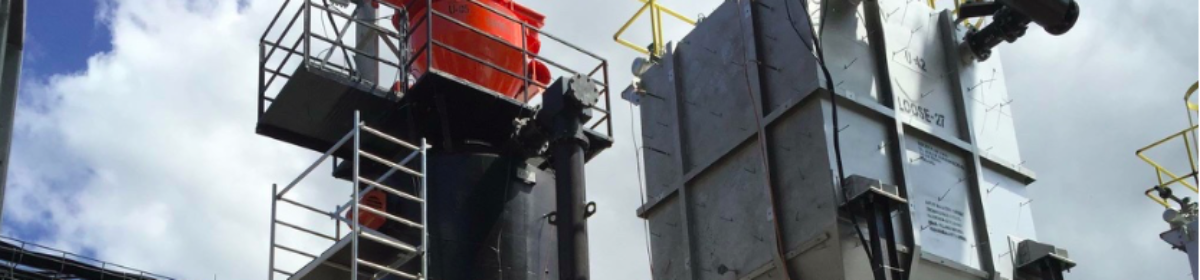
TITAN is globally unusual because it is designed as a Full Stack fermentation platform.
Phase 1 combines acetogenic and methanogenic systems. Phase 2 completes the stack by adding aerobic capability.
That changes the industrial possibilities.
Acetogenic fermentation can route carbon-rich gases toward ethanol and chemical pathways. Methanogenic fermentation can route carbon toward renewable methane. Aerobic fermentation opens another layer: biological manufacturing, future materials, proteins, and potentially next-generation microbial agents for recovery and remediation.
This is where TITAN connects to STRATA.
TITAN is not STRATA.
But TITAN may provide the industrial biological manufacturing capability needed for STRATA to scale.
The microbes required for future recovery systems need cultivation, propagation, oxygen management, process control and deployment infrastructure. They do not move from university laboratories to national recovery platforms by magic.
They need a manufacturing base.
TITAN Phase 2 can become that base.
Nature provides the tools.
AI Digital improves the understanding.
AI Carbon builds the infrastructure.
Fermentation makes the route practical.
Drawing the Circle
The post-pollution society is not a fantasy about a world without industry.
It is a practical plan for a world where industry works with nature rather than against it.
We extracted abundance.
We used abundance.
We misplaced abundance.
Now we must recover abundance.
That is the circle.
The old economy treated pollution as the end of the story. The circular age treats pollution as the point where intelligence must begin.
Understand carbon.
Understand how it moves.
Understand how it becomes misplaced.
Then build the workflows that recover it and keep it in service.
This is not anti-industrial.
It is the next stage of industry.
A better industry.
A wiser industry.
An industry that uses nature’s tools, AI’s intelligence and circular infrastructure to recover value again and again.
If we do that well, security improves, economics improve, and the environment begins to recover by design.
Cited institutional support: Ellen MacArthur Foundation, European Commission, UNEP, UNIDO/GACERE.