Warsaw 31:12:2025 8.32 AM Steve Walker
Scrap Is Turning to Biology
For more than one hundred years, the scrap industry has mastered the art of recovery.
It has learned how to identify, collect, separate, grade, move, store, process and trade complex materials. It has built supply chains from industrial sites, demolition yards, workshops, cities, households and ports. It has handled metals, plastics, electronics, machinery, vehicles, cables, buildings and the hidden material value inside modern life.
Scrap has never been a simple waste business. It is a recovery business.
Now the next recovery tool is arriving.
Biology.
The scrap industry already understands complexity. It understands that value is rarely found in clean, perfect streams. Value is found in mixed streams, difficult streams, contaminated streams, low-margin streams and stranded streams. The skill of the industry is not simply buying and selling material. The skill is recognising value where others see cost, risk or inconvenience.
That is why biology now matters.
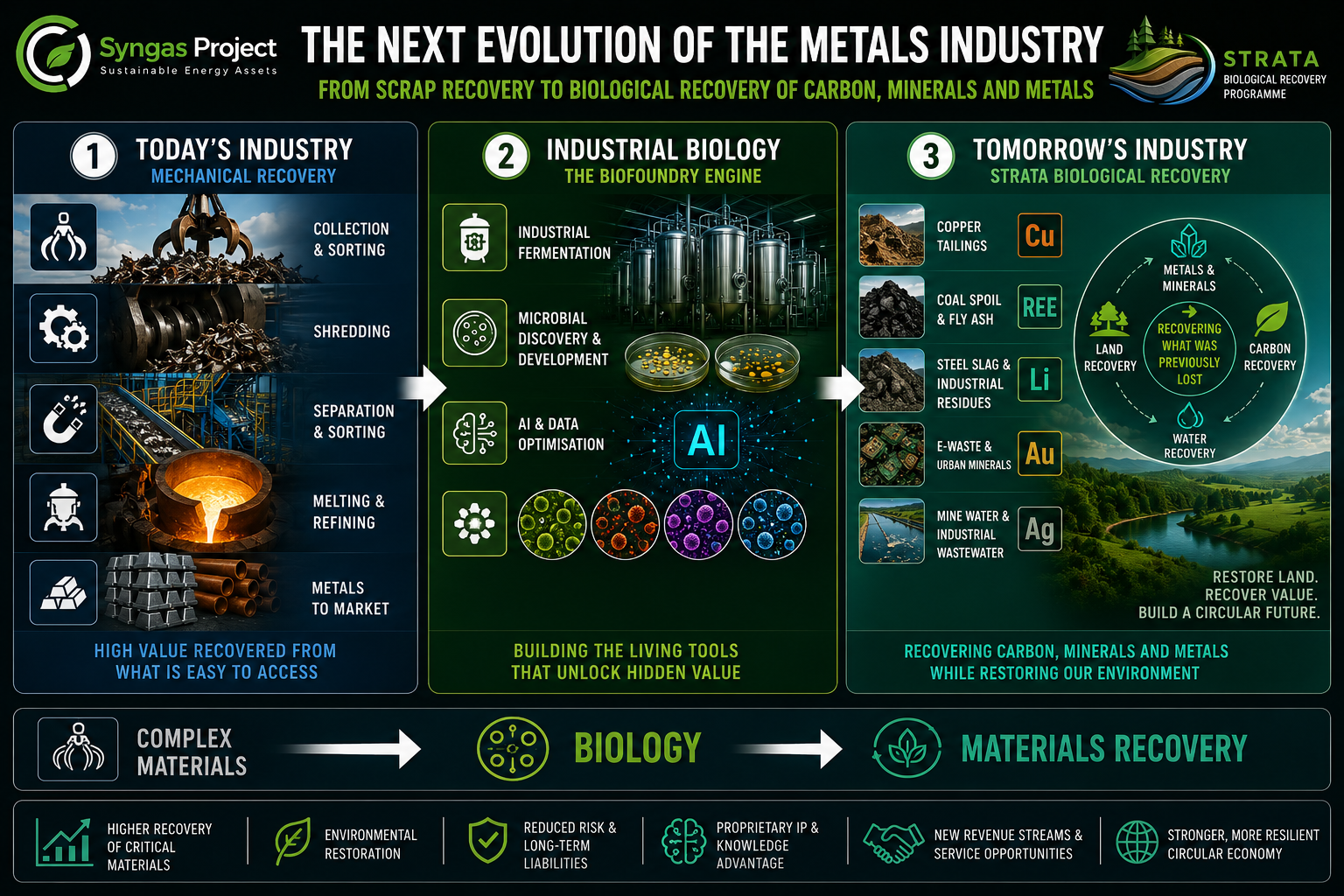
The next generation of recovery is not only mechanical. It is not only sorting, shredding, melting and refining. It is also biological extraction, microbial mobilisation, targeted recovery and material upgrading. Biology gives the recovery industry a new set of workers: microbes that can help separate, bind, dissolve, concentrate and recover valuable materials from complex streams.
This is not science fiction. It is the next practical layer in a sector that has always evolved.