Why the Recycling and Resource Recovery Industry Turned to Biology

Scrap Is Turning to Biology

For more than one hundred years, the scrap industry has mastered the art of recovery.

It has learned how to identify, collect, separate, grade, move, store, process and trade complex materials. It has built supply chains from industrial sites, demolition yards, workshops, cities, households and ports. It has handled metals, plastics, electronics, machinery, vehicles, cables, buildings and the hidden material value inside modern life.

Scrap has never been a simple waste business. It is a recovery business.

Now the next recovery tool is arriving.

Biology.

The scrap industry already understands complexity. It understands that value is rarely found in clean, perfect streams. Value is found in mixed streams, difficult streams, contaminated streams, low-margin streams and stranded streams. The skill of the industry is not simply buying and selling material. The skill is recognising value where others see cost, risk or inconvenience.

That is why biology now matters.

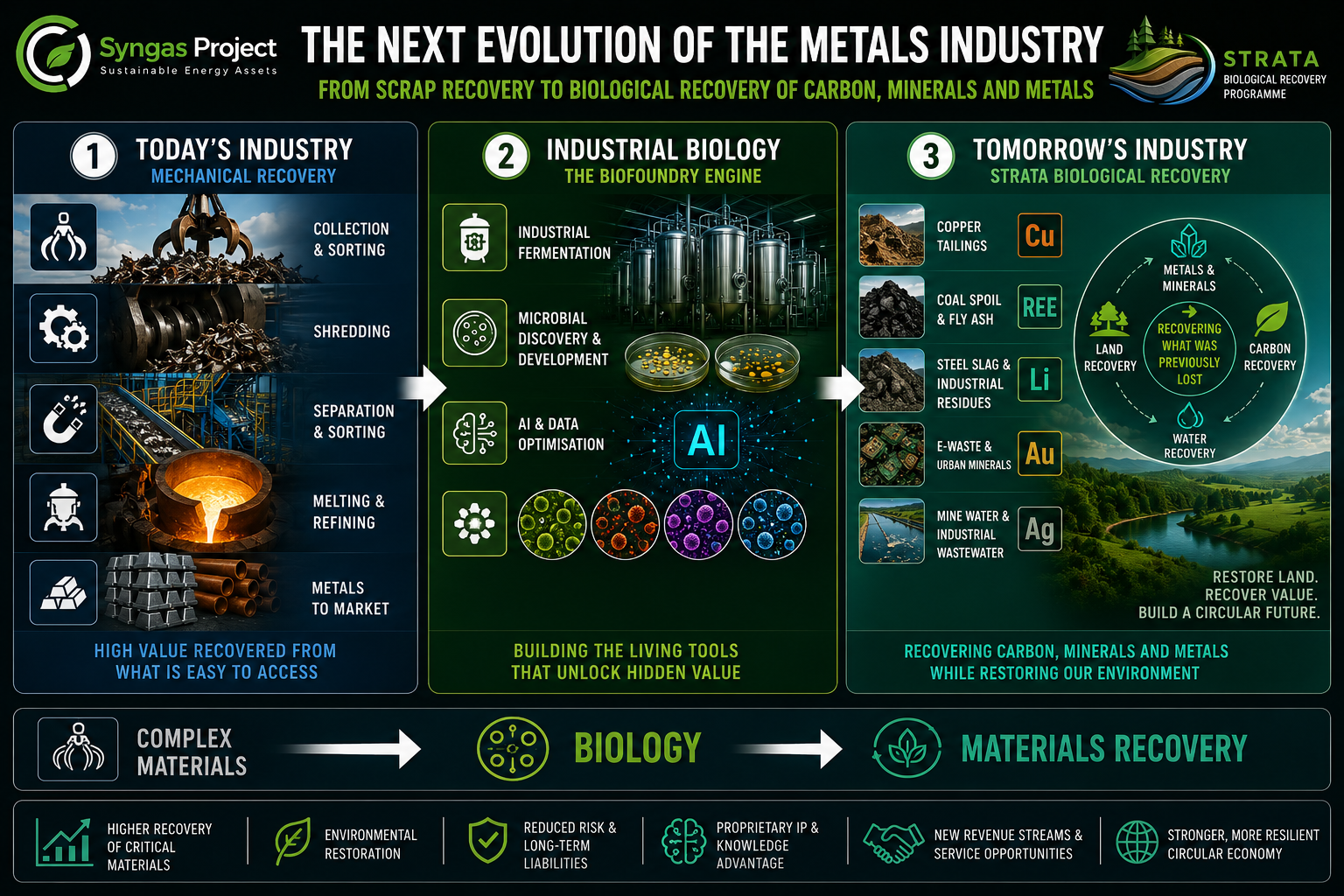
The next generation of recovery is not only mechanical. It is not only sorting, shredding, melting and refining. It is also biological extraction, microbial mobilisation, targeted recovery and material upgrading. Biology gives the recovery industry a new set of workers: microbes that can help separate, bind, dissolve, concentrate and recover valuable materials from complex streams.

This is not science fiction. It is the next practical layer in a sector that has always evolved.
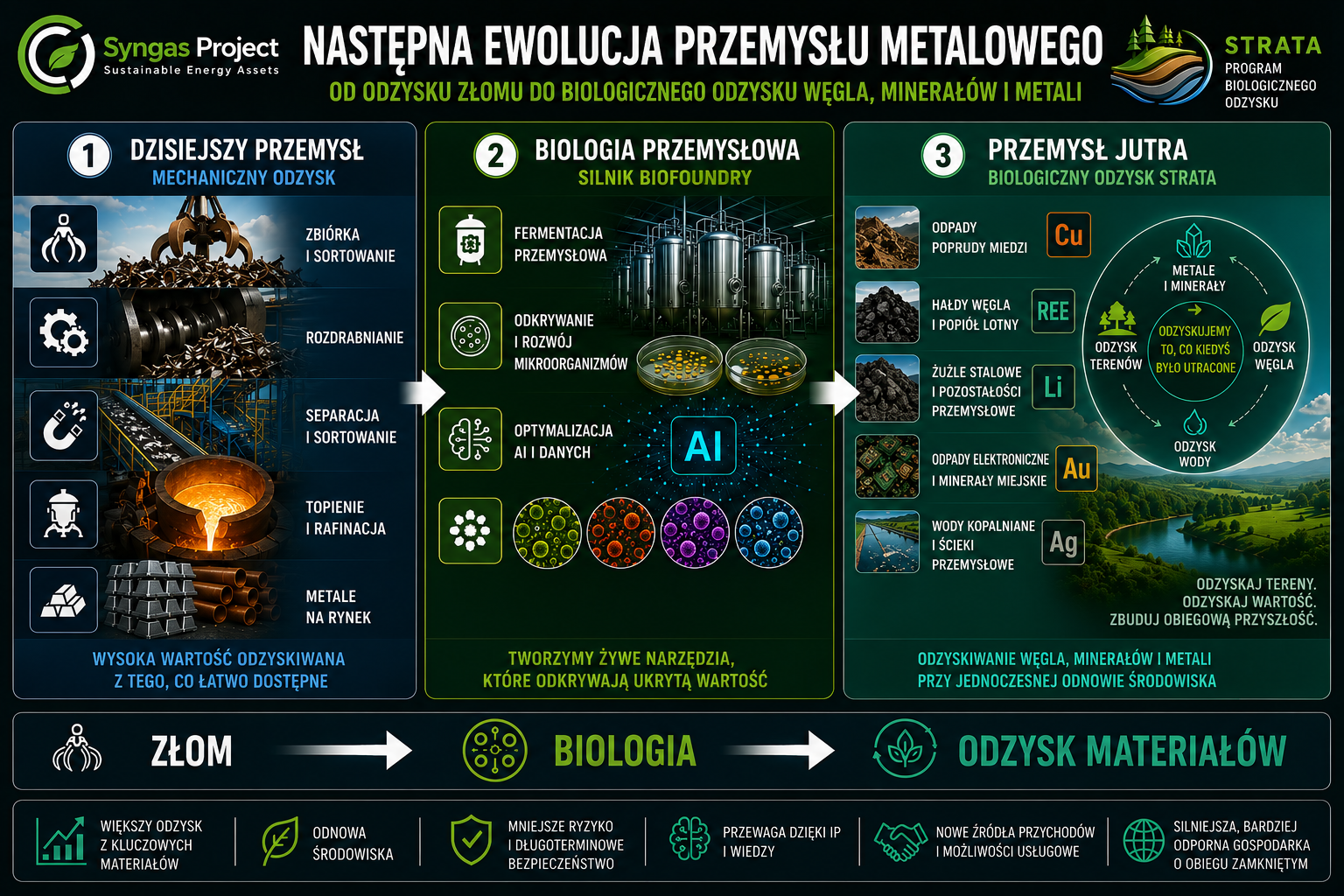
Dlaczego branża recyklingu i odzysku surowców zwróciła się ku biologii

Dlaczego branża recyklingu i odzysku surowców zwróciła się ku biologii

Od ponad stu lat branża recyklingu doskonali sztukę odzysku.

Nauczyła się rozpoznawać wartość, zbierać, sortować, klasyfikować, transportować, magazynować, przetwarzać i sprzedawać coraz bardziej złożone materiały. Zbudowała sieci dostaw obejmujące zakłady przemysłowe, place rozbiórkowe, warsztaty, miasta, gospodarstwa domowe i porty. Każdego dnia odzyskuje metale, tworzywa sztuczne, elektronikę, maszyny, pojazdy, przewody, elementy budowlane oraz ukrytą wartość materiałową współczesnego świata.

Branża złomowa nigdy nie była jedynie biznesem związanym z odpadami.

Od zawsze była branżą odzysku.

Dziś do jej zestawu narzędzi dołącza kolejna technologia.

Biologia.

Branża odzysku materiałów doskonale rozumie złożoność. Wie, że największa wartość rzadko znajduje się w czystych i jednorodnych strumieniach materiałów. Prawdziwa wartość ukryta jest w materiałach mieszanych, zanieczyszczonych, trudnych technologicznie, niskomarżowych lub takich, które przez lata uznawano za nieopłacalne.

Największą kompetencją tej branży nie jest handel materiałami.

Jej największą kompetencją jest dostrzeganie wartości tam, gdzie inni widzą koszt, ryzyko lub problem.

Dlatego właśnie biologia staje się tak ważna.

Nowa generacja odzysku nie opiera się już wyłącznie na technologiach mechanicznych. Nie kończy się na sortowaniu, rozdrabnianiu, topieniu czy rafinacji. Coraz częściej obejmuje biologiczne uwalnianie metali, mikrobiologiczny odzysk surowców oraz ukierunkowane procesy zwiększające wartość materiałów.

Biologia dostarcza branży odzysku zupełnie nową grupę pracowników.

Są nimi mikroorganizmy zdolne do wiązania, rozpuszczania, uwalniania, koncentrowania i odzyskiwania cennych metali oraz minerałów z materiałów, które dotychczas pozostawały poza zasięgiem tradycyjnych metod.

Nie jest to wizja przyszłości.

To kolejny praktyczny etap rozwoju branży, która od zawsze rozwijała się poprzez wdrażanie coraz lepszych narzędzi.

Central Europe’s Great Recovery

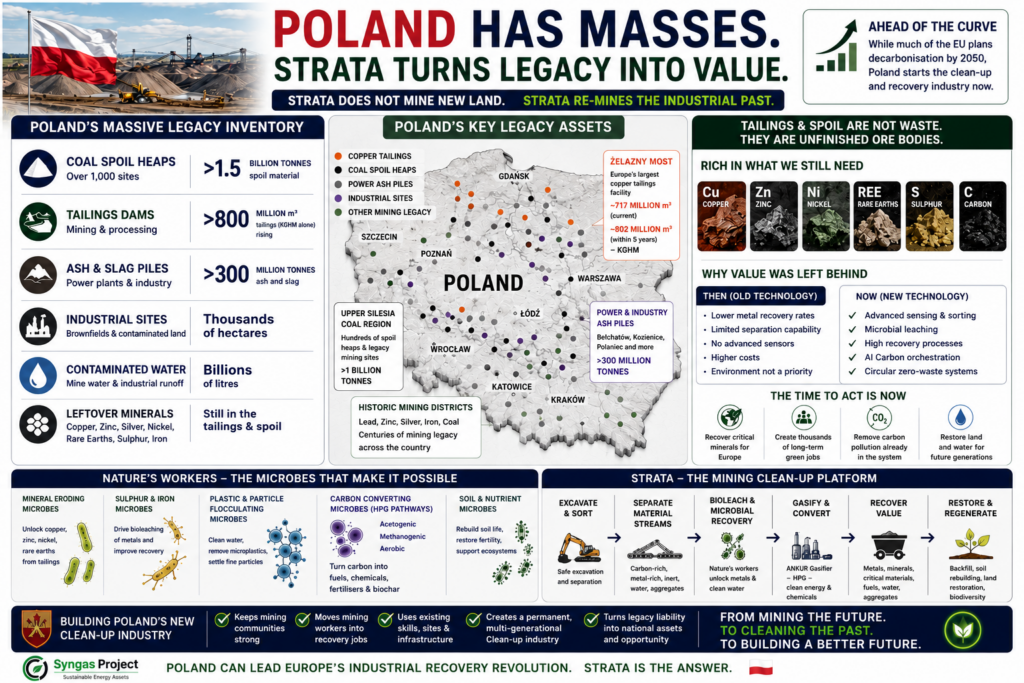
The Mining Boom Starts Above Ground

Across Central Europe, an extraordinary opportunity sits in plain sight.

It dominates skylines, fills valleys, surrounds former industrial towns and stretches across landscapes shaped by generations of mining and heavy industry. Tailings, spoil heaps, ash lagoons, slag mountains, industrial residues and contaminated land are often viewed as scars of the past. Too often they simply spoil the view.

Yet those same landscapes represent one of Europe’s largest untapped resource inventories.

The value has never disappeared.

It simply waits for better tools.

For decades, the economics of mining ended when the primary commodity had been extracted. Copper mines recovered copper. Coal mines recovered coal. Smelters produced metals while everything else became waste. What earlier generations discarded was not worthless—it was simply beyond the reach of the technology and economics of the day.

Today that equation changes.

Across Poland, Germany, Czechia, Belgium, France, Denmark, Sweden, the Netherlands, Luxembourg and the United Kingdom, an entirely new industrial sector is emerging. It does not begin with new mines or deeper shafts. It begins with recovering the wealth already sitting above ground.

The next mining boom starts where the last one ended.

From Scrap Dealers to Materials Recovery Companies

The companies best placed to lead this transformation are not necessarily traditional mining companies.

They are today’s materials recovery businesses.

What once began as local scrap merchants has evolved into one of Europe’s most sophisticated industrial sectors. Over decades these companies learned to sort, shred, classify, recover and refine increasingly complex material streams.

Mechanical recovery became an industry.

Digital sorting transformed productivity.

Chemical recovery unlocked new value.

Now biology joins the toolkit.

This is not a replacement for existing technologies.

It is the next industrial discipline.

Mechanical systems expose materials.

Chemical systems separate them.

Biological systems recover what both leave behind.

Together they create a far more powerful recovery platform than any single technology alone.

The recovery industry has already mastered logistics, industrial processing, commodity markets and recycling infrastructure. Adding biology is not a revolution in business—it is the natural evolution of a business that has always recovered value from complex materials.