The Syngas Project Family

Six platforms. One industrial logic.

Syngas Project is built around a simple idea: carbon is not waste. It is misplaced.

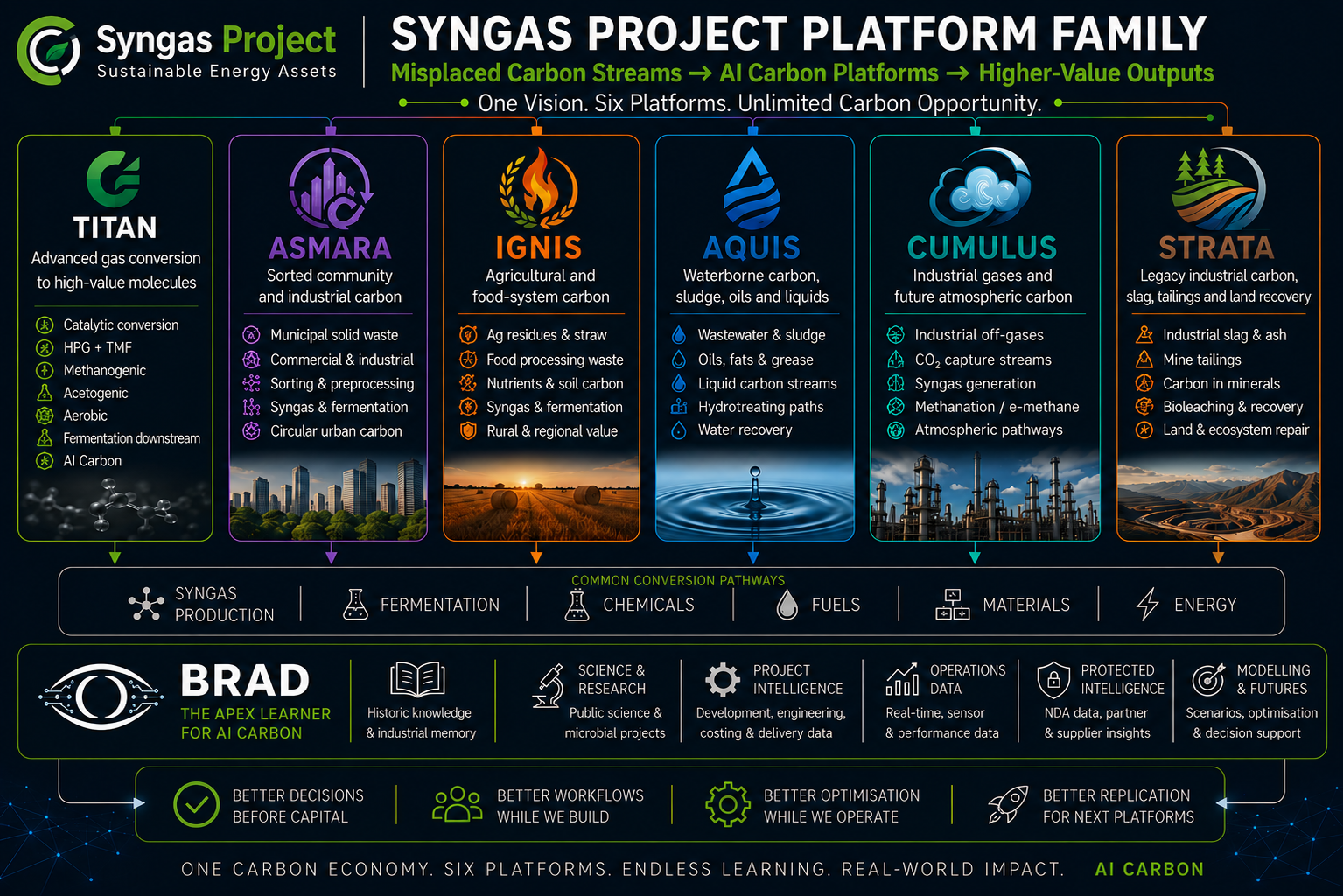
The Syngas Project Family turns different misplaced carbon streams into fuels, chemicals, materials, gases, nutrients and recovered minerals. Each platform focuses on a specific carbon source. Together, they form a practical deployment system for the circular economy.

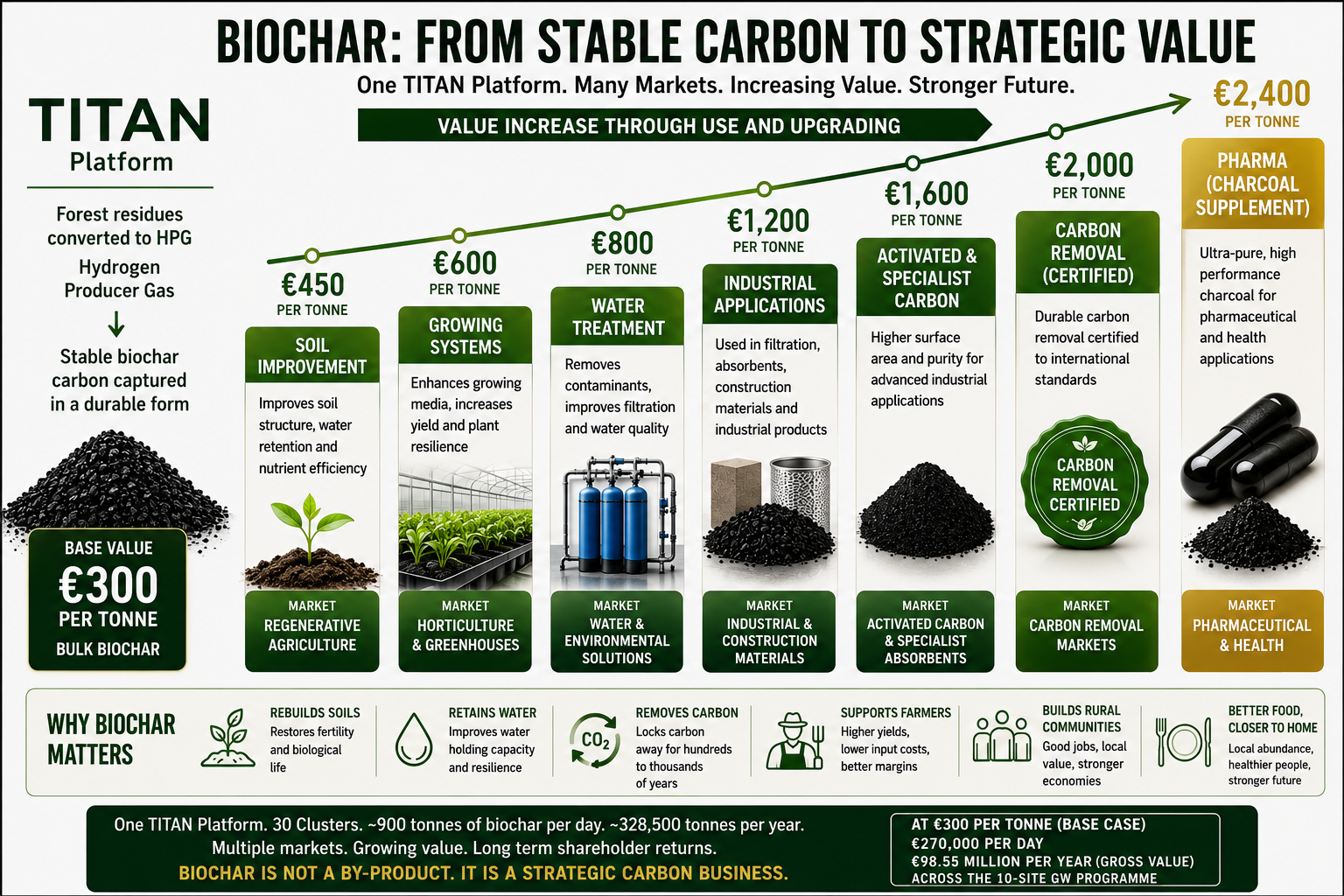
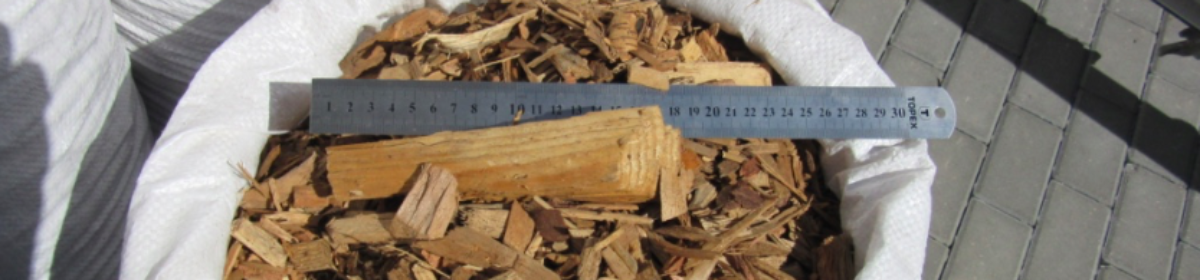
TITAN is the flagship platform. It converts forest residues and non-virgin wood into Hydrogen Producer Gas and then into renewable products through Targeted Microbial Fermentation.

But TITAN is also the first member of a wider family.

The Six Pack

The Syngas Project Family consists of six deployment platforms:

TITAN converts solid forest carbon. TITAN is our leading platform. Click the icon above to find out more. Click here for the TITAN teaser. EU/ETS (plus Ukraine, Belarus and Georgia forest resources Click here

ASMARA converts solid community carbon from sorted municipal waste. Click the icon above to find out more, or click here for the ASMARA teaser. Click here for the ASMARA EU/ETS Country Summary

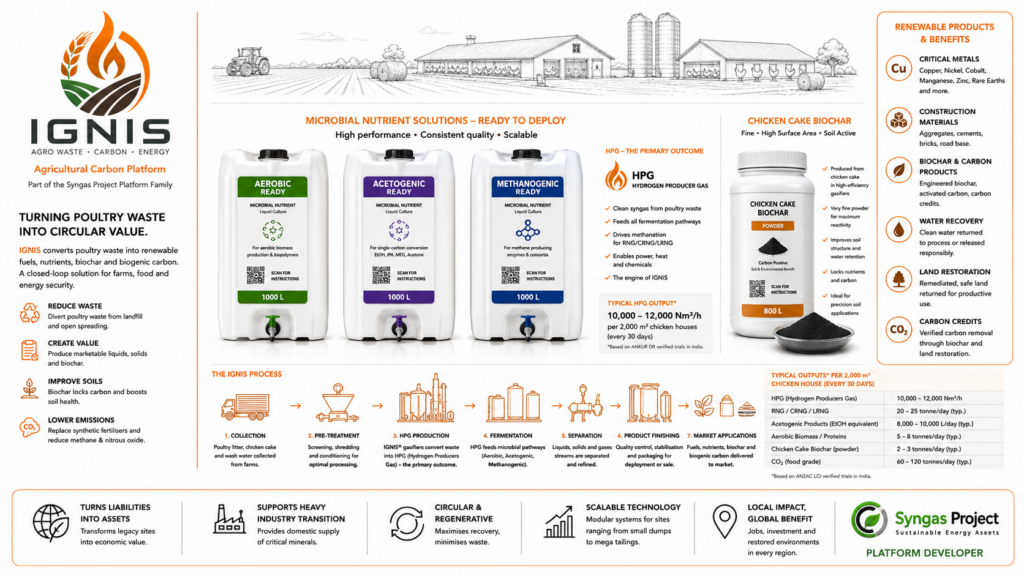
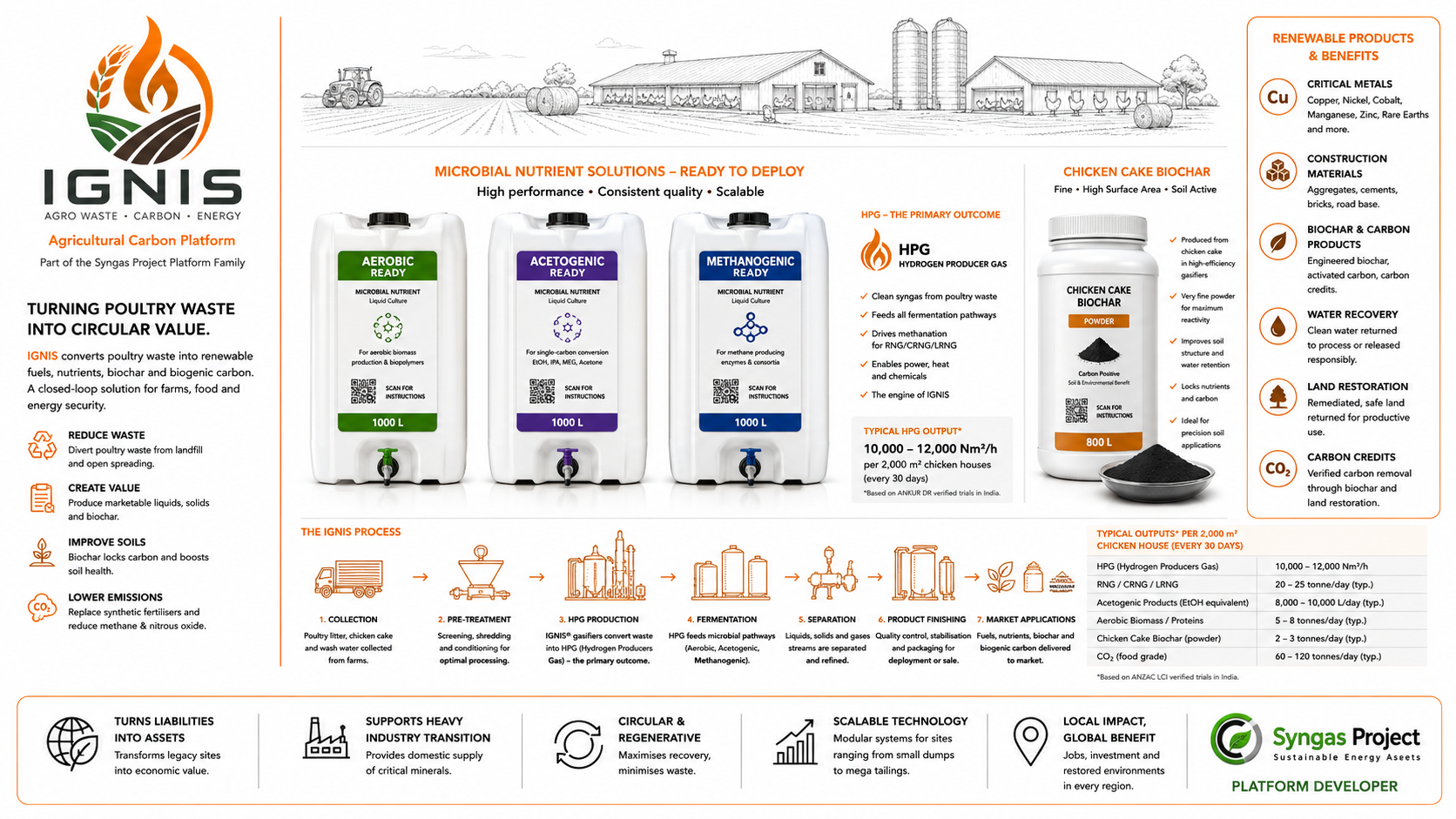
IGNIS converts agricultural and food carbon, including residues such as poultry litter. Click the icon above to find out more, or click here for the IGNIS Field Husbandry teaser or here for the IGNIS Poultry Husbandry teaser

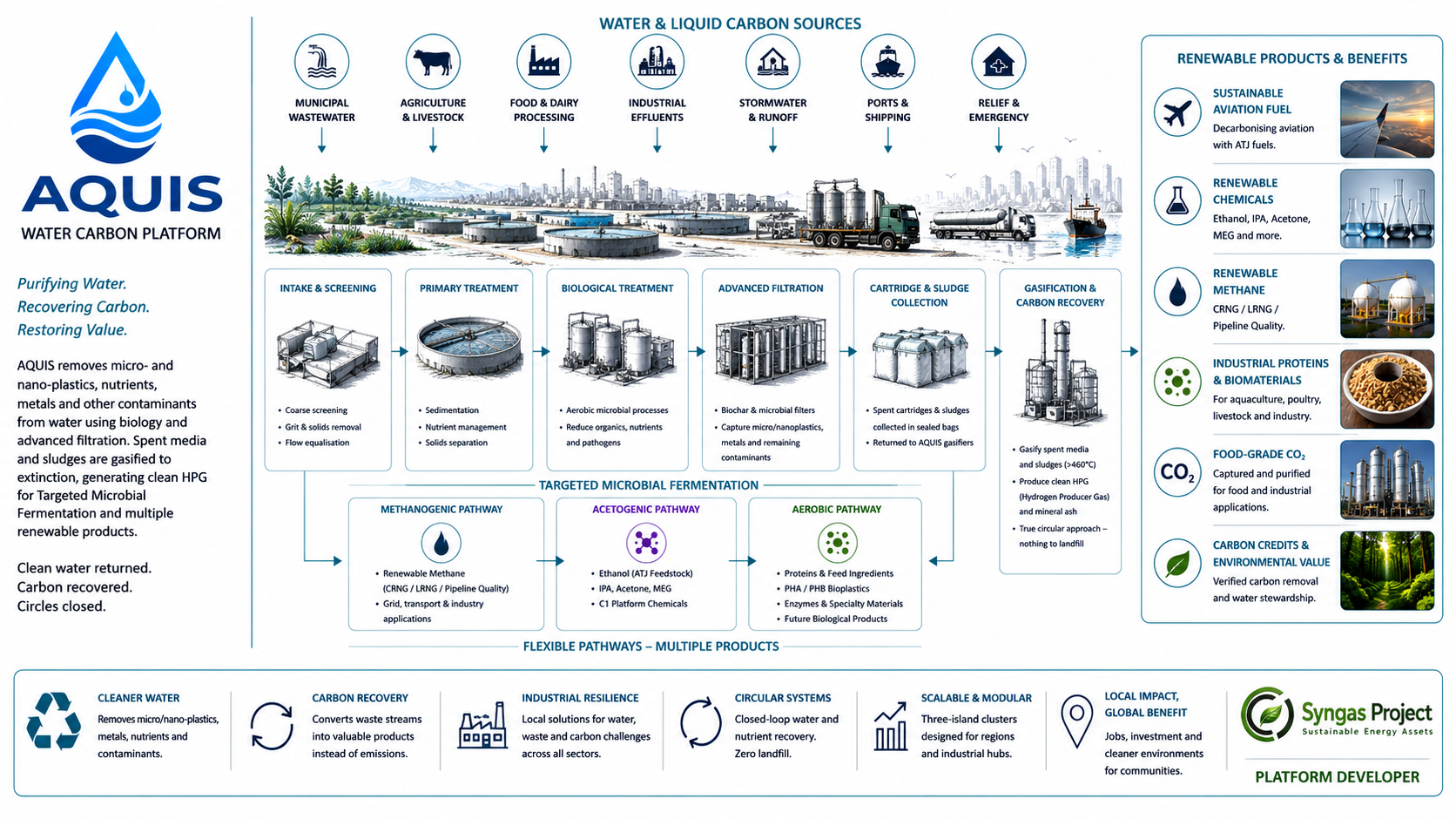
AQUIS treats waterborne carbon, including sludge, spent filters, microplastics and contaminated residues. Click the icon above to find out more, or Click here for the AQUIS teaser. Click here for the AQUIS EU/ETS Waste Water Sludge Summary. Click here for the AQUIS EU/ETS extended AD Summary

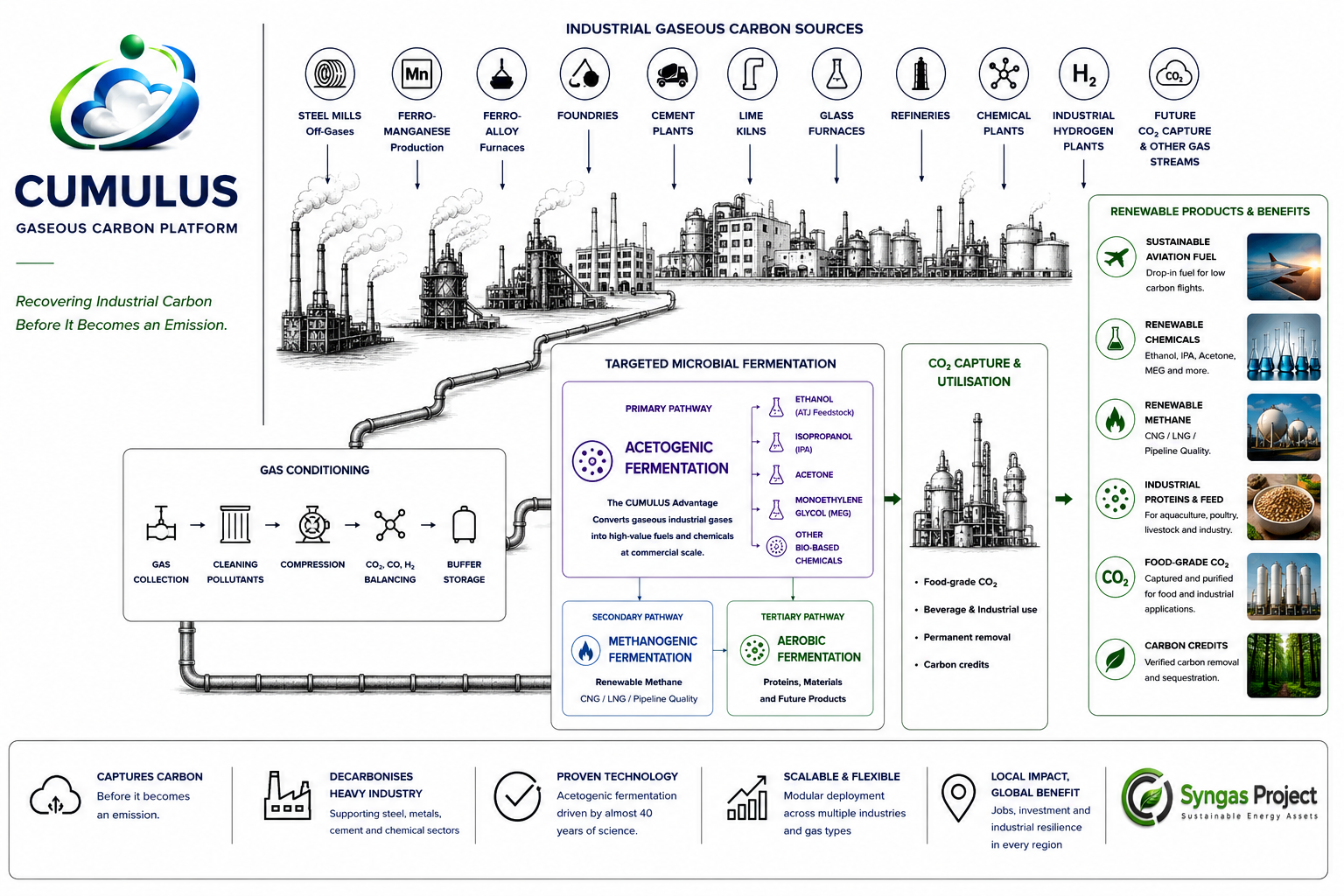
CUMULUS manages gaseous carbon, including renewable gas, compressed gas and liquefied renewable gas. Click the icon above to find out more, or click here for the CUMULUS teaser.

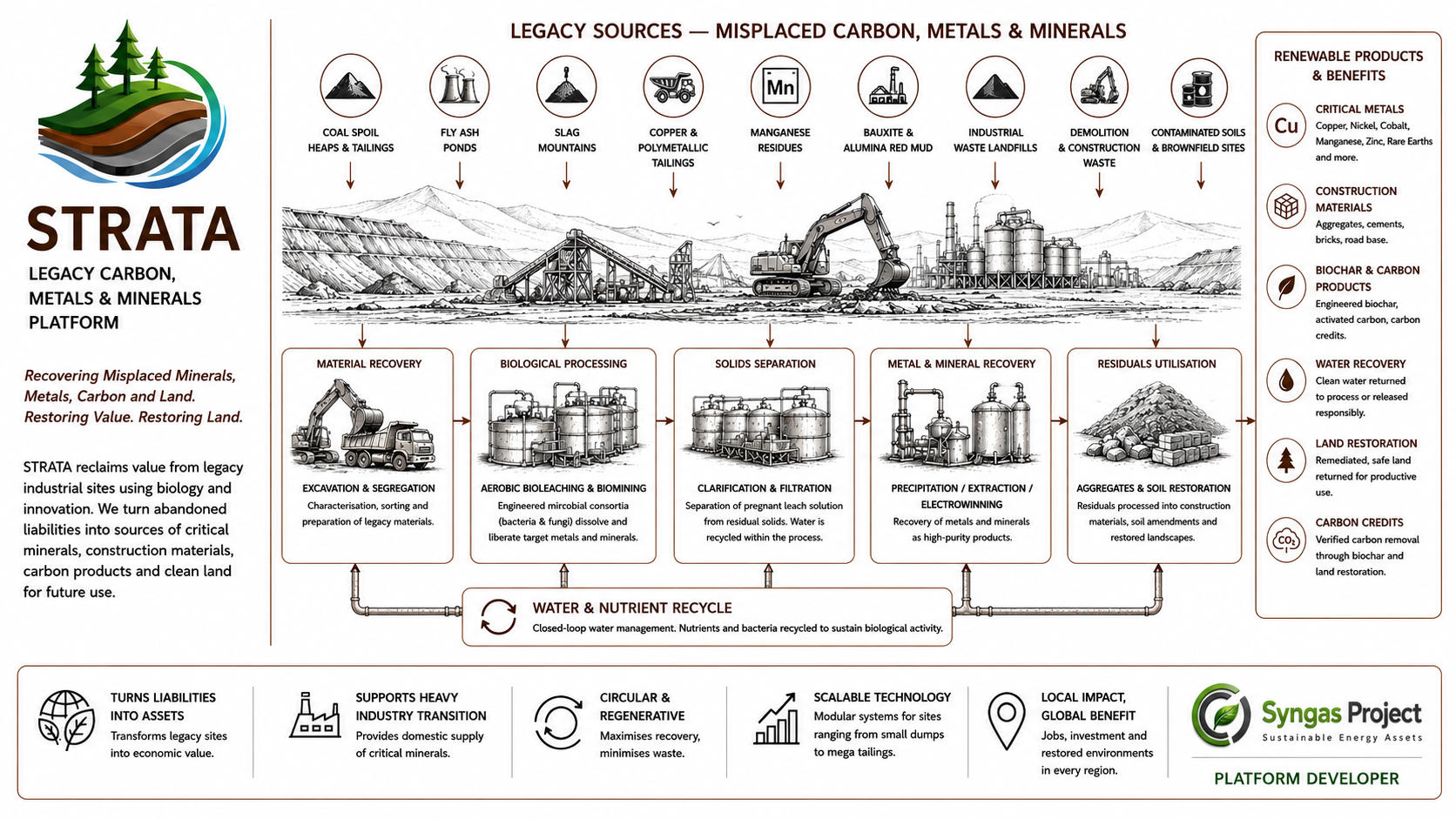
STRATA recovers value from legacy carbon, minerals, ash, spoil, tailings and industrial residues. Click the icon above to find out more, or click here for the STRATA teaser.

Each platform has its own feedstock, business model and operating team. But the industrial logic is shared.

The common engine

The family is built around Hydrogen Producer Gas and Targeted Microbial Fermentation, and the full stack fermentation capability TMF has three

Methanogenic Microbes: Methanogenic pathways produce renewable gas. Click on the icon above to find out more

Acetogenic Microbes: Acetogenic pathways produce alcohols and chemical intermediates. Click on the icon above to find out more

Aerobic Microbes: Aerobic pathways support proteins, materials, water treatment and specialist microbial applications. Click on the icon above to find out more

One Common Currency

Hydrogen Producer Gas gives the platform family a common carbon and hydrogen intermediate. Targeted Microbial Fermentation then directs that intermediate into specific products.

This creates a flexible system. The platform does not depend on one feedstock, one product or one market. It converts different carbon streams into the products most needed by industry.

How does the TMF industry work?

Click here How the TMF Supply Chain Works to find out

Why the family matters

The circular economy does not have one waste problem. It has many misplaced carbon problems.

Forests produce residues.

Cities produce sorted waste.

Farms produce litter, digestate and organic residues.

Water systems collect plastics, sludge and metals.

Industry produces gas streams, ash, tailings and legacy materials.

Syngas Project does not treat these as separate problems. It treats them as connected industrial opportunities.

The Six Pack gives each carbon stream a home.

TITAN remains the flagship

The Platform page is now reserved for TITAN.

That matters.

TITAN is the foundation platform because forest residues provide scale, logistics, energy density and industrial discipline. TITAN proves the full stack: feedstock, gasification, gas cleaning, fermentation, energy integration, biochar, ash handling, certification and offtake.

Once TITAN is established, the same industrial DNA expands across ASMARA, IGNIS, AQUIS, CUMULUS and STRATA.

The Syngas Project Family is therefore not a collection of ideas. It is a deployment architecture.

Six platforms.

One circular industrial system.

Carbon misplaced.

Carbon recovered.

Carbon put back to work.
Rodzina Platform Syngas Project

Sześć platform. Jedna logika przemysłowa.

Syngas Project opiera się na prostej idei: węgiel nie jest odpadem. Jest niewłaściwie ulokowany.

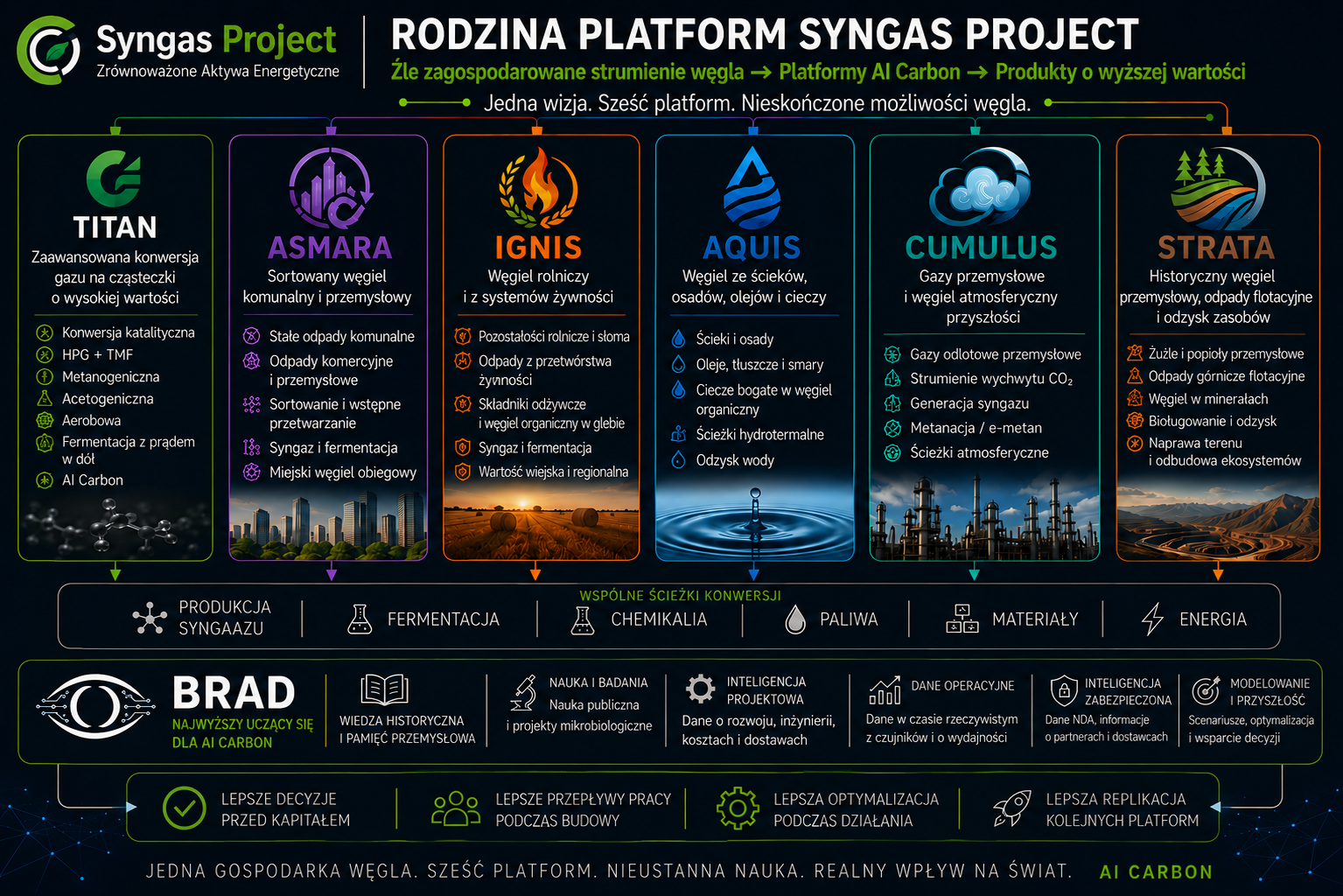
Rodzina Platform Syngas Project przekształca różne strumienie niewłaściwie ulokowanego węgla w paliwa, chemikalia, materiały, gazy odnawialne, składniki odżywcze oraz odzyskane minerały. Każda platforma koncentruje się na określonym rodzaju surowca węglowego. Razem tworzą praktyczny system wdrażania gospodarki o obiegu zamkniętym.

TITAN jest naszą flagową platformą. Przekształca pozostałości leśne i drewno nieprzeznaczone do zastosowań materiałowych w Gaz Wodorowy (Hydrogen Producer Gas), który następnie staje się surowcem dla Ukierunkowanej Fermentacji Mikrobiologicznej (Targeted Microbial Fermentation).

Jednak TITAN jest również pierwszym członkiem znacznie większej rodziny platform.

Six Pack

Rodzina Syngas Project składa się z sześciu platform wdrożeniowych.

TITAN przetwarza stały węgiel pochodzenia leśnego.

ASMARA przetwarza stały węgiel pochodzący z posegregowanych odpadów komunalnych.

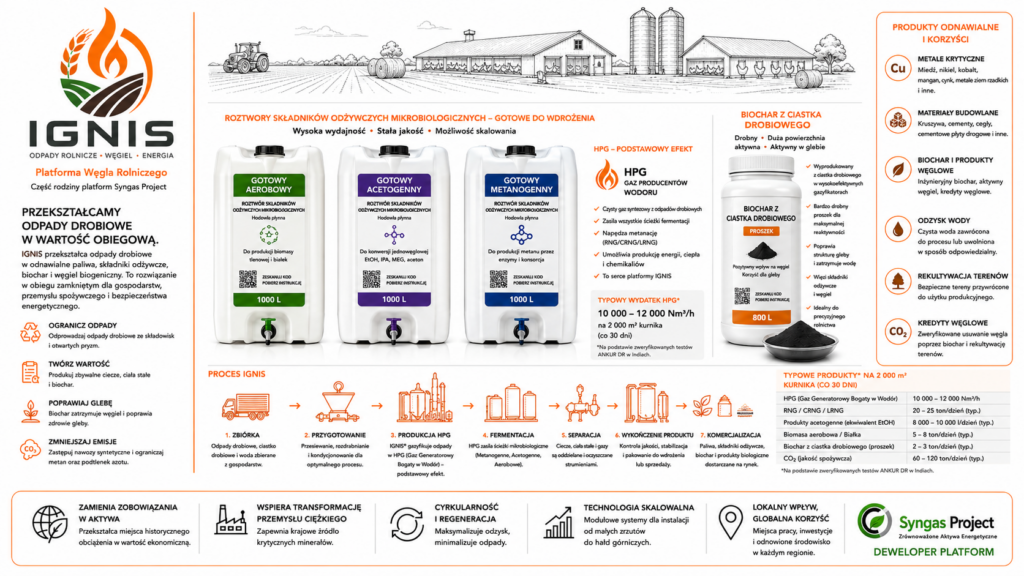
IGNIS wykorzystuje węgiel pochodzący z rolnictwa i przemysłu spożywczego, w tym pozostałości takie jak pomiot drobiowy.

AQUIS zajmuje się węglem obecnym w systemach wodnych, w tym osadami, zużytymi filtrami, mikroplastikami oraz zanieczyszczonymi pozostałościami.

CUMULUS zarządza gazowymi strumieniami węgla, obejmującymi odnawialne gazy, sprężony gaz odnawialny oraz skroplony gaz odnawialny.

STRATA odzyskuje wartość z historycznie nagromadzonych materiałów zawierających węgiel i minerały, takich jak popioły, hałdy, odpady pogórnicze, osady oraz pozostałości przemysłowe.

Każda platforma posiada własny surowiec, model biznesowy i zespół operacyjny. Wszystkie jednak opierają się na tej samej logice przemysłowej.

IGNIS Agricultural Carbon

IGNIS: Turning Agricultural Carbon into Europe’s Next Strategic Resource

Agriculture’s next revolution will be biological

For more than a century, agriculture has been measured by what leaves the farm. Grain, milk, meat, vegetables and timber have traditionally defined productivity and value.

The next generation of agriculture will also be measured by what remains behind.

Every harvest, every poultry house, every livestock enterprise and every food processing facility produces carbon-rich materials that are often regarded as wastes requiring disposal. Poultry litter, crop residues, food processing by-products and agricultural biomass represent millions of tonnes of underutilised carbon generated every year across Europe.

Historically these materials have presented a challenge. They are costly to transport, increasingly regulated and, if poorly managed, can release methane, ammonia and other emissions. Yet these same materials contain carbon, hydrogen and valuable minerals that remain useful long after food production has ended.

The challenge is no longer how to dispose of agricultural residues.

The challenge is how to recover their value.

That is the purpose of IGNIS.

From waste management to carbon management

Syngas Project developed IGNIS to serve the agricultural economy in the same way TITAN serves forestry and ASMARA serves municipalities.

Instead of treating agricultural residues as wastes, IGNIS treats them as misplaced agricultural carbon.

The distinction is important.

Carbon is rarely lost. It simply ends up in places where it no longer creates value.

Agricultural residues still contain energy, carbon, minerals and chemical building blocks capable of supporting entirely new industries. The objective is therefore not disposal but recovery.

IGNIS is designed around this principle.

Agricultural carbon enters the platform once. From that point onwards every effort is made to recover the maximum possible value before the remaining mineral fraction leaves the facility.

IGNIS – Węgiel Rolniczy

Przekształcanie węgla pochodzenia rolniczego w kolejny strategiczny zasób Europy

Przez dziesięciolecia europejskie rolnictwo oceniano przede wszystkim przez pryzmat żywności opuszczającej gospodarstwo. Zboże, mleko, mięso, warzywa czy drewno były naturalnym wyznacznikiem produktywności oraz wartości ekonomicznej.

Dziś coraz wyraźniej widać, że równie istotne staje się to, co pozostaje po zakończeniu produkcji.

Każde żniwa, każda ferma drobiu, każde gospodarstwo hodowlane i każdy zakład przetwórstwa spożywczego wytwarzają ogromne ilości biomasy bogatej w węgiel. Pomiot drobiowy, słoma, pozostałości pożniwne, odpady z przetwórstwa żywności czy inne produkty uboczne rolnictwa przez wiele lat postrzegano głównie jako problem logistyczny lub środowiskowy.

To podejście szybko odchodzi jednak do przeszłości.

Rosnące ceny energii, potrzeba zwiększenia bezpieczeństwa surowcowego Europy oraz dynamiczny rozwój bioekonomii sprawiają, że materiały jeszcze niedawno uznawane za odpady zaczynają być traktowane jako wartościowe surowce przemysłowe.

Nie chodzi już o ich utylizację.

Chodzi o odzyskanie zawartej w nich wartości.

Tak właśnie powstała platforma IGNIS, rozwijana przez Syngas Project jako odpowiednik platform TITAN dla sektora leśnego oraz ASMARA dla sektora komunalnego.

IGNIS nie jest kolejną instalacją energetyczną opalaną biomasą.

To platforma przemysłowa zaprojektowana z myślą o maksymalnym wykorzystaniu potencjału węgla pochodzenia rolniczego.

Filozofia projektu jest niezwykle prosta.

Węgiel praktycznie nigdy nie znika.

Zmienia jedynie miejsce występowania i przestaje pracować na rzecz gospodarki.

Zadaniem IGNIS jest przywrócenie mu wartości.

Każda tona biomasy trafiająca do instalacji zawiera nie tylko energię, lecz również wodór, związki chemiczne oraz cenne składniki mineralne. Odpowiednio wykorzystane mogą stać się podstawą produkcji odnawialnych paliw, chemikaliów, materiałów, białek mikrobiologicznych, a w przyszłości także wielu innych produktów biologicznych.