Artificial Intelligence is no longer changing only the digital world.
For the past few years AI has transformed software development, finance, healthcare and professional services. It writes code, generates images, analyses data and automates office work. Yet perhaps the most profound application of Artificial Intelligence is happening far away from computer screens.
It is happening in biology.
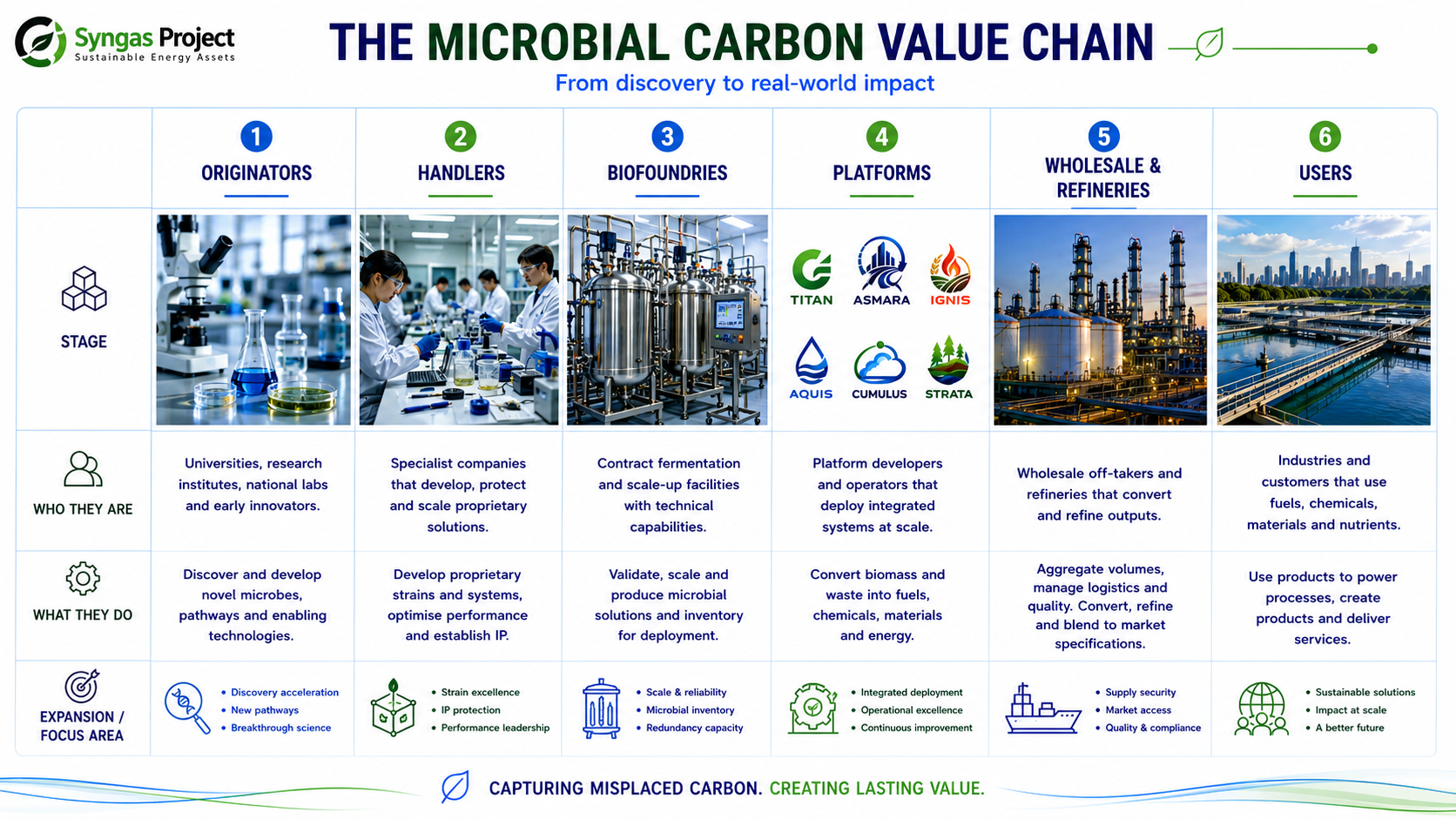
Across universities, polytechnics, research institutes and biotechnology companies, AI is dramatically accelerating the discovery and optimisation of microorganisms capable of performing useful industrial work. Every week researchers identify new metabolic pathways, improve microbial performance and engineer biological systems capable of producing valuable industrial products.
The objective is no longer simply understanding biology.
The objective is building the next generation of the real economy.
Łańcuch wartości ukierunkowanej fermentacji mikrobiologicznej
Sztuczna inteligencja przestaje zmieniać wyłącznie świat cyfrowy.
Przez ostatnich kilka lat AI zrewolucjonizowała rozwój oprogramowania, finanse, ochronę zdrowia i usługi profesjonalne. Pisze kod, generuje obrazy, analizuje dane i automatyzuje pracę biurową. Jednak być może jej największy wpływ nie będzie dotyczył komputerów.
Największa rewolucja dokonuje się dziś w biologii.
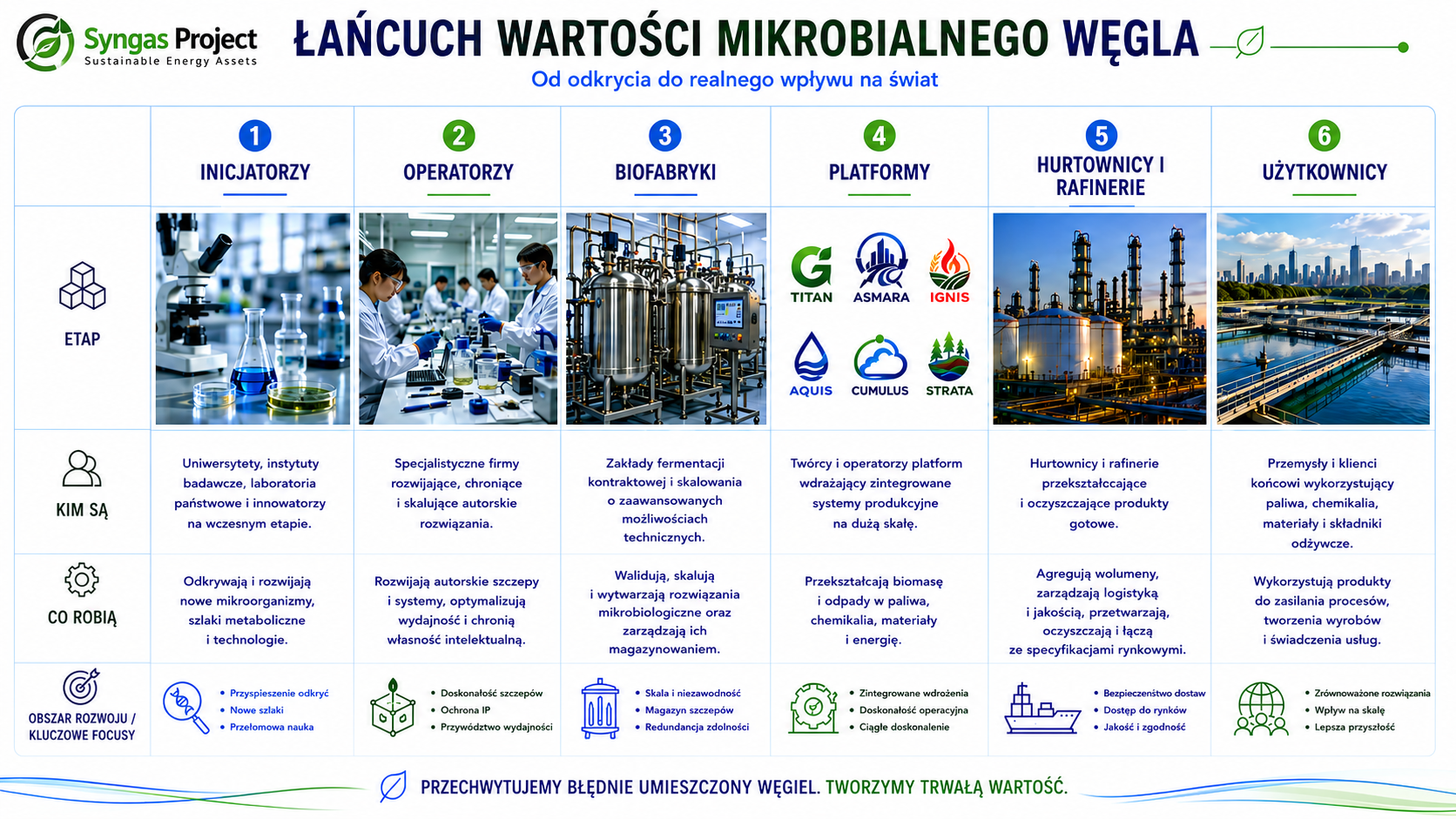
Na uniwersytetach, politechnikach, w instytutach badawczych i firmach biotechnologicznych sztuczna inteligencja gwałtownie przyspiesza odkrywanie oraz udoskonalanie mikroorganizmów zdolnych wykonywać użyteczną pracę przemysłową. Z tygodnia na tydzień powstają nowe szlaki metaboliczne, udoskonalane są istniejące szczepy, a biologiczne systemy osiągają wydajność, która jeszcze kilka lat temu wydawała się nieosiągalna.
Celem nie jest już wyłącznie zrozumienie biologii.
Celem jest budowa kolejnej generacji realnej gospodarki.
Sztuczna inteligencja obiecywała lepsze paliwa.
Lepsze chemikalia.
Lepsze materiały.
Lepsze składniki odżywcze.
Dziś ta obietnica staje się rzeczywistością.
Wyścig nie polega już na samym dokonywaniu odkryć naukowych.
For decades, diesel has been the backbone of modern forestry. It powers harvesters, forwarders, chippers, service vehicles, workshops and generators. Diesel works because forests are difficult places to work. They are remote, constantly changing and rarely connected to the electricity grid.
Today the challenge is no longer productivity. It is decarbonisation.
Many believe the answer is simple: replace diesel with electric machines. Electric technology has an important role to play, but forestry presents realities that cannot be ignored. Machines work beneath dense tree canopies, often many kilometres from the nearest grid connection. Temporary roads are built and removed as harvesting progresses. Operations move continuously. Charging infrastructure does not move as easily as the forest does.
The forest itself presents another irony.
Solar energy is an essential part of the renewable energy transition, but inside a working forest the trees literally put solar in the shade. The environment itself limits the technology.
PowerCan begins with a different question.
Instead of asking forestry operators to choose between electricity and renewable fuel, why not provide both?
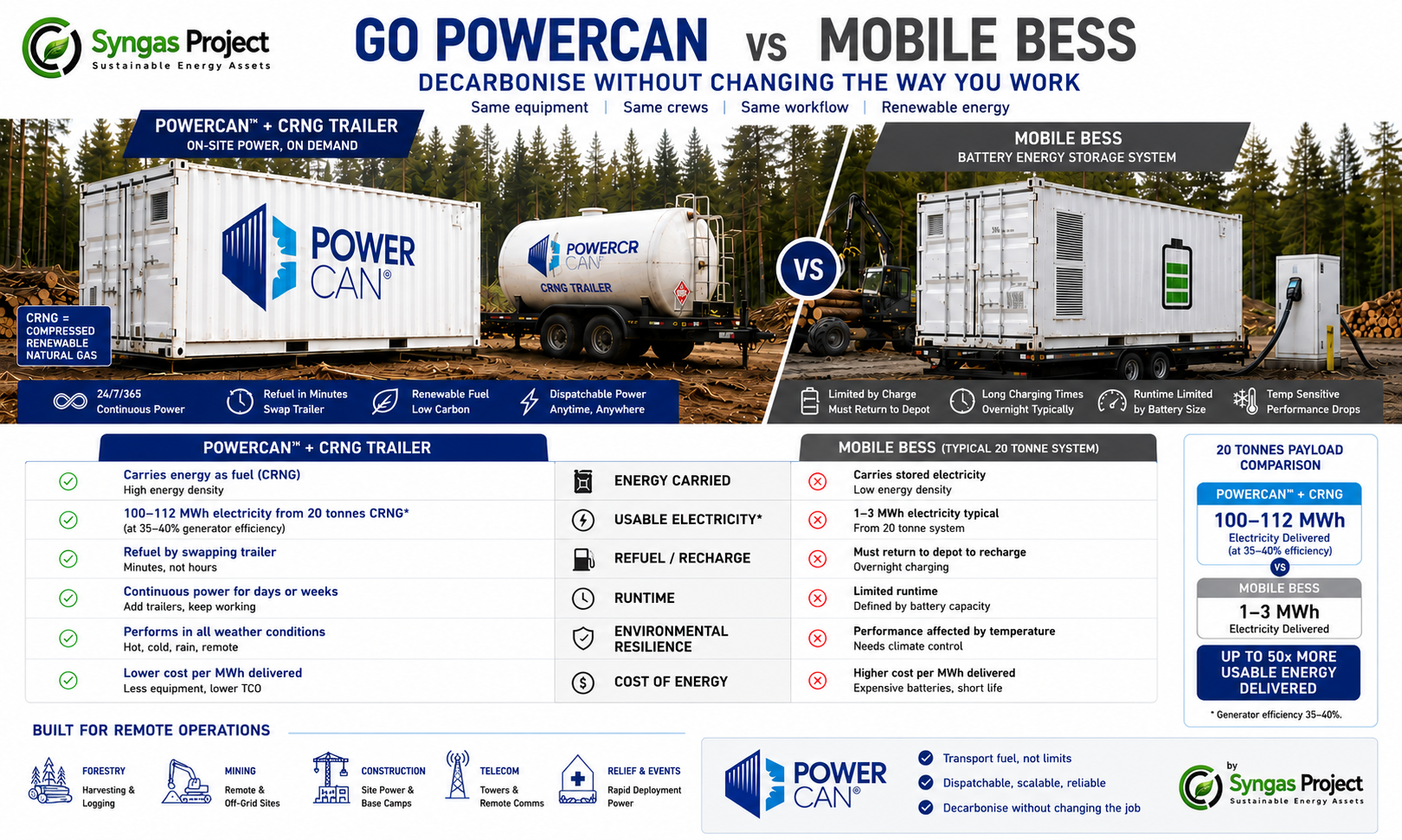
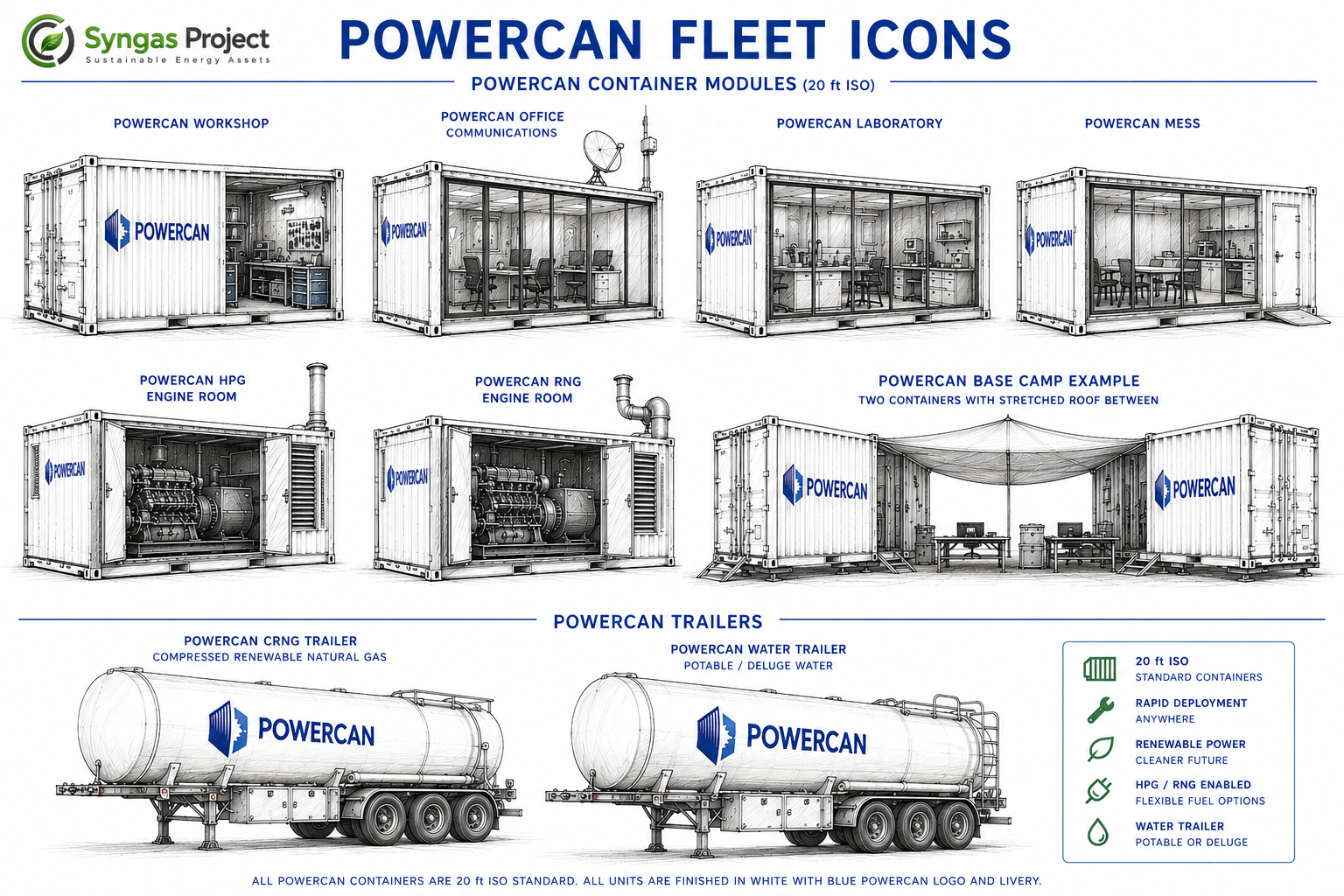
PowerCan supplies renewable electricity exactly where forestry operations need it. It powers site offices, workshops, communications, welfare facilities, lighting, pumps, maintenance equipment and battery charging for electric tools and vehicles. Wherever temporary electricity is required, PowerCan creates an independent renewable power source without waiting for a permanent grid connection.
At the same time, PowerCan produces Compressed Renewable Natural Gas (CRNG) from Hydrogen Producer Gas generated from forest residues.
Przez dekady diesel był podstawą nowoczesnego leśnictwa. Zasila harwestery, forwardery, rębaki, pojazdy serwisowe, warsztaty i generatory. Diesel działa, ponieważ lasy są trudnym miejscem pracy: są oddalone, zmienne i rzadko podłączone do sieci elektroenergetycznej.
Dziś wyzwaniem nie jest już wydajność. Wyzwaniem jest dekarbonizacja.
Wielu uważa, że odpowiedź jest prosta: zastąpić diesel maszynami elektrycznymi. Elektryfikacja ma ważną rolę, ale leśnictwo ma realia, których nie można ignorować. Maszyny pracują pod gęstym okapem drzew, często wiele kilometrów od najbliższego przyłącza. Drogi tymczasowe powstają i znikają wraz z postępem prac. Operacje stale się przemieszczają. Infrastruktura ładowania nie przemieszcza się tak łatwo jak praca w lesie.
Las pokazuje też pewną ironię.
Energia słoneczna jest ważną częścią transformacji energetycznej, ale w pracującym lesie drzewa dosłownie stawiają fotowoltaikę w cieniu. Samo środowisko ogranicza tę technologię.
PowerCan zaczyna od innego pytania.
Zamiast zmuszać operatorów leśnych do wyboru między energią elektryczną a paliwem odnawialnym, dlaczego nie dostarczyć obu?
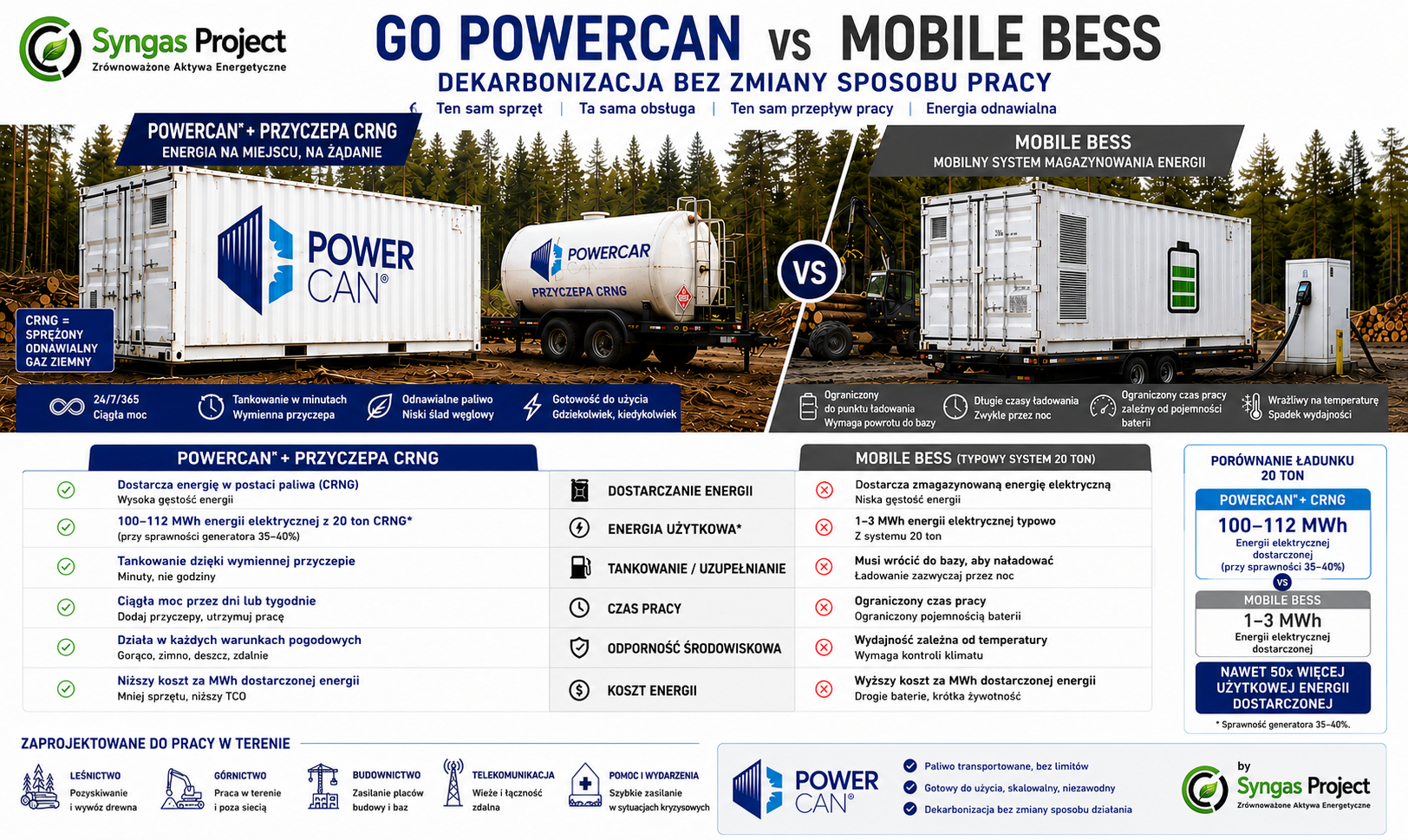
PowerCan dostarcza odnawialną energię elektryczną dokładnie tam, gdzie leśnictwo jej potrzebuje. Zasila biura terenowe, warsztaty, łączność, zaplecze socjalne, oświetlenie, pompy, sprzęt serwisowy oraz ładowanie narzędzi i pojazdów elektrycznych. Wszędzie tam, gdzie potrzebna jest energia tymczasowa, PowerCan tworzy niezależne odnawialne źródło zasilania bez oczekiwania na stałe przyłącze do sieci.
Jednocześnie PowerCan wytwarza Compressed Renewable Natural Gas (CRNG) z Hydrogen Producer Gas produkowanego z pozostałości leśnych.
Syngas Project is built around a simple idea: carbon is not waste. It is misplaced.
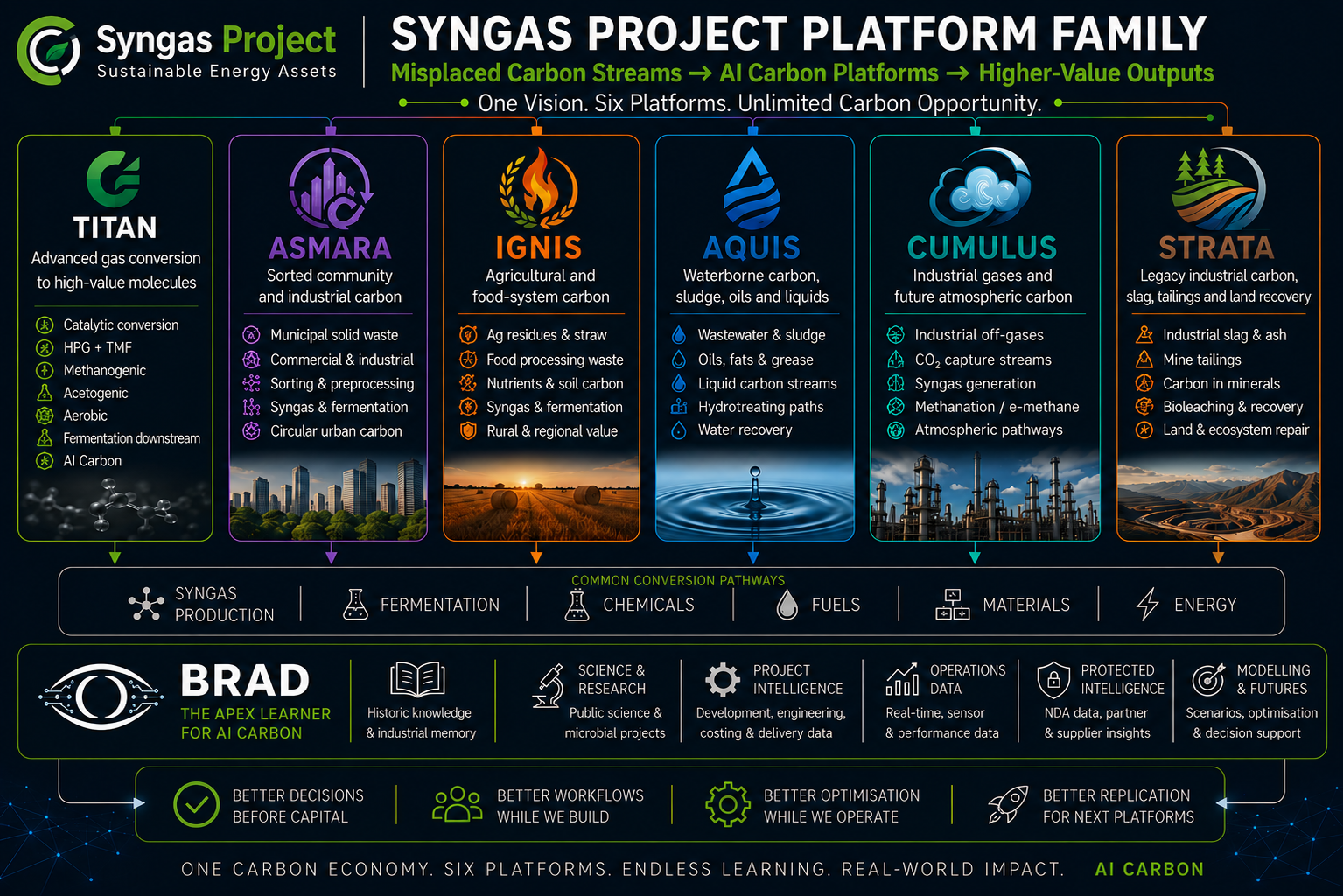
The Syngas Project Family turns different misplaced carbon streams into fuels, chemicals, materials, gases, nutrients and recovered minerals. Each platform focuses on a specific carbon source. Together, they form a practical deployment system for the circular economy.
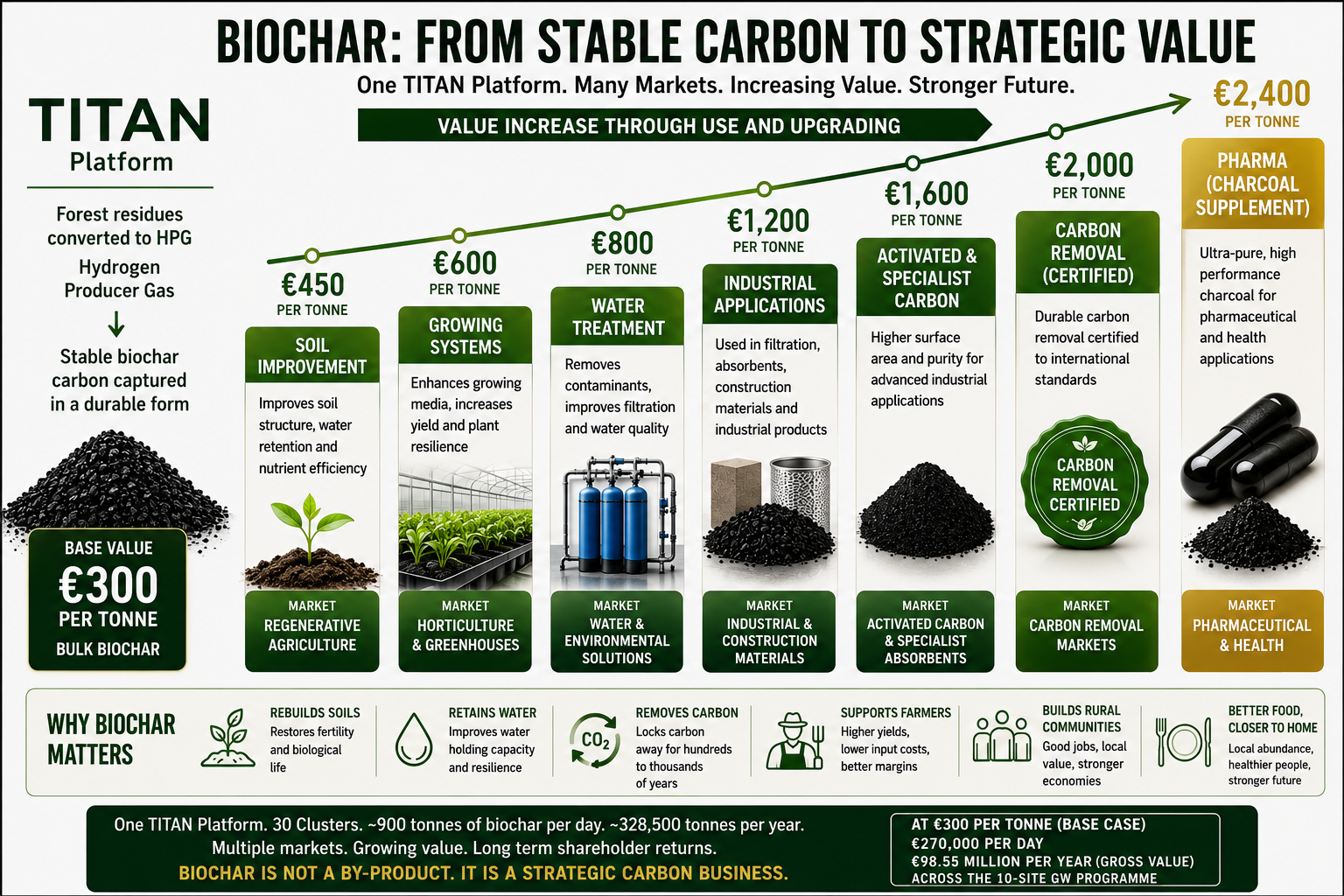
TITAN is the flagship platform. It converts forest residues and non-virgin wood into Hydrogen Producer Gas and then into renewable products through Targeted Microbial Fermentation.
But TITAN is also the first member of a wider family.
The Six Pack
The Syngas Project Family consists of six deployment platforms:
TITAN converts solid forest carbon. TITAN is our leading platform. Click the icon above to find out more. Click here for the TITAN teaser. EU/ETS (plus Ukraine, Belarus and Georgia forest resources Click here
ASMARA converts solid community carbon from sorted municipal waste. Click the icon above to find out more, or click here for the ASMARA teaser. Click here for the ASMARA EU/ETS Country Summary
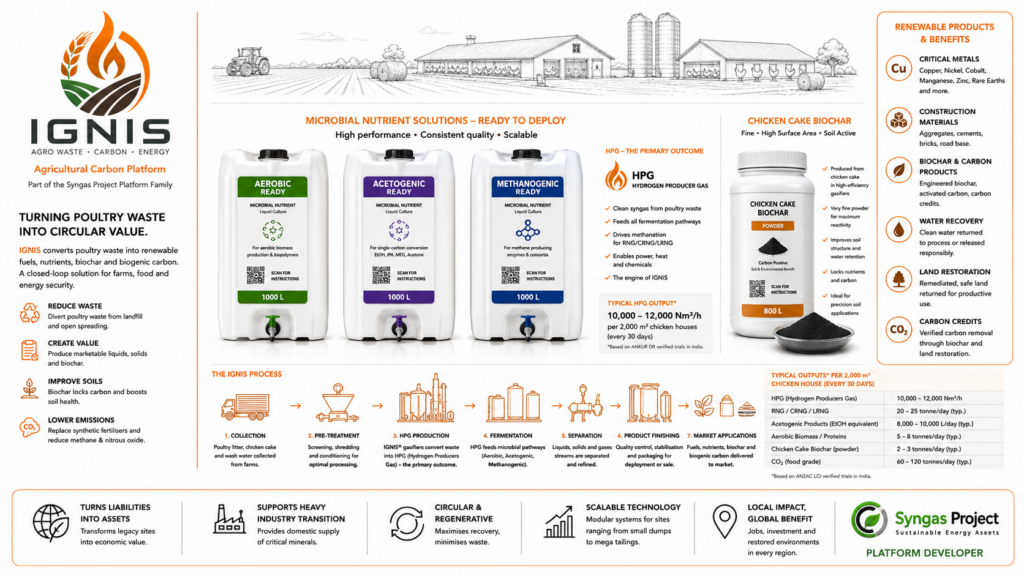
IGNIS converts agricultural and food carbon, including residues such as poultry litter. Click the icon above to find out more, or click here for the IGNIS Field Husbandry teaser or here for the IGNIS Poultry Husbandry teaser. Click here for the IGNIS Poultry Summary
AQUIS treats waterborne carbon, including sludge, spent filters, microplastics and contaminated residues. Click the icon above to find out more, or Click here for the AQUIS teaser. Click here for the AQUIS EU/ETS Waste Water Sludge Summary. Click here for the AQUIS EU/ETS extended AD Summary
CUMULUSmanages gaseous carbon, including renewable gas, compressed gas and liquefied renewable gas. Click the icon above to find out more, or click here for the CUMULUS teaser.
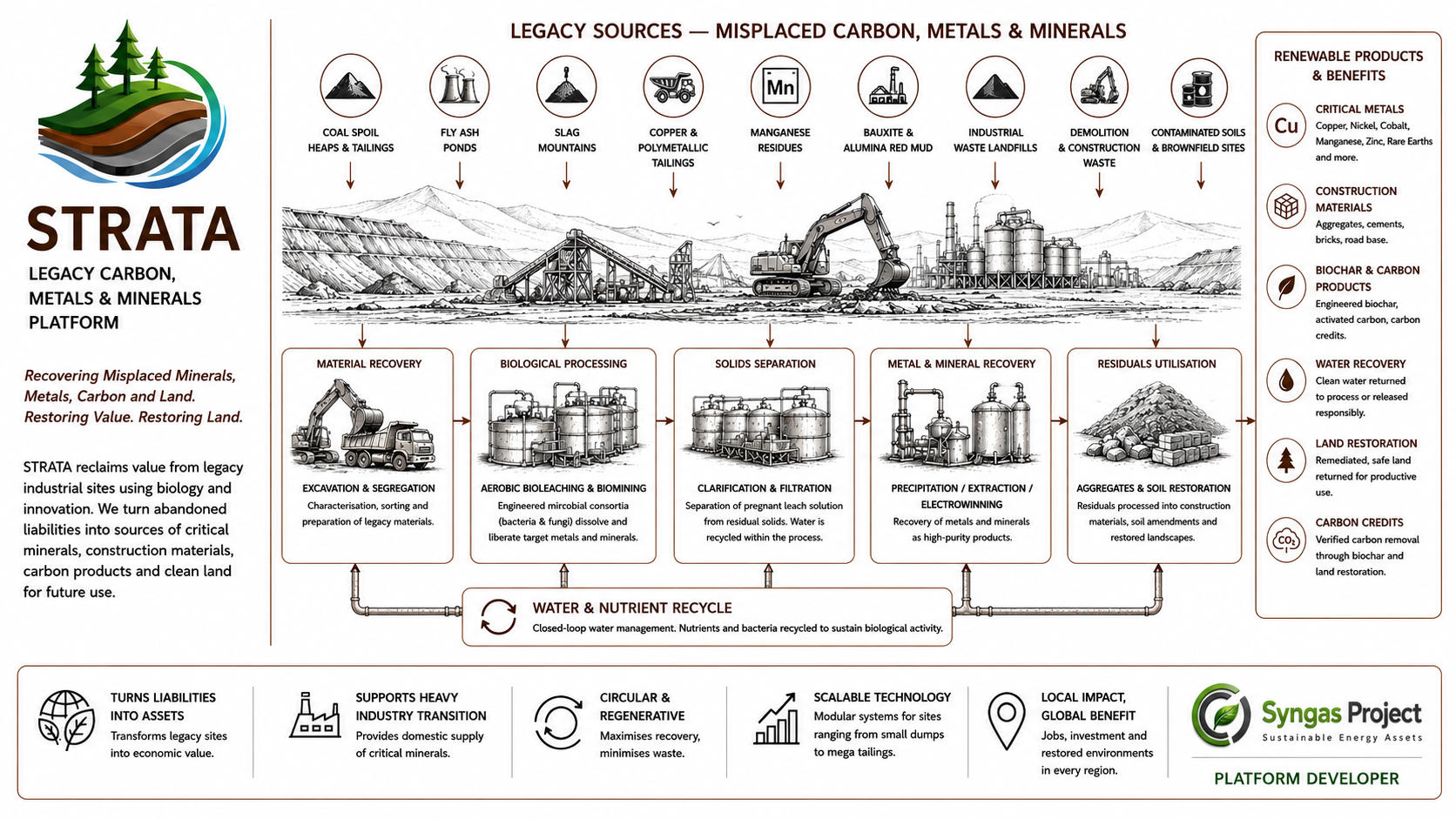
STRATA recovers value from legacy carbon, minerals, ash, spoil, tailings and industrial residues. Click the icon above to find out more, or click here for the STRATA teaser.
Each platform has its own feedstock, business model and operating team. But the industrial logic is shared.
The common engine
The family is built around Hydrogen Producer Gas and Targeted Microbial Fermentation, and the full stack fermentation capability TMF has three
Methanogenic Microbes: Methanogenic pathways produce renewable gas. Click on the icon above to find out more
Acetogenic Microbes: Acetogenic pathways produce alcohols and chemical intermediates. Click on the icon above to find out more
Aerobic Microbes: Aerobic pathways support proteins, materials, water treatment and specialist microbial applications. Click on the icon above to find out more
One Common Currency
Hydrogen Producer Gas gives the platform family a common carbon and hydrogen intermediate. Targeted Microbial Fermentation then directs that intermediate into specific products.
This creates a flexible system. The platform does not depend on one feedstock, one product or one market. It converts different carbon streams into the products most needed by industry.
The circular economy does not have one waste problem. It has many misplaced carbon problems.
Forests produce residues.
Cities produce sorted waste.
Farms produce litter, digestate and organic residues.
Water systems collect plastics, sludge and metals.
Industry produces gas streams, ash, tailings and legacy materials.
Syngas Project does not treat these as separate problems. It treats them as connected industrial opportunities.
The Six Pack gives each carbon stream a home.
TITAN remains the flagship
The Platform page is now reserved for TITAN.
That matters.
TITAN is the foundation platform because forest residues provide scale, logistics, energy density and industrial discipline. TITAN proves the full stack: feedstock, gasification, gas cleaning, fermentation, energy integration, biochar, ash handling, certification and offtake.
Once TITAN is established, the same industrial DNA expands across ASMARA, IGNIS, AQUIS, CUMULUS and STRATA.
The Syngas Project Family is therefore not a collection of ideas. It is a deployment architecture.
Syngas Project opiera się na prostej idei: węgiel nie jest odpadem. Jest niewłaściwie ulokowany.
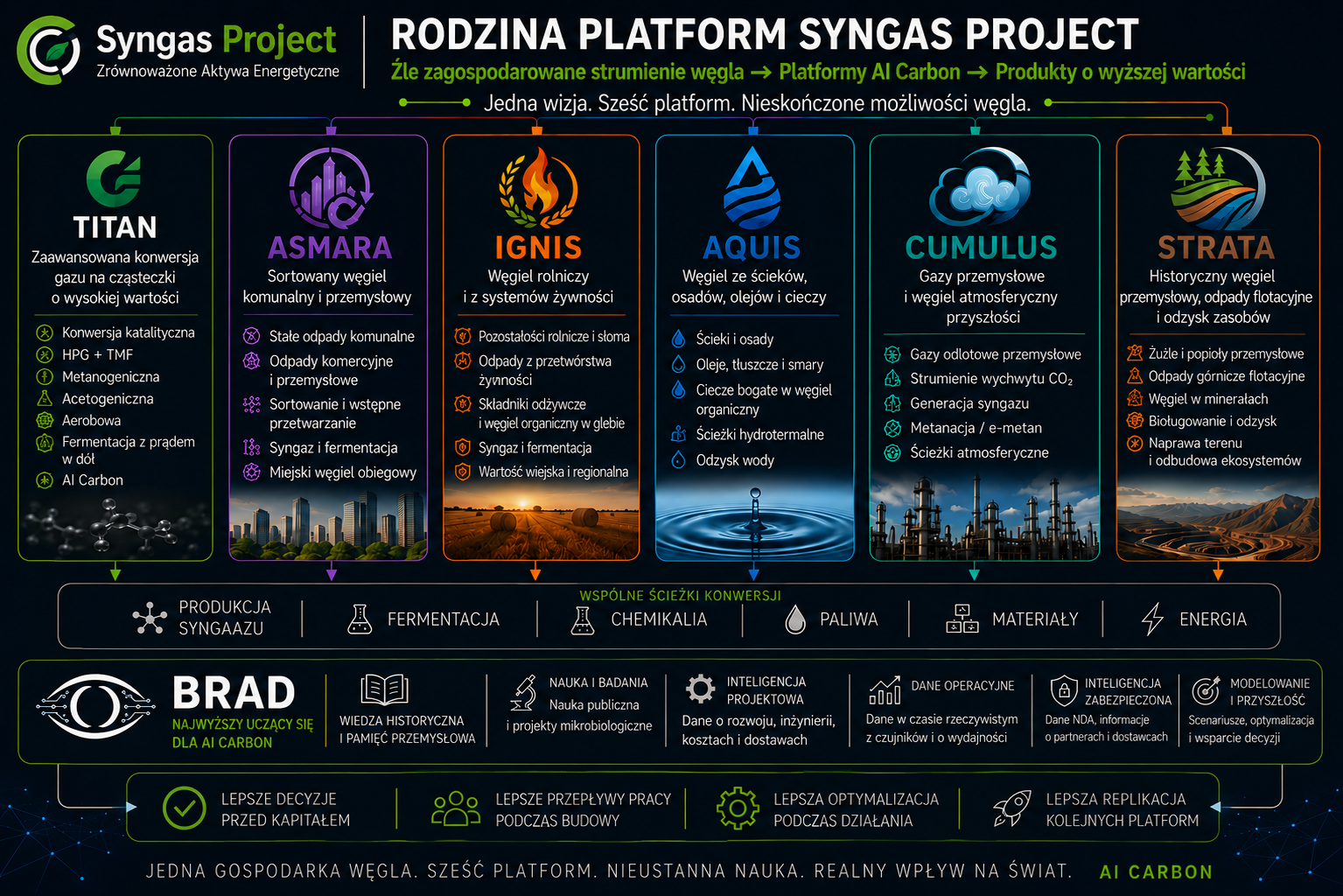
Rodzina Platform Syngas Project przekształca różne strumienie niewłaściwie ulokowanego węgla w paliwa, chemikalia, materiały, gazy odnawialne, składniki odżywcze oraz odzyskane minerały. Każda platforma koncentruje się na określonym rodzaju surowca węglowego. Razem tworzą praktyczny system wdrażania gospodarki o obiegu zamkniętym.
TITAN jest naszą flagową platformą. Przekształca pozostałości leśne i drewno nieprzeznaczone do zastosowań materiałowych w Gaz Wodorowy (Hydrogen Producer Gas), który następnie staje się surowcem dla Ukierunkowanej Fermentacji Mikrobiologicznej (Targeted Microbial Fermentation).
Jednak TITAN jest również pierwszym członkiem znacznie większej rodziny platform.
Six Pack
Rodzina Syngas Project składa się z sześciu platform wdrożeniowych.
TITAN przetwarza stały węgiel pochodzenia leśnego.
ASMARA przetwarza stały węgiel pochodzący z posegregowanych odpadów komunalnych.
IGNIS wykorzystuje węgiel pochodzący z rolnictwa i przemysłu spożywczego, w tym pozostałości takie jak pomiot drobiowy.
AQUIS zajmuje się węglem obecnym w systemach wodnych, w tym osadami, zużytymi filtrami, mikroplastikami oraz zanieczyszczonymi pozostałościami.
CUMULUS zarządza gazowymi strumieniami węgla, obejmującymi odnawialne gazy, sprężony gaz odnawialny oraz skroplony gaz odnawialny.
STRATA odzyskuje wartość z historycznie nagromadzonych materiałów zawierających węgiel i minerały, takich jak popioły, hałdy, odpady pogórnicze, osady oraz pozostałości przemysłowe.
Każda platforma posiada własny surowiec, model biznesowy i zespół operacyjny. Wszystkie jednak opierają się na tej samej logice przemysłowej.