Forest Residue Is Not Waste: It Is Europe’s Underused Carbon Resource

Przewiń w dół, aby zobaczyć polską wersję.

Europe does not lack carbon.

It lacks controlled renewable carbon.

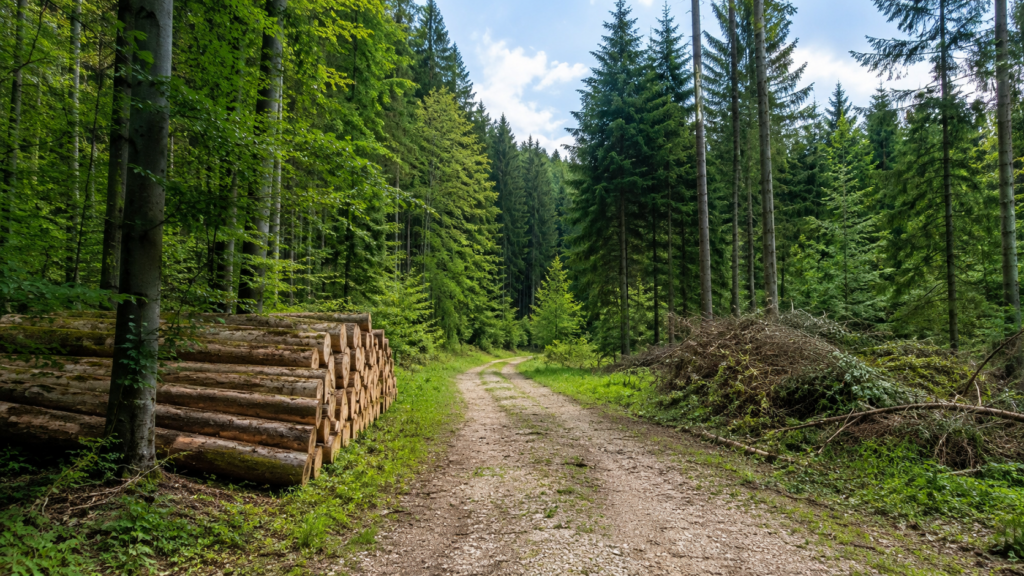
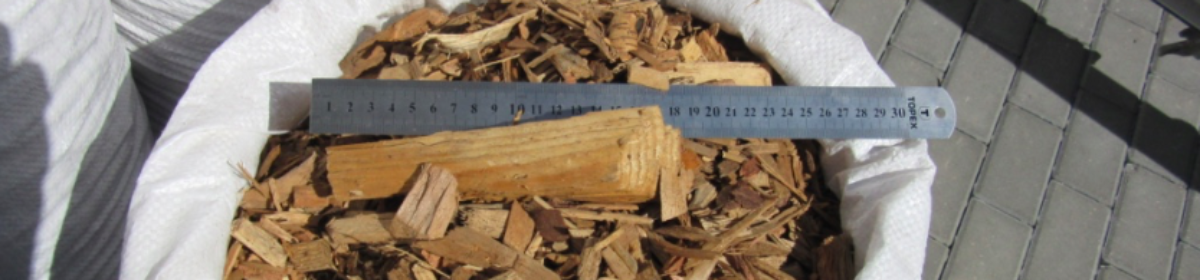
Every year, forests produce large volumes of material that never becomes merchantable timber. Branches, tops, twisted wood, undersized stems, storm residues and other low-value material are often difficult to recover economically. Some of this material is left on the forest floor. Some is recovered for low-value uses. Much of it is treated as a logistical problem rather than an industrial opportunity.

TITAN sees this material differently.

Forest residue is not waste. It is renewable carbon. It is local, physical, measurable and already present inside the European landscape. When collected responsibly, it can support a new generation of industrial molecule production without competing directly with food crops or high-value timber markets.

This distinction matters.

Europe’s energy debate has focused heavily on electrons. Wind, solar and grid expansion are essential, but they do not solve the molecule problem. Aviation fuel, industrial gas, chemicals, materials and many liquid fuels still depend on carbon-based molecules. The question is not whether Europe needs carbon. It does. The question is where that carbon should come from.

Today, too much of Europe’s molecule economy still depends on imported fossil carbon.

TITAN offers a different route.

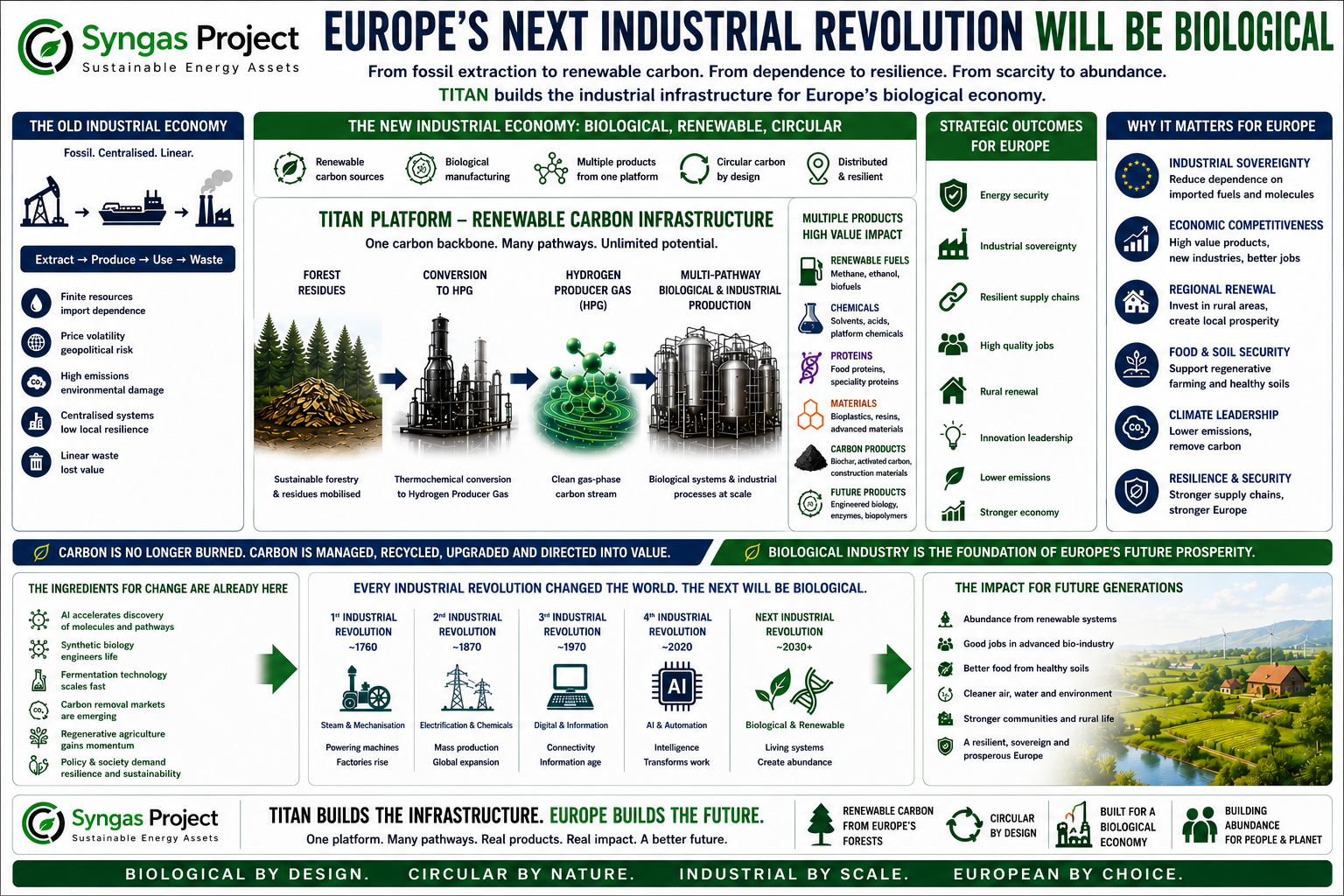
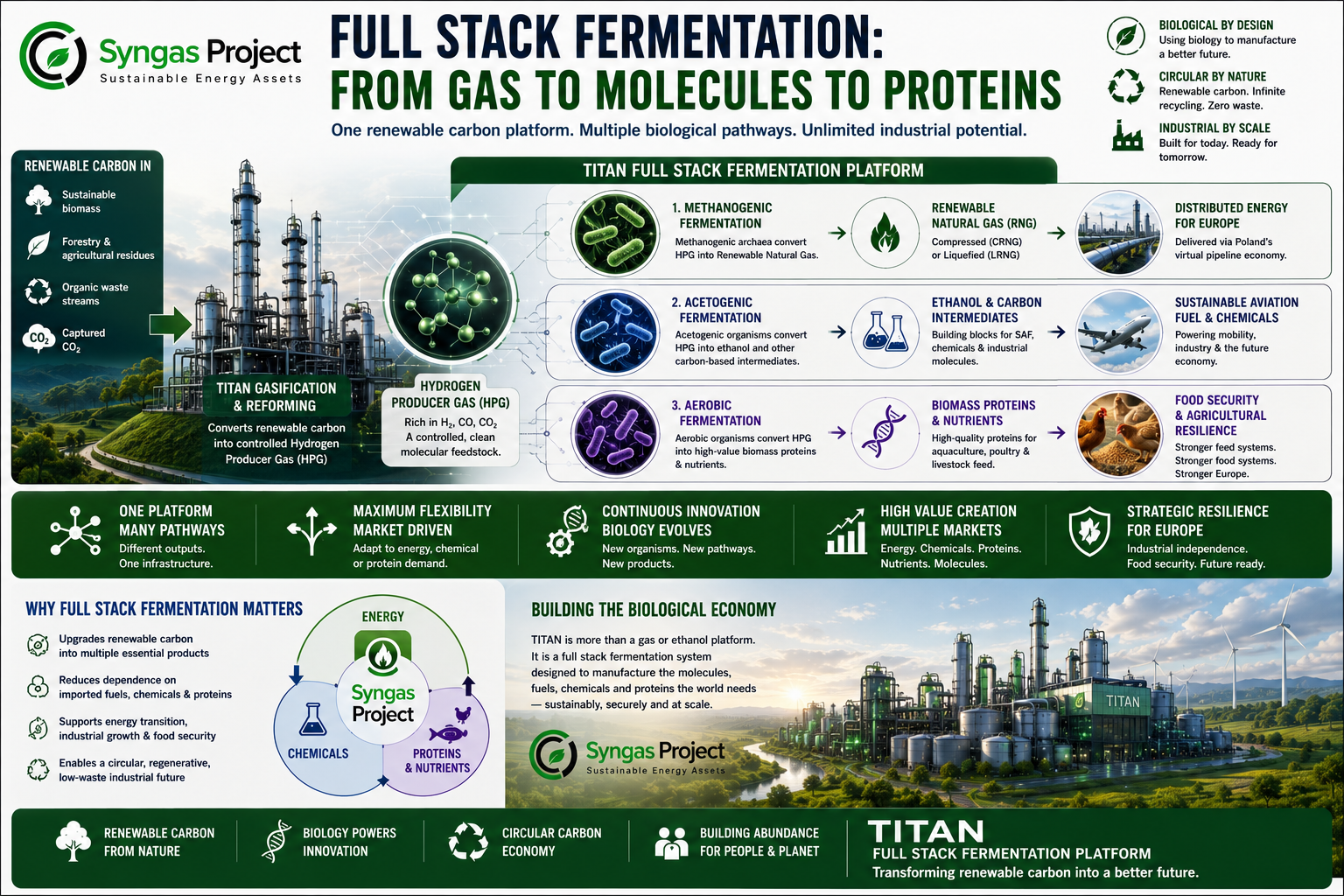
The platform converts forest residue into Hydrogen Producer Gas, creating a controlled gas-phase feedstock for targeted microbial fermentation. From there, carbon can be converted into renewable methane, 2G ethanol and, in future, wider fuels, chemicals, materials and nutrients.

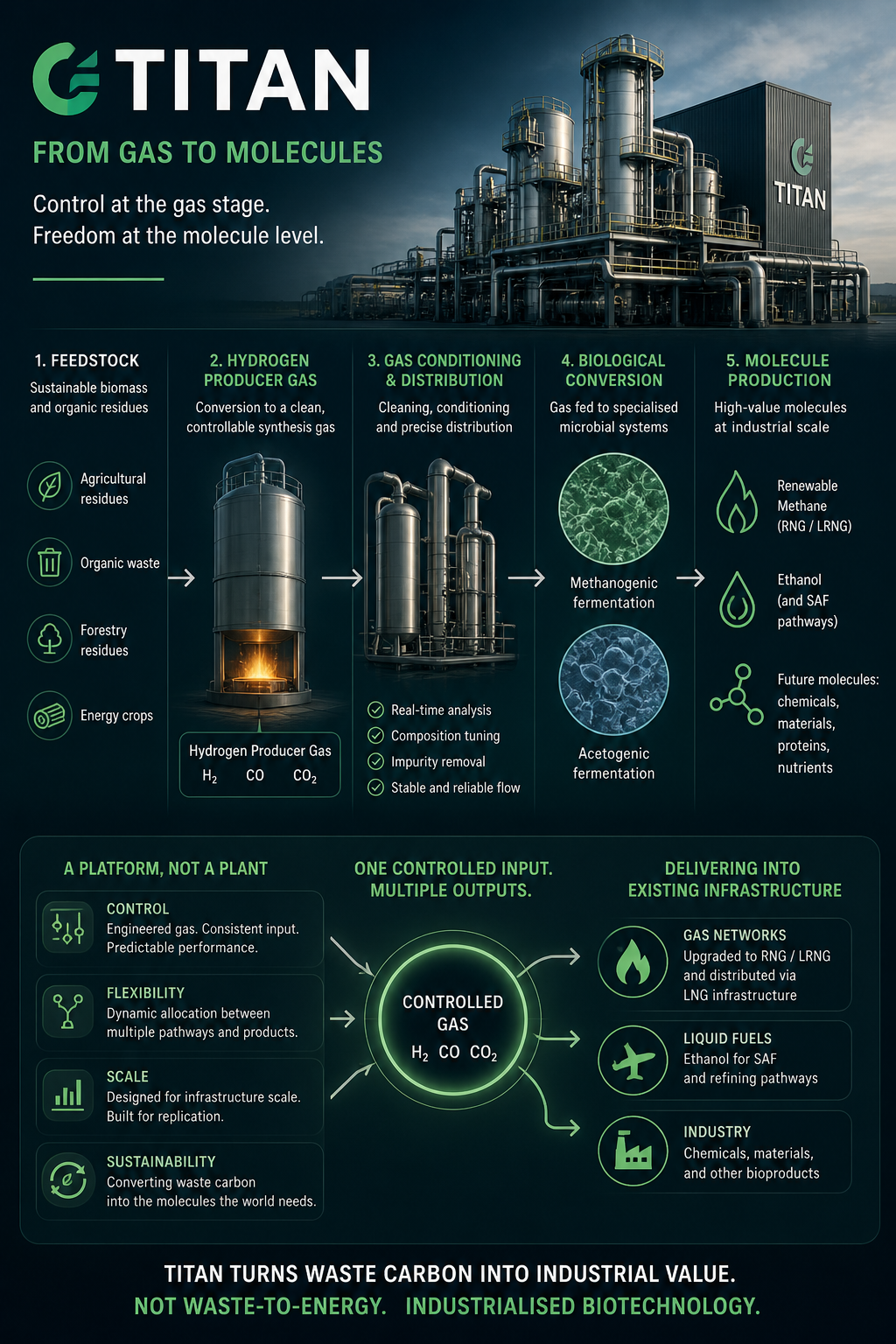
TITAN: From Gas to Molecules — Why Control Matters

Przewiń w dół, aby zobaczyć wersję w języku polskim.

TITAN does not begin with fermentation.

It begins with control.

At the heart of the platform is a simple but critical step: converting solid carbon into a stable, controllable gas. This is achieved through Hydrogen Producer Gas, where biomass is transformed into a defined mixture of hydrogen, carbon monoxide and carbon dioxide.

This step determines everything that follows.

Most carbon conversion systems struggle because they attempt to process variability. Mixed inputs lead to unstable outputs. Biological systems, in particular, are sensitive to inconsistency. When feedstock fluctuates, performance drops, yields fall, and scale becomes difficult.

TITAN removes this problem at the source.

By converting solids into gas first, it separates variability from production. The gas phase becomes a controlled interface between raw material and biology. Instead of managing unpredictable solids, the system manages a measurable, adjustable flow.

Gas can be analysed in real time.

Composition can be tuned. Ratios of hydrogen to carbon monoxide can be adjusted depending on the target pathway. Flow can be stabilised. Impurities can be reduced through conditioning and polishing. What enters the fermentation system is no longer variable waste. It is engineered input.

This is the difference between adaptation and design.

In conventional systems, biology is forced to adapt to the feedstock. In TITAN, the feedstock is engineered to suit the biology. This allows microbial systems to operate under optimal conditions rather than survival conditions.

The result is stability.

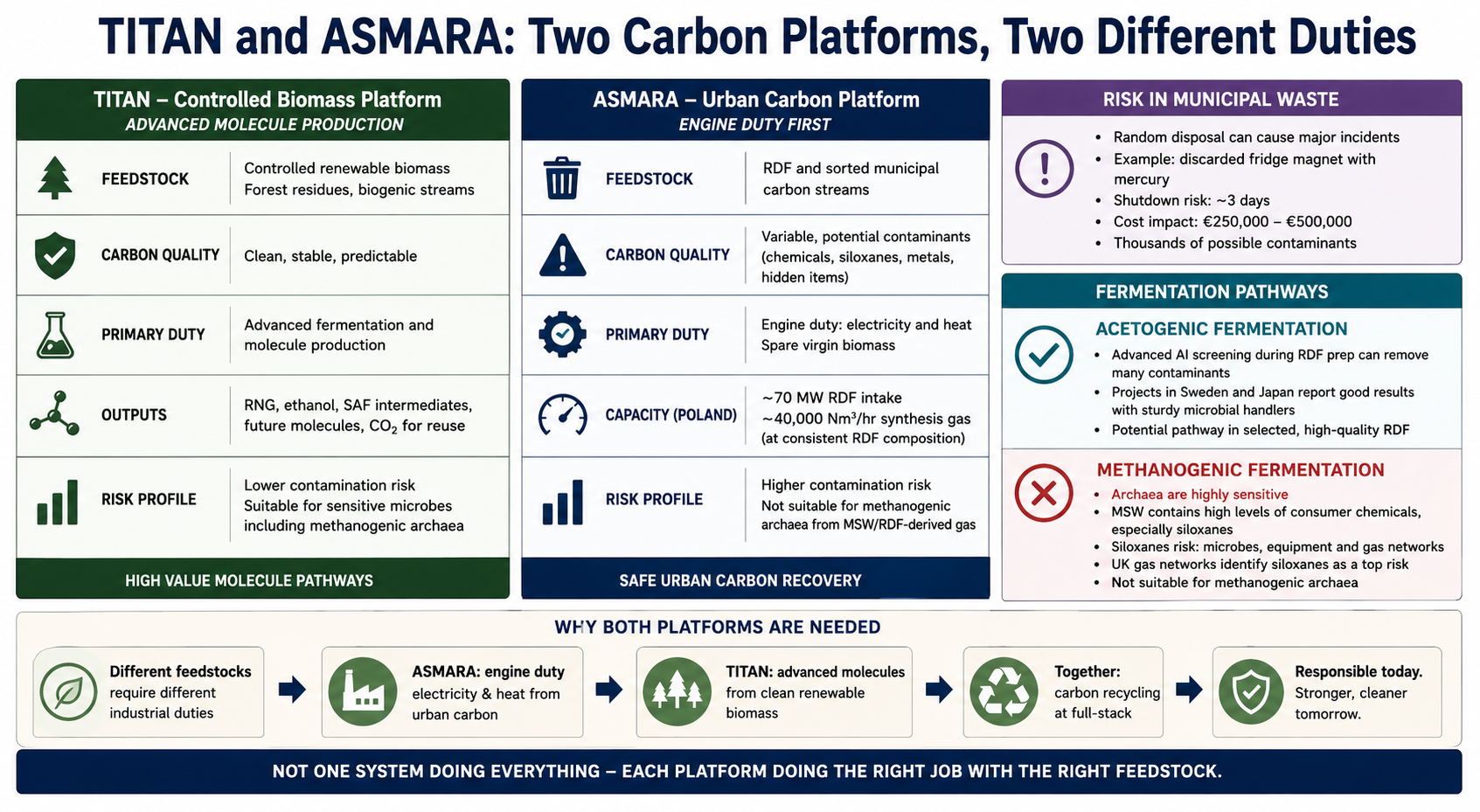
Methanogenic and acetogenic pathways require consistency to perform at industrial scale. Methanogens convert hydrogen and carbon dioxide into methane. Acetogens convert carbon monoxide and hydrogen into ethanol and other molecules. Both processes are highly sensitive to gas composition, pressure and flow.

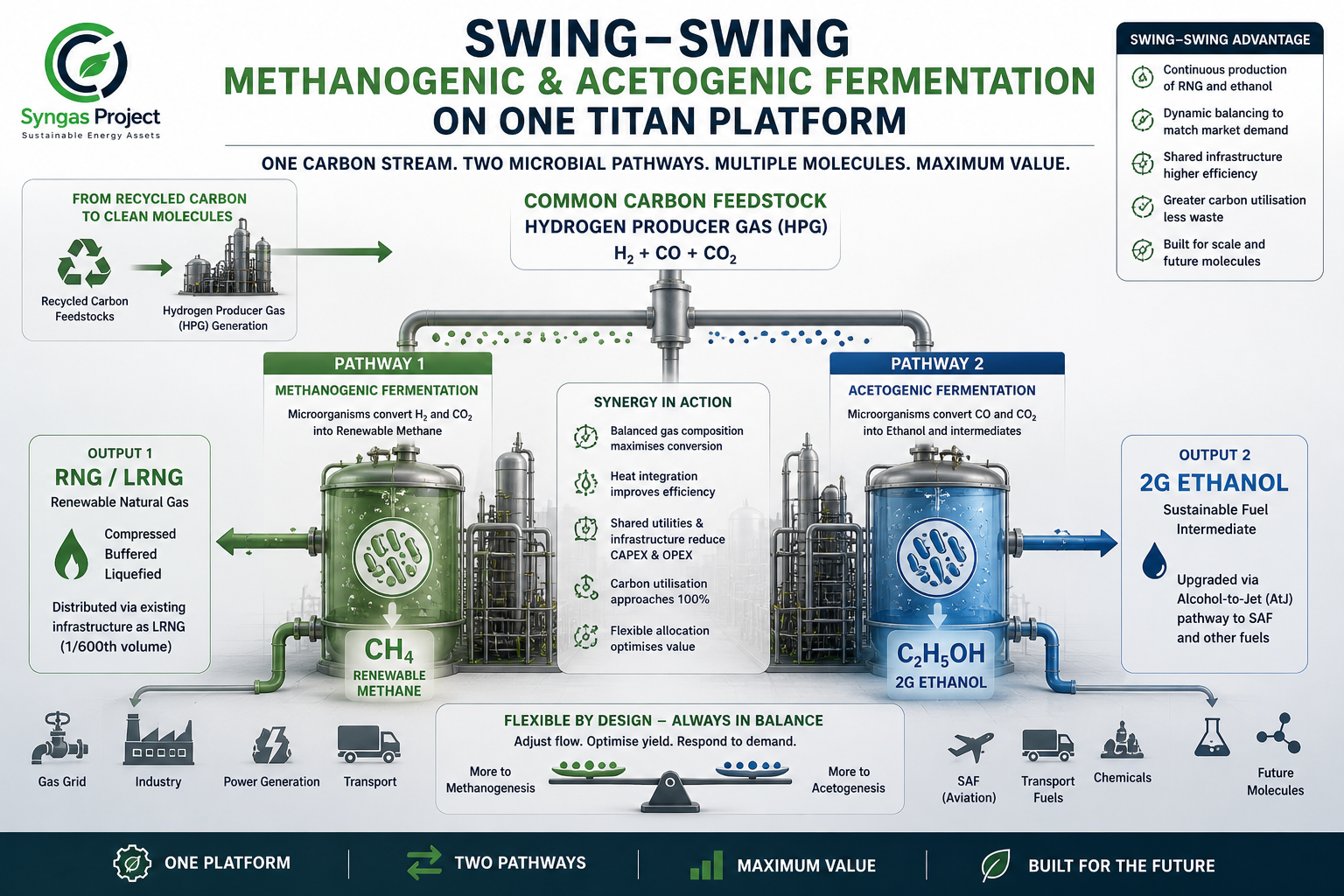
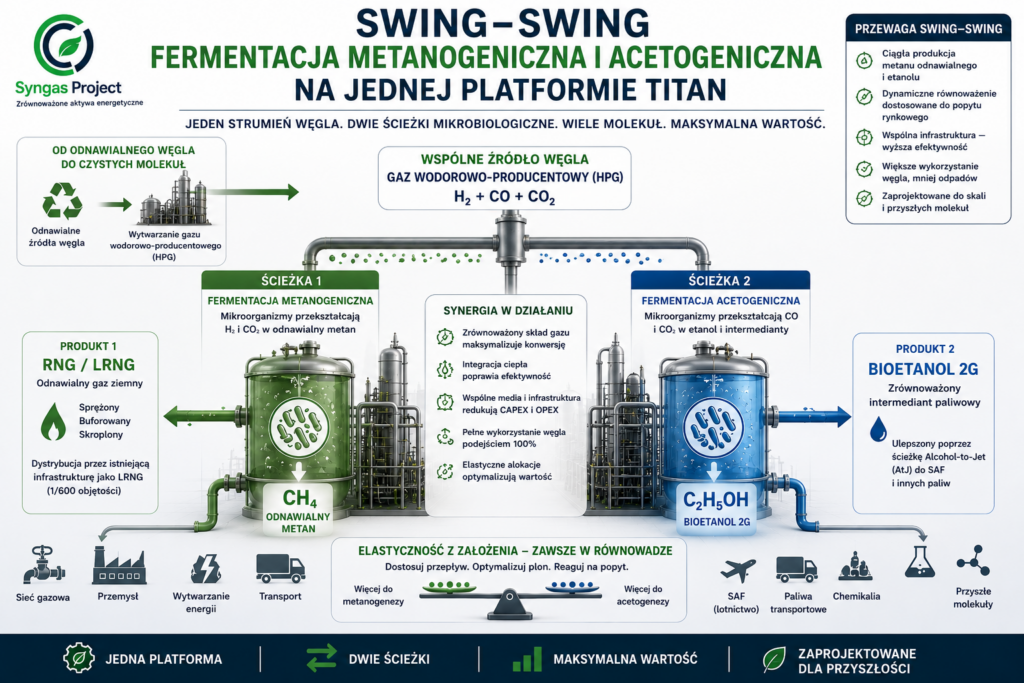
Swing–Swing — Bankability Through Molecule Choice

(Przewiń w dół, aby zobaczyć wersję polską.)

Published March 20 2026

TITAN is built as a molecule platform, not a single-output plant.

In Phase 1, the local materiality case is methane-led. Poland needs a bankable, scalable renewable gas solution, and TITAN answers that need by converting forest residue into Hydrogen Producer Gas and then into renewable methane through methanogenic fermentation. This is the right starting point. It connects directly to existing gas infrastructure, supports energy security, and creates an immediate route to market.

But TITAN is not simply an RNG plant.

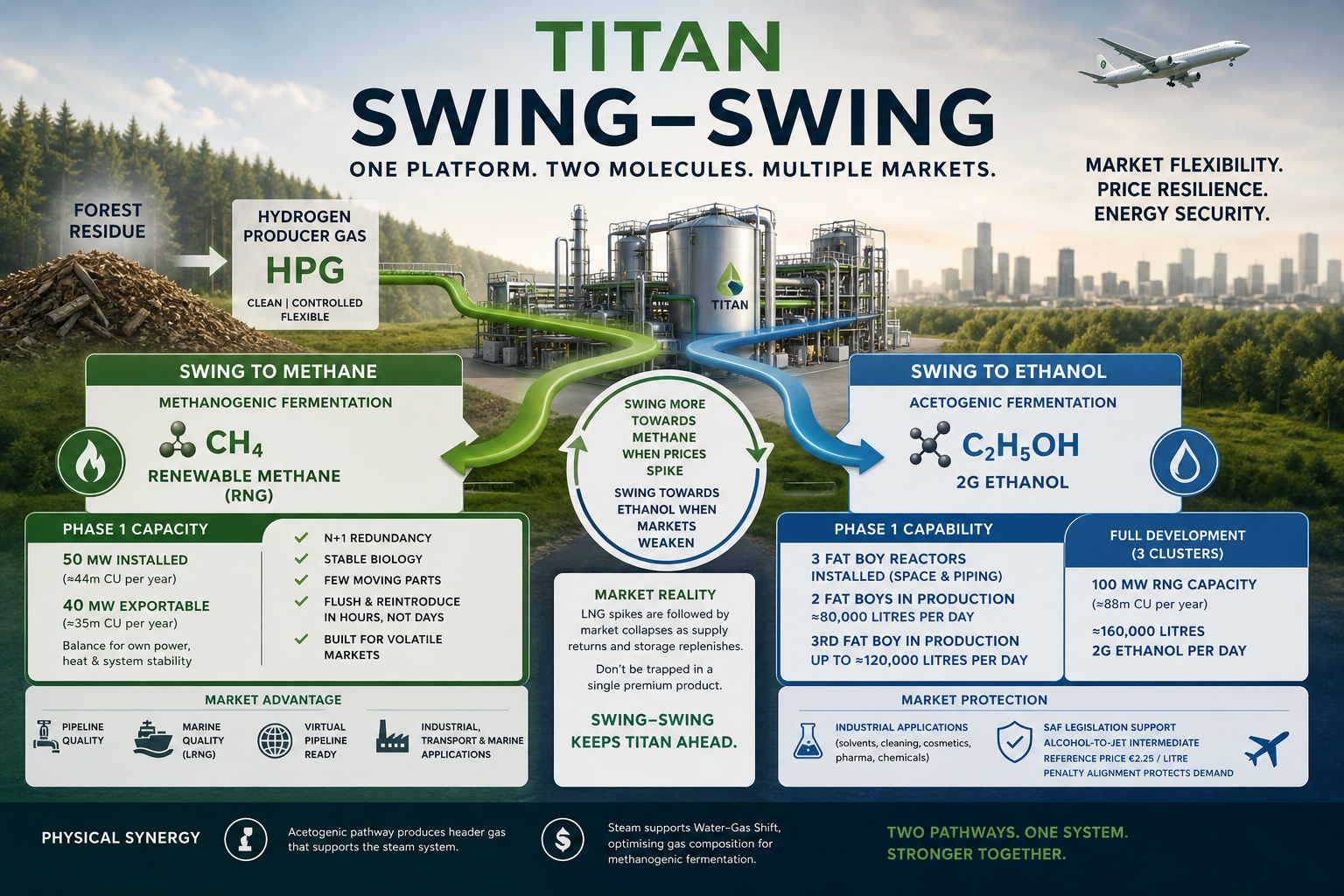
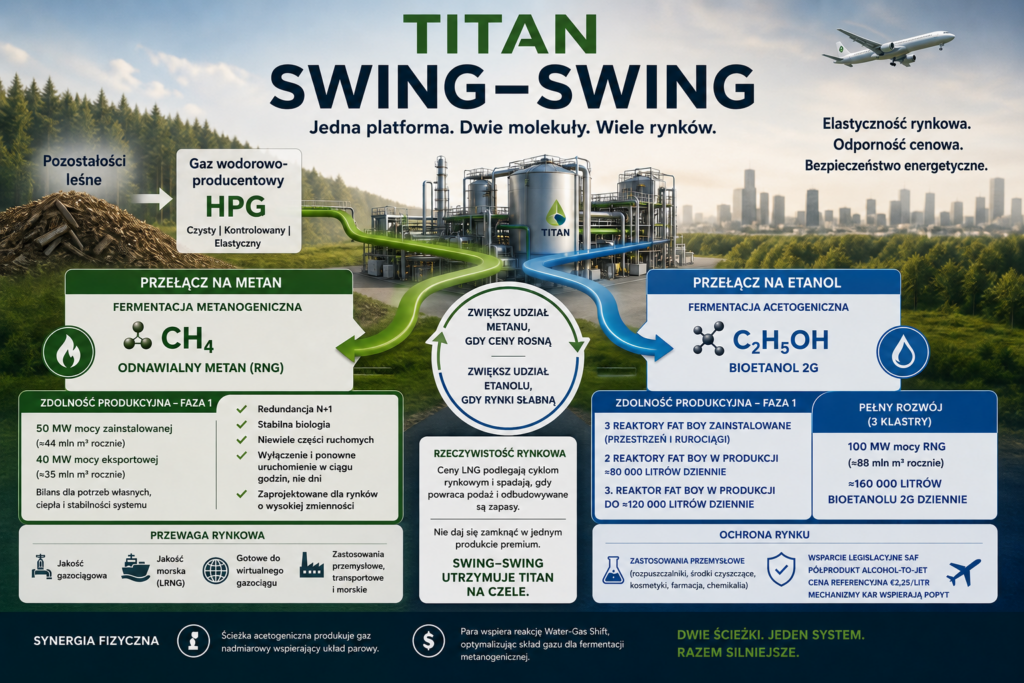
The platform is designed from the beginning to move between renewable methane and 2G ethanol. This is the meaning of Swing–Swing 25MW RNG (circa 22m CU per year) + 80,000 litres of 2G EtOH daily.

Phase 1 installs 50 MW (Circa 44m CU a year) of RNG capacity. In normal operation, around 40 MW (circa 35m CU a year) can be exported, while the balance is retained for own power, heat and system stability. The additional installed capacity provides N+1 redundancy, but not because the biology is weak. Methanogenic fermentation is stable. The archaea operate as efficient replicating colonies, with very few moving parts. Once established, the colony regime is unlikely to change materially within a 12-month cycle, and if intervention is needed, flushing and reintroduction are measured in hours, not days.

The redundancy is justified because the market is volatile.

If LNG or gas prices spike, TITAN can swing more gas toward methane and capture that value. If methane prices weaken or collapse as they often do after spikes), the platform is not trapped. It can direct gas toward acetogenic fermentation, producing ethanol instead.

Gather–Chip–Ship: How TITAN Connects Modern Forestry to Renewable Molecules

(Przewiń w dół, aby zobaczyć wersję polską.)

Published February 28 2026

Forestry is often misunderstood.

Many people imagine forest residues as a random, scattered and uncertain resource. They picture a loose biomass market, occasional availability and a feedstock supply chain that is difficult to control.

Nothing could be further from the real position in Poland.

Poland’s State Forests are one of the country’s great strategic assets. They are organised through 17 Regional Directorates of State Forests, known as RDLPs. Across more than 9 million hectares of forest, the system is planned, measured and managed over long biological cycles. Forest stands mature over 40 years and longer. Harvesting, replanting, thinning, species management and timber classification are not accidental. They are known, recorded and managed.

This matters for TITAN.

It also matters for the long-term CSRD logic of forestry.

A platform that converts forest residue into renewable molecules cannot depend on guesswork. It must understand where material is available, when it will be available, what quality it has and how much can be responsibly recovered.

The Polish forestry system already contains much of that knowledge.

The RDLP structure knows its forests. It knows stand maturity, species composition, harvest planning, merchantable timber availability and non-merchantable material potential. It understands where forest residues arise, where windthrow or disease has affected stands, and where clean-up work is required after harvesting.

This means the non-merchantable resource can be accounted for down to the tonne.

That changes its status.

Instead of being treated as a low-value residue, unmanaged by-product or potential liability, it becomes an auditable renewable carbon resource. It can be measured, recovered, priced and reported. For forestry, this is important. CSRD requires better evidence, better inventory logic and better explanation of how environmental resources and impacts are managed.

TITAN helps make that possible.

TITAN is not only a plant waiting at the end of a supply chain. It is active at the front end. The platform is designed around its own Gather–Chip–Ship capability, known as GCS. This means dedicated mobile machinery, trained operators and a controlled recovery system located around the regional forest base.

TITAN next generation ethanol and the decarbonisation of our skies

Revised: Steve Walker 20.04.2025

TITAN: Next-Generation Ethanol and the Decarbonisation of Our Skies

As aviation and transport fuel regulations tighten across Europe, second-generation ethanol (2G EtOH) has emerged as a cornerstone in the EU’s clean fuel strategy. At the heart of this transition is TITAN, a bio-engineering platform that transforms forest waste into renewable fuel, replacing petroleum-based inputs with high-value, low-emission alternatives.

TITAN is not just a plant — it is a statement of intent. It reflects a deep commitment to energy sovereignty, local feedstock utilisation, and a truly circular economy. It also represents a strategic leap forward for Poland’s aviation sector, offering a domestic solution to one of Europe’s most urgent climate compliance challenges.

2G Ethanol: The Core of TITAN’s Mission

TITAN’s primary objective is the production of advanced, non-food-based 2G EtOH, sourced entirely from waste forest biomass. This includes residues left on the forest floor, non-virgin woody biomass, and materials historically destined for landfilling or low-grade combustion.

Using a proprietary Hydrogen Producer Gas (HPG) to Targeted Microbial Fermentation (TMF) process, TITAN extracts renewable carbon and hydrogen from biomass, converting it into 2G EtOH with near-zero refinery emissions and no fossil fuel input. The platform’s dual HPG island architecture ensures continuous and decentralised gas supply for both electricity/heat and fermentation feedstock.

This modular structure allows TITAN to function as a standalone, grid-independent, smoke-free, zero-coal facility, setting a new benchmark for carbon-negative industrial energy systems.

SAF Rollout and the Alcohol-to-Jet Pathway

The second phase of TITAN’s rollout will focus on producing Sustainable Aviation Fuel (SAF) through the Alcohol-to-Jet (AtJ) pathway. The AtJ process refines TITAN’s 2G ethanol into Jet-A1 compliant, drop-in aviation fuel, ready to blend at refuelling depots across Europe. The first ten TITAN installations produce enough 2G EtOH to supply an AtJ refinery producing Jet-A1 and Biodeisel

This development is perfectly aligned with the ReFuelEU Aviation Regulation, which mandates all EU airports begin blending sustainable aviation fuels starting at 2% in 2025, rising to 6% in 2030, 20% by 2035, and 28% by 2050. Airlines that do not comply must pay penalties.

TITAN’s SAF production will therefore not only enable Polish airlines to comply — it will allow them to lead. By producing SAF locally, Poland can secure its own fuel supply, reduce its carbon intensity per flight, and offer intercontinental connections from a net-zero baseline.

Amidst the Threat of War: “Polands SAF Urgency is Overshadowed by NATO Front-Line Energy Security”

Ask AI No.3: Syngas Projects  AI-Driven “Executive Strategy”: Shouldn’t we be Accelerating TITAN Deployment Amid Geopolitical Pressures and the threat of war? 

TITAN, developed by Syngas Project, stands at the forefront of a strategic energy shift, playing a pivotal role in addressing Poland’s future energy needs and fortifying NATO’s eastern flank amid escalating geopolitical pressures. TITAN, a groundbreaking platform, converts forest and wood waste through Hydrogen Producers Gas + Microbial Fermentation, on one platform to produce Second Generation Ethanol (2G EtOH). The platform’s innovative approach, replacing outdated Fischer-Tropsch technology, aligns with modern environmental standards. The decision to expedite TITAN’s deployment, driven by AI’s counsel, reflects a commitment to meet Poland’s 2030 REpowerEU, Sustainable Aviation Fuel (SAF) requirements and secure energy independence, simultaneously contributing to NATO’s regional security objectives. The pursuit of 40 TITAN units ensures a resilient, decarbonised aviation future for Poland and a strategic response to evolving geopolitical challenges.

The way AI is transforming our business is how we are transforming our industry

How Dark Hydrogen became the New Green

The “new green hydrogen” is “dark bio-hydrogen”, so called after the dark fermentation bio-manufacturing process which creates it green because its manufacture and existence are entirely organic, renewable and waterless. 

We choose to go to the moon JFK 1962 Moonshot Speech
60 years on from JFK moonshot speech

One small step ahead of carbon capture and storage CCS replacing it instead with capture and transformation CCT, thus taking the capture and recycling of waste carbon to the next level is a giant leap for mankind. 60 years on from JFK’s moonshot speech and on its anniversary Joe Biden announced the cure for cancer is the new moonshot and its through bio-technology transformation that will get us there.

TITAN and ASMARA incorporate two technologies on one platform, waste to hydrogen producer gas + microbial fermentation to manufacture fuel, chemical and material products. CCT is a well-proven process for recycling both the carbon at the smoke stack, in the waste we produce and in the waste we throw away as it is for the carbon we have already produced. We are presented with a truly value-added proposition because recycling the carbon we already have obviates the need to dig up more carbon. Through converting solid waste into producer’s gas and CCT emission technology to recycle carbon in the producer’s gas through, microbial fermentation, we can reproduce all of the products we currently manufacture from oil and gas, where the likes of transport fuels, plastics and fertilisers are produced with far less environmental impact. In manufacturing, this great array of products as an added bonus, large quantities of waterless green hydrogen is recovered as a byproduct.        

Dark bio-hydrogen presents a disruptive edge to the idea of hydrogen as an energy carrier because it does not burden our ever-depleting water supply, instead, hydrogen is recovered from changing the state of organic feedstock through a proprietary, bio-manufacturing process where carbon-rich waste biomass or bio-waste is transformed from solid state to a gaseous state and as a feedstock for fermentation.