Europe’s SAF Challenge Cannot Be Solved with Cooking Oil Alone

Publish date: 4 May 2026

(Przewiń w dół, aby zobaczyć wersję polską.)

Europe is entering a new phase of aviation decarbonisation.

For decades, aviation depended almost entirely on fossil kerosene. The sector became one of the hardest parts of the economy to decarbonise because aircraft require extremely energy-dense liquid fuels that are safe, stable and globally compatible.

Unlike passenger vehicles, aviation cannot easily electrify at large scale.

Aircraft need molecules.

This is why Sustainable Aviation Fuel has become strategically important.

SAF allows the aviation sector to reduce lifecycle emissions while continuing to use existing aircraft, airports, pipelines and fuel logistics infrastructure. Instead of replacing the aviation system entirely, SAF enables gradual transition using compatible renewable fuels.

This approach is practical.

But it also creates a major challenge.

The scale of aviation fuel demand is enormous.

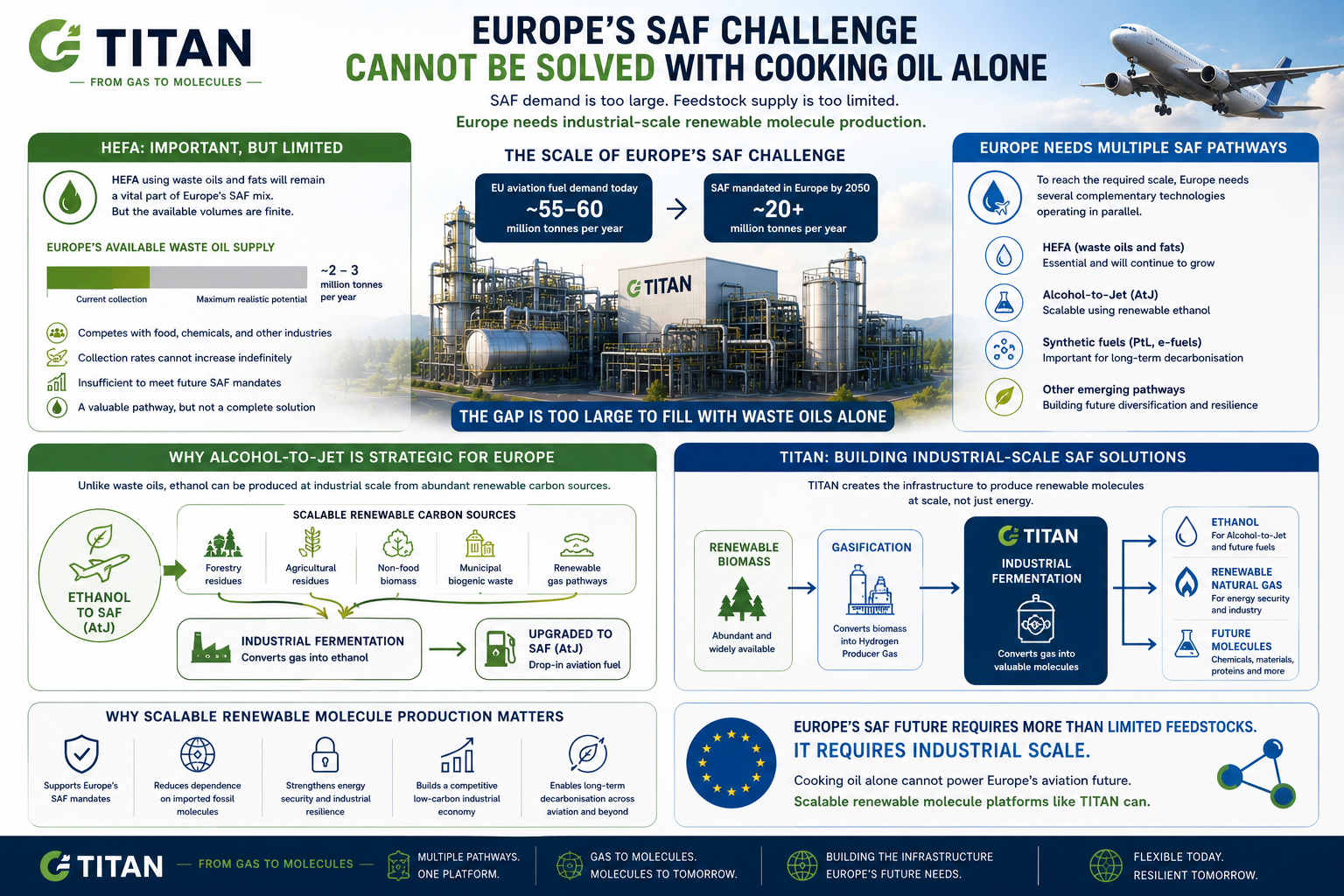
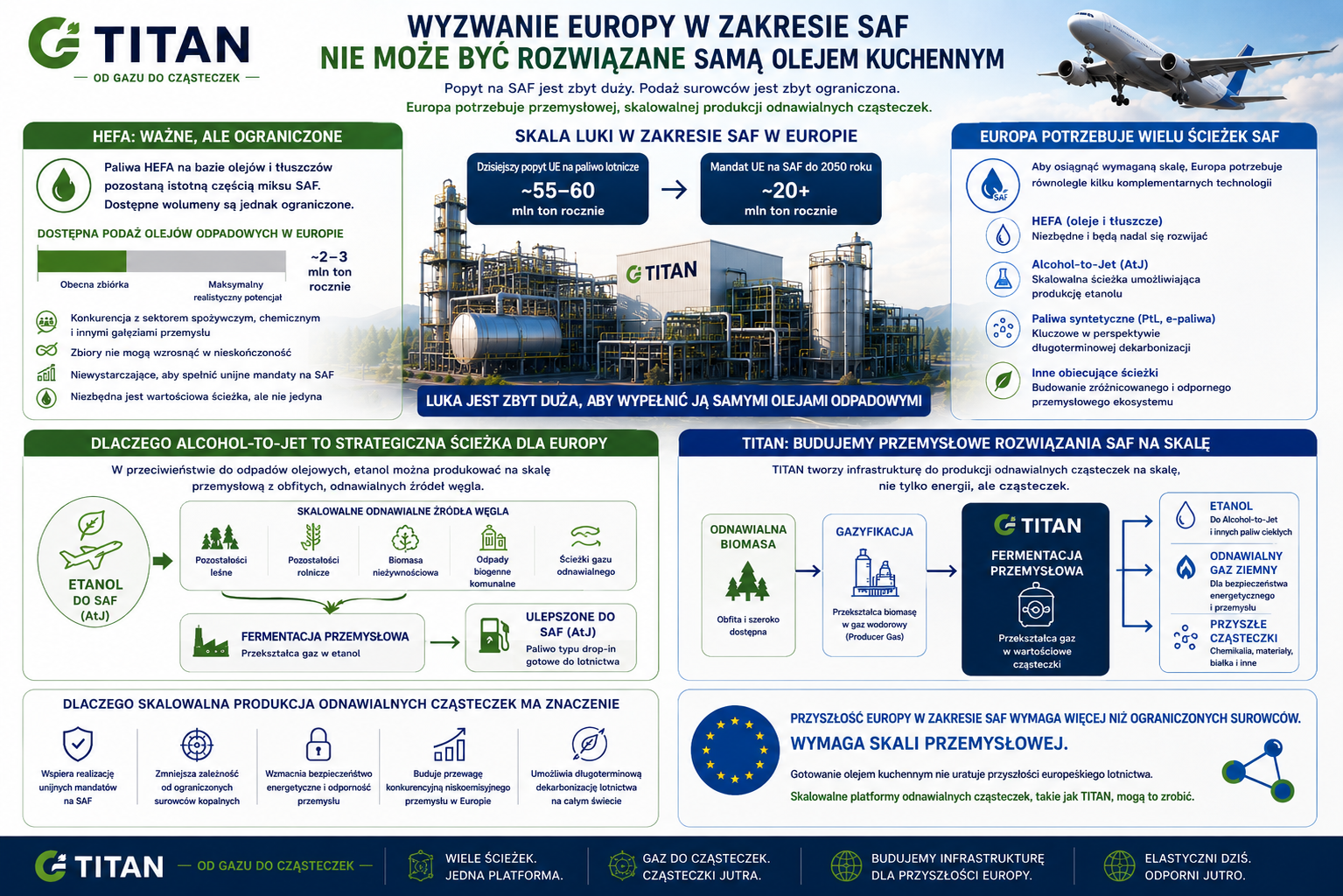
Europe consumes tens of millions of tonnes of aviation fuel every year. As SAF mandates increase over time, the volume of renewable fuel required will become extremely large. This creates pressure on feedstock supply chains across the entire energy and industrial system.

At present, much of the SAF discussion focuses on lipid-based pathways such as used cooking oil, waste fats and vegetable oils. These pathways are important and will continue to play a valuable role in SAF development.

But there is a structural limitation.

The volume of waste oils available is finite.

Europe cannot build a long-term SAF strategy around feedstocks that exist only in limited quantities. Even with aggressive collection systems, the available supply of used cooking oil and waste fats remains relatively small compared with total aviation fuel demand.

This is not a criticism of HEFA or lipid pathways.

It is simply a question of scale.

As aviation decarbonisation accelerates, Europe will require additional SAF pathways capable of operating at industrial volume using broader renewable carbon resources.
Full Stack: The Physical Layer of Artificial Intelligence

Publish Date: 2 May 2026

(Przewiń w dół, aby zobaczyć wersję polską.)

Artificial intelligence is rapidly becoming the defining technology race of the 21st century.

Every week brings announcements about larger models, faster processors, more capable software agents and increasingly advanced machine reasoning systems. Governments are investing billions. Technology companies are competing for dominance. Data centres are expanding across the world at extraordinary speed.

Most discussion focuses on computation.

But very little discussion focuses on what artificial intelligence ultimately needs in the physical world.

Because intelligence alone does not manufacture anything.

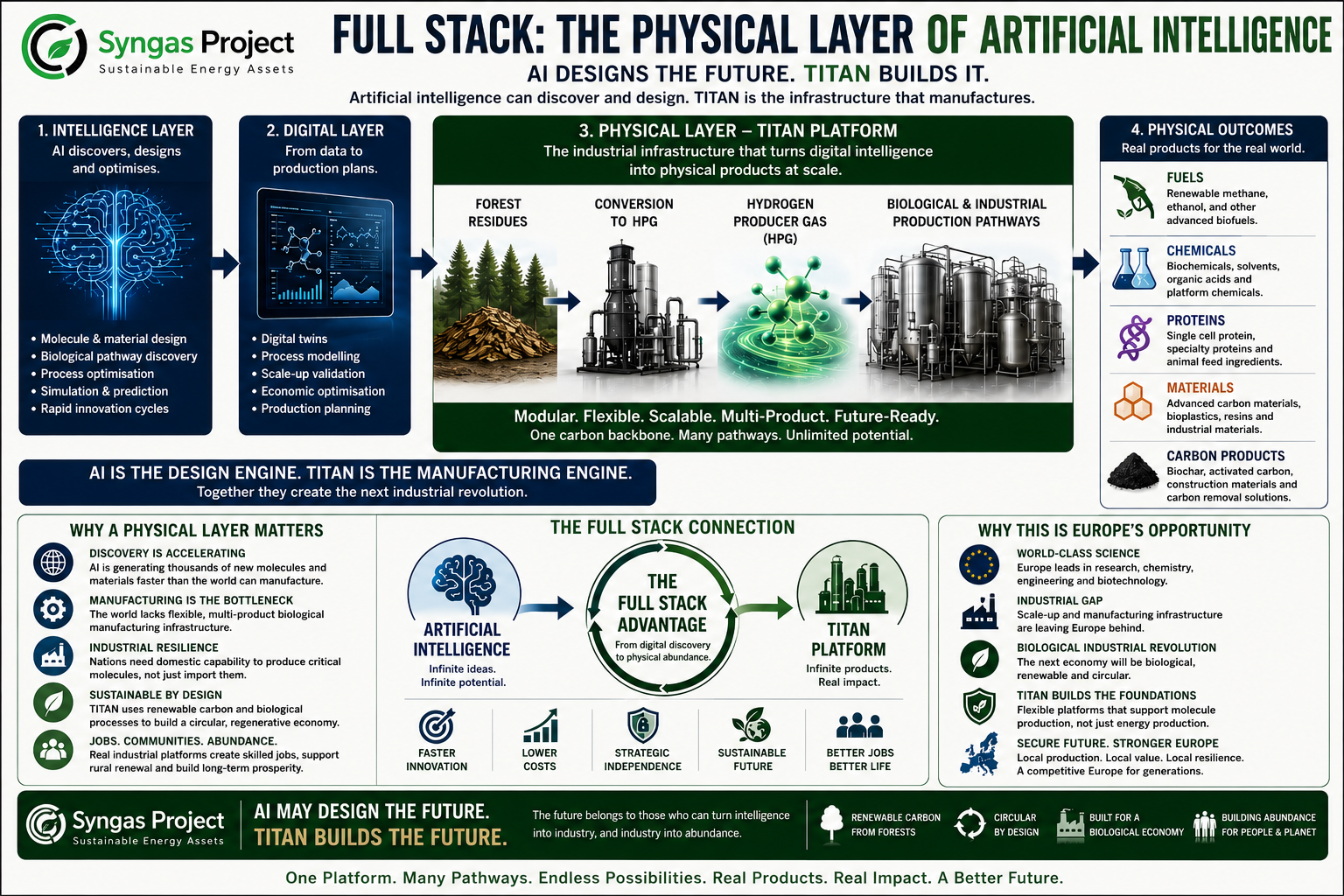
Artificial intelligence can design molecules.
It can optimise biological pathways.
It can simulate new materials.
It can improve industrial systems.
It can accelerate chemistry and biotechnology research.

But eventually, something physical must manufacture the result.

This is where the next industrial bottleneck may emerge.

The future may not belong only to countries that control computation.

It may also belong to countries that control biological manufacturing platforms capable of turning digital intelligence into physical products.

That distinction is becoming increasingly important.

Artificial intelligence is already beginning to transform chemistry, material science, pharmaceutical research, biological engineering and industrial process optimisation. The speed of discovery is accelerating dramatically. New materials, proteins, enzymes, carbon structures and biological production pathways are being identified faster than traditional industrial systems can adapt.

But discovery is only one half of the equation.

Manufacturing remains the other half.

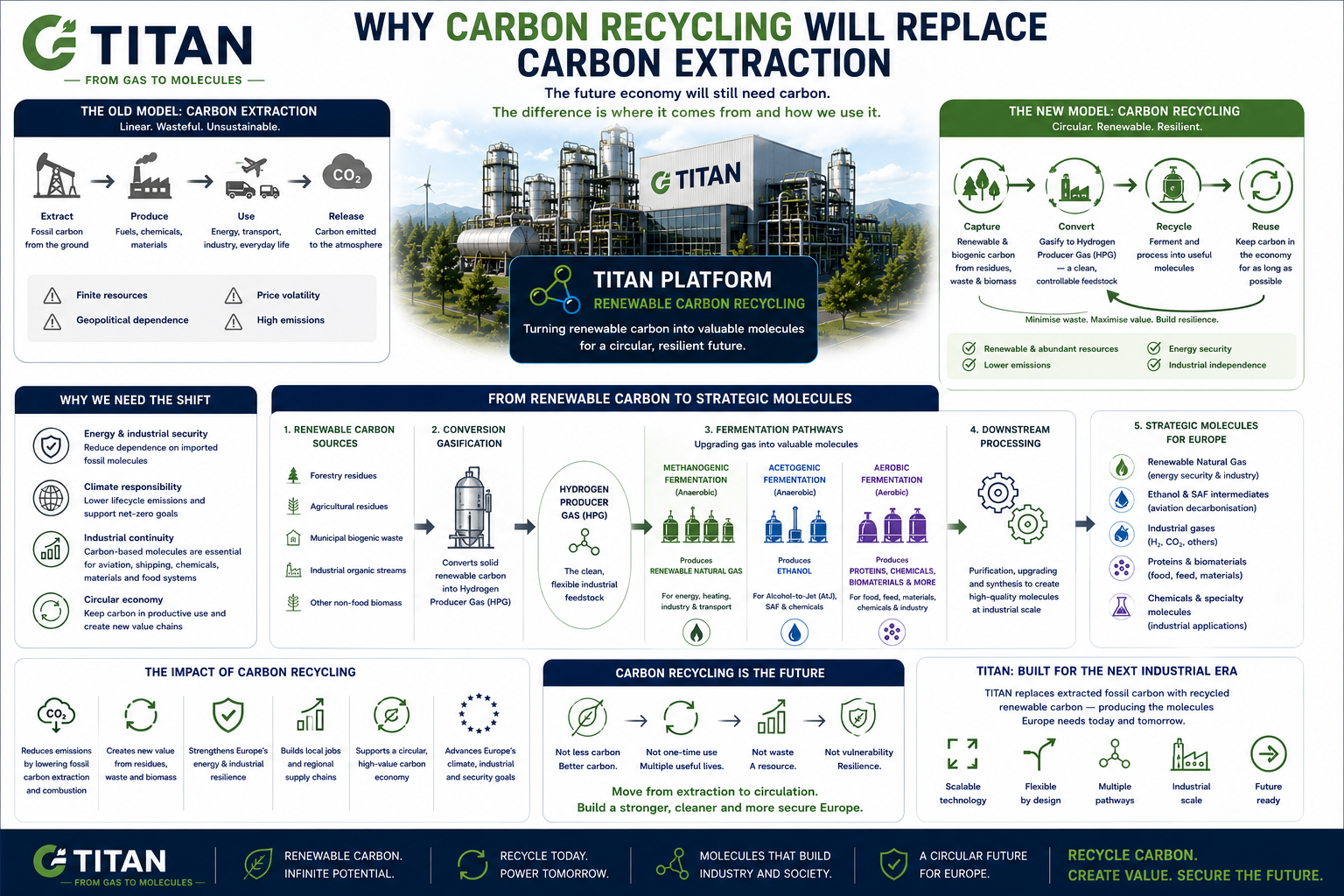
Why Carbon Recycling Will Replace Carbon Extraction

Publish date: 1 May 2026

(Przewiń w dół, aby zobaczyć wersję polską.)

For more than a century, industrial growth has depended on carbon extraction.

Coal, oil and natural gas were taken from the ground, refined, transported and converted into energy, fuels, chemicals and materials. This model powered the modern economy. It created mobility, manufacturing, aviation, plastics, fertilisers and global trade.

But it also created a structural problem.

The industrial economy became dependent on fossil carbon.

Carbon was extracted once, used briefly, and then released into the atmosphere. This linear model was efficient during the age of cheap fossil resources, but it is no longer compatible with Europe’s long-term climate, industrial and security objectives.

The next industrial era will require a different model.

Carbon cannot simply be treated as something to extract, burn and discard.

It must be treated as something to recover, recycle and reuse.

This is the logic of carbon recycling.

Carbon recycling does not mean stopping the use of carbon. That would be impossible for many parts of the economy. Aviation, shipping, chemicals, materials, agriculture, food systems and industrial manufacturing all depend on carbon-based molecules.

The real question is not whether society will use carbon.

The question is where that carbon comes from.

In the old model, carbon came from fossil extraction.

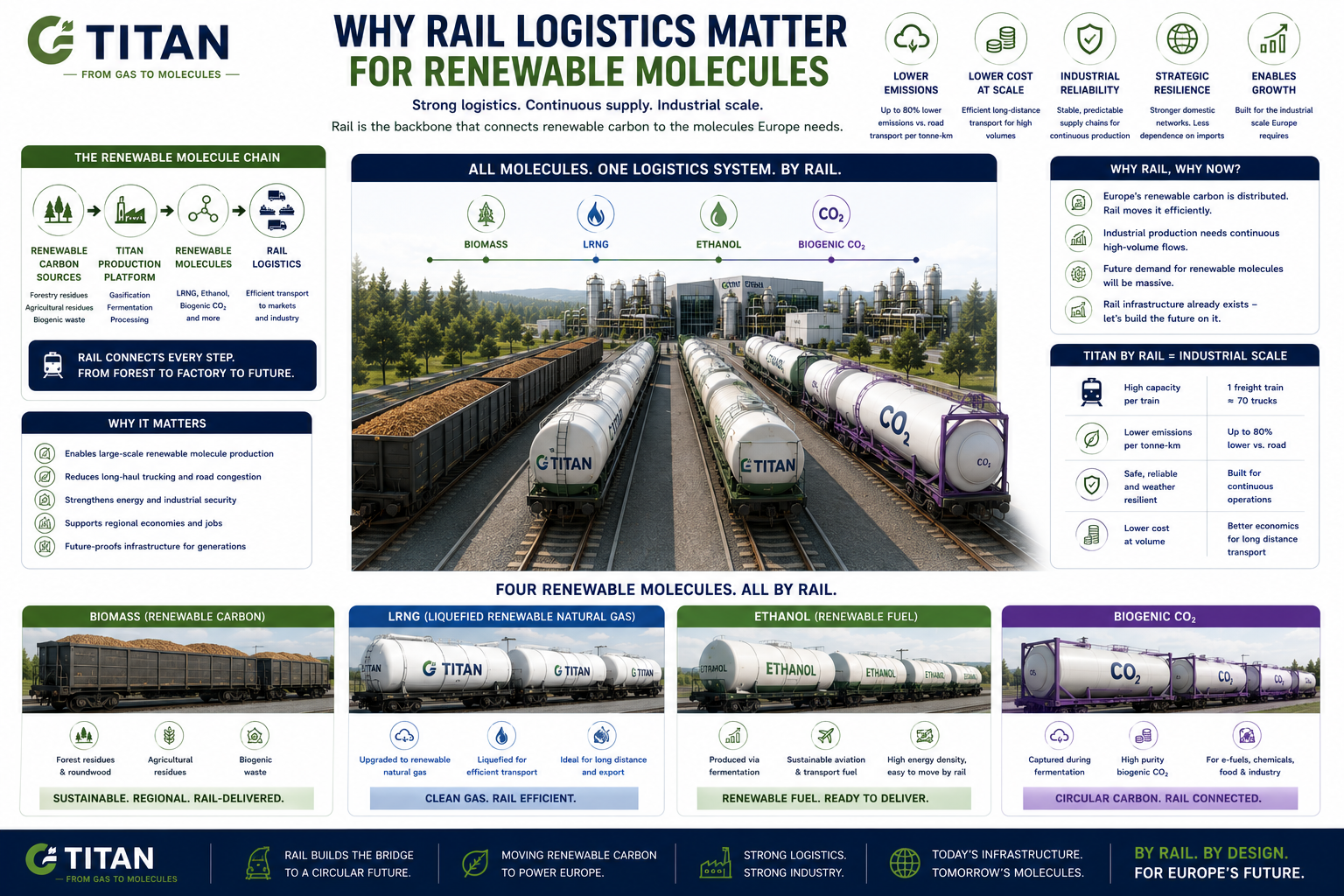
Why Rail Logistics Matter for Renewable Molecules

Publish date 29 April 2026

(Przewiń w dół, aby zobaczyć wersję polską.)

The renewable molecule economy will not succeed on chemistry alone.

It will succeed on logistics.

One of the largest mistakes in modern energy planning is the assumption that low-carbon systems can simply replace fossil systems without rebuilding the underlying industrial transport infrastructure. In reality, renewable molecules require an entirely different logistical approach.

This is especially true at industrial scale.

Renewable carbon is more distributed than fossil carbon. Biomass is regional. Residues are seasonal. Industrial fermentation requires continuous feedstock flow. Renewable gases and fuels must move efficiently between production, storage and end markets.

That means logistics become strategic infrastructure.

This is one of the reasons TITAN was designed around rail.

Rail is not simply a transport option.

It is one of the core foundations of industrial-scale renewable molecule production.

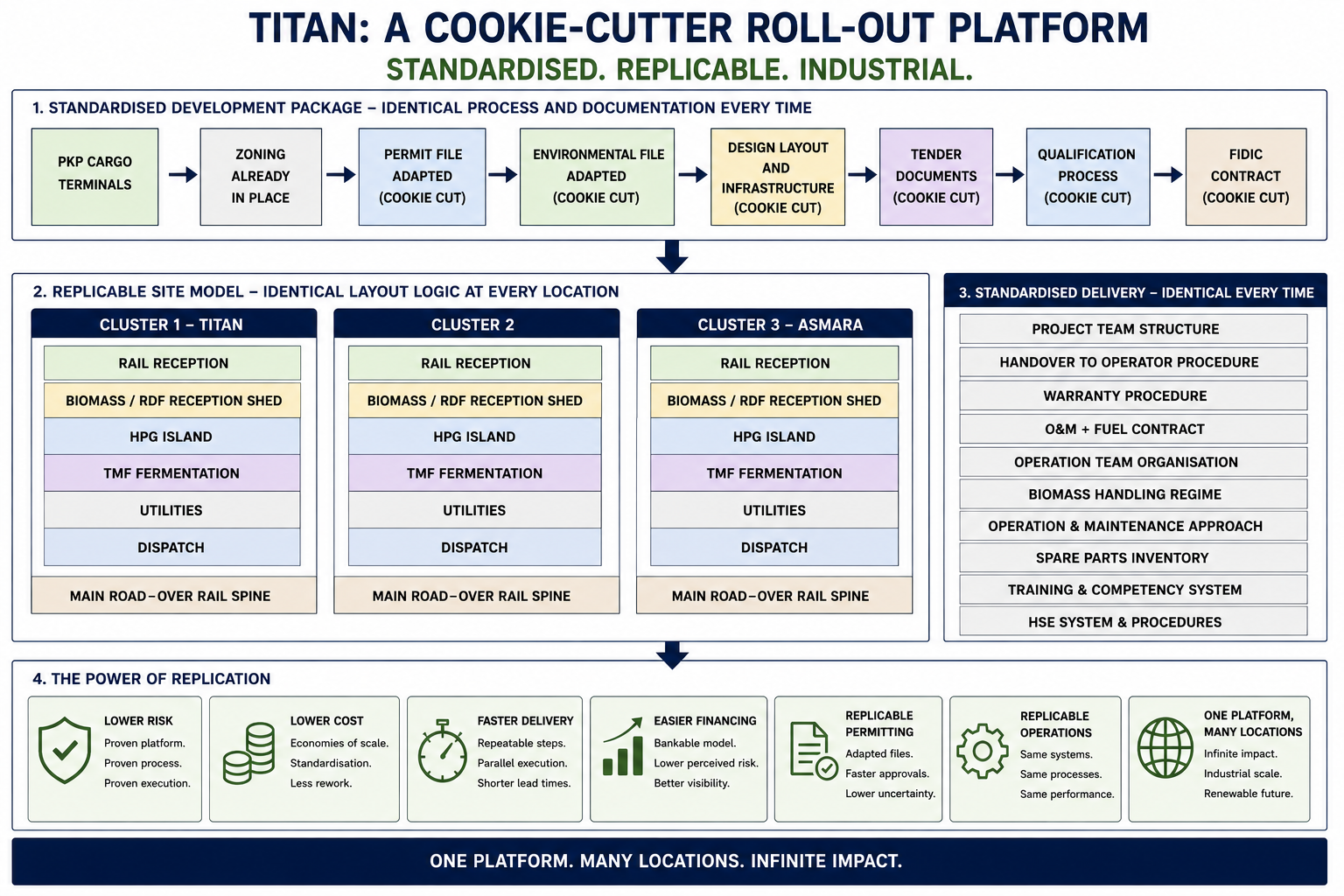
TITAN: A Cookie-Cutter Roll-Out Platform

Publish date: 28 April 2026

(Przewiń w dół, aby zobaczyć wersję polską.)

One of the biggest challenges in industrial decarbonisation is not technology.

It is replication.

Many energy and industrial projects work only under highly specific local conditions. They rely on unusual feedstocks, unique permitting structures, customised engineering or isolated infrastructure advantages. This makes scaling difficult, expensive and slow.

Europe does not only need successful demonstration projects.

Europe needs repeatable industrial platforms.

This is one of the core principles behind TITAN.

TITAN was not designed as a one-off installation.

It was designed as a cookie-cutter roll-out platform.

The objective is simple:

Standardise as much of the industrial system as possible while allowing limited adaptation to local site conditions.

This approach changes the economics and deployment logic of renewable molecule infrastructure.

In traditional industrial development, every project often starts from the beginning. Engineering teams redesign systems repeatedly. Procurement chains change. Operational training changes. Construction sequencing changes. Financing becomes more difficult because each installation appears unique.

TITAN approaches this differently.

The platform is modular, repeatable and structurally standardised.

Core systems remain consistent across deployments: gasification architecture, Hydrogen Producer Gas production, fermentation pathways, logistics logic, control philosophy and industrial workflow. This allows engineering knowledge, operational experience and supply-chain learning to accumulate over time rather than restarting for every site.

This is how industrial scaling historically succeeds.

The automotive industry did not scale through handcrafted prototypes.

Container shipping did not scale through unique containers.

Rail systems did not scale through custom track gauges for every city.

Industrial systems become powerful when they become repeatable.

TITAN applies the same principle to renewable molecule infrastructure.

Each TITAN deployment is designed around a familiar industrial structure: renewable carbon intake, gasification, controlled Hydrogen Producer Gas production, fermentation pathways, molecule upgrading, logistics integration and dispatch.

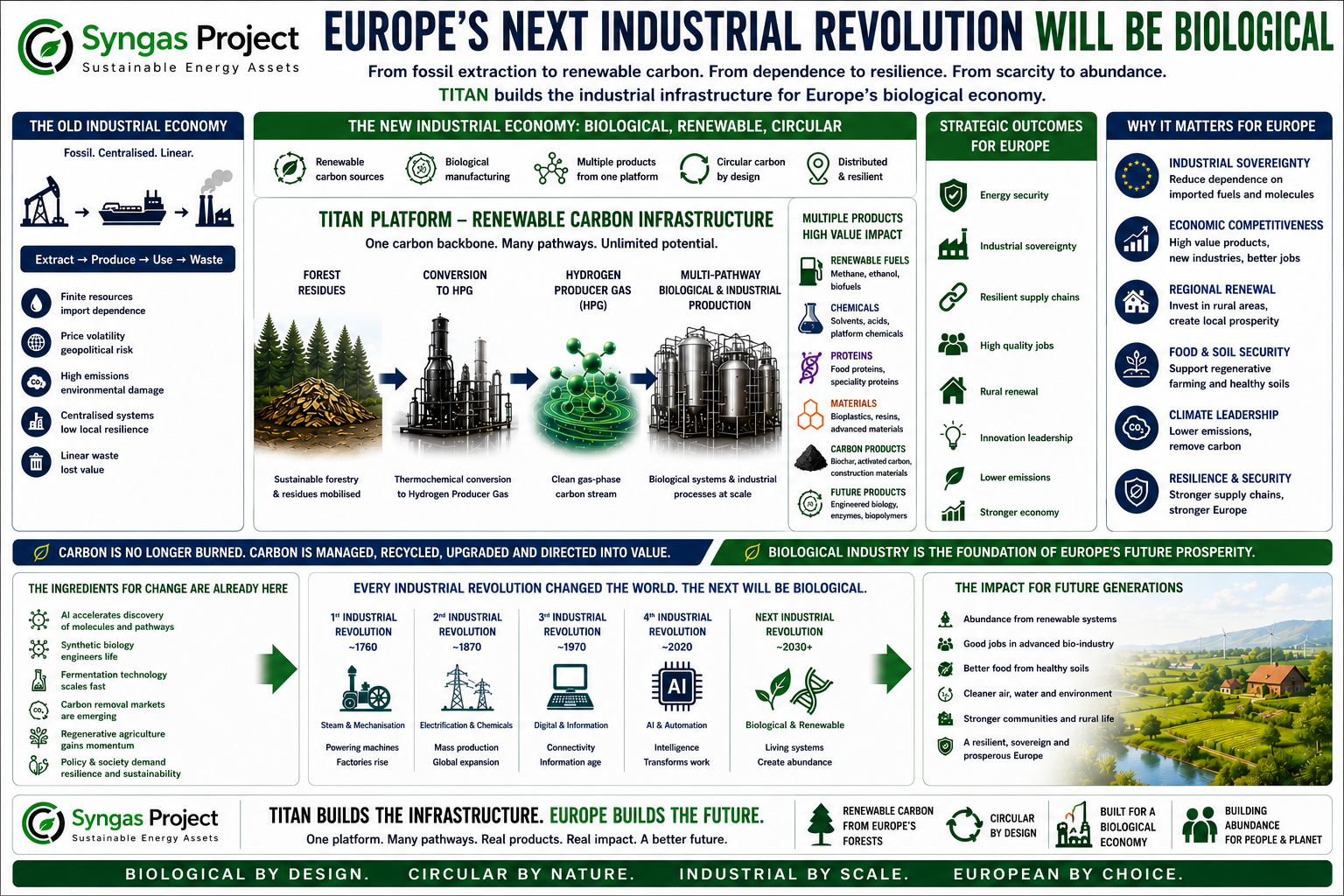
Europe’s Next Industrial Revolution Will Be Biological

Publish Date 27 April 2026

(Przewiń w dół, aby zobaczyć wersję polską.)

Europe was built on industrial revolutions.

The first industrial age was powered by coal, steam and mechanisation. The second was built around oil, gas, chemicals and mass electrification. The digital era transformed communications, finance and information systems.

The next industrial revolution may be biological.

Not in the science-fiction sense.

In the industrial sense.

The global economy is beginning to move away from extracting fossil carbon from underground and toward managing renewable carbon flows above ground. This transition will affect far more than energy production. It will reshape fuels, chemicals, agriculture, food systems, materials, manufacturing and industrial supply chains.

This matters because modern economies do not run on electricity alone.

They also run on molecules.

Fuels.
Chemicals.
Plastics.
Solvents.
Proteins.
Materials.
Industrial gases.
Carbon products.

For more than a century, most of these products originated from oil, coal and gas extraction. The fossil economy did not only produce energy. It produced the molecular foundation of industrial civilisation.

That foundation is now beginning to change.

Europe faces a strategic challenge.

The continent has world-class science, engineering and biotechnology capability. But it imports large quantities of critical molecules and remains structurally dependent on external energy and feedstock systems. Geopolitical instability, supply chain disruption and rising resource competition are exposing the risks of this dependence.

The solution may not simply be replacing fossil electricity generation.

The solution may be rebuilding Europe’s molecule economy around renewable carbon systems.

This is where biological manufacturing becomes important.

Biological systems are extraordinarily efficient molecular factories. Microbes, enzymes and fermentation systems can already produce fuels, proteins, chemicals and specialist compounds. Artificial intelligence is now accelerating the discovery of entirely new biological pathways and material possibilities.

But these systems require industrial platforms capable of operating at scale.

That is where TITAN positions itself.

TITAN next generation ethanol and the decarbonisation of our skies

Revised: Steve Walker 20.04.2025

TITAN: Next-Generation Ethanol and the Decarbonisation of Our Skies

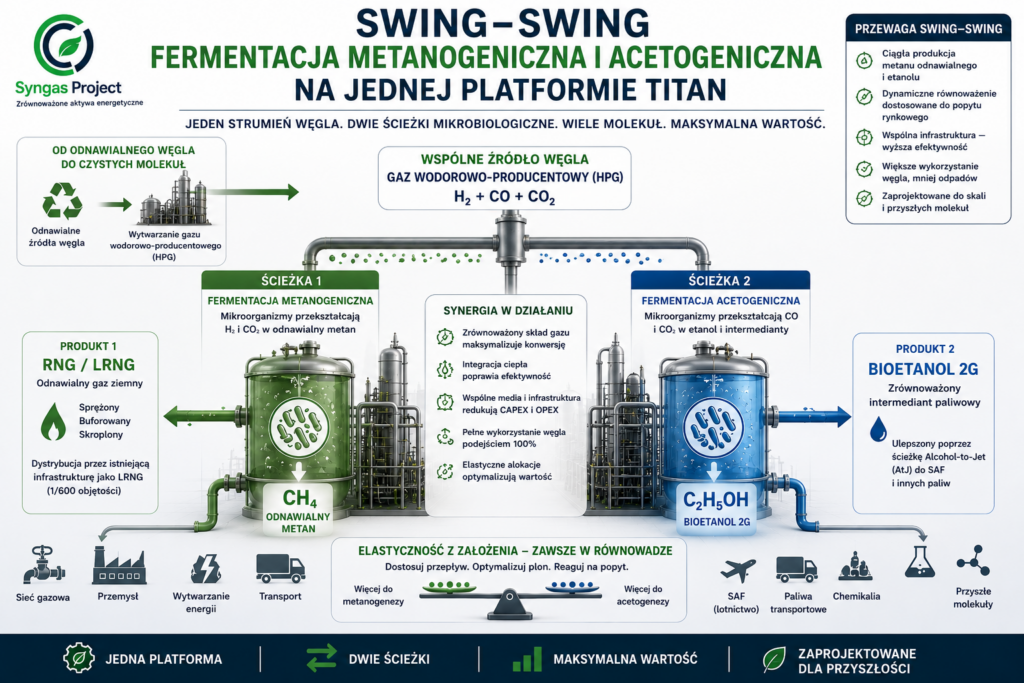
As aviation and transport fuel regulations tighten across Europe, second-generation ethanol (2G EtOH) has emerged as a cornerstone in the EU’s clean fuel strategy. At the heart of this transition is TITAN, a bio-engineering platform that transforms forest waste into renewable fuel, replacing petroleum-based inputs with high-value, low-emission alternatives.

TITAN is not just a plant — it is a statement of intent. It reflects a deep commitment to energy sovereignty, local feedstock utilisation, and a truly circular economy. It also represents a strategic leap forward for Poland’s aviation sector, offering a domestic solution to one of Europe’s most urgent climate compliance challenges.

2G Ethanol: The Core of TITAN’s Mission

TITAN’s primary objective is the production of advanced, non-food-based 2G EtOH, sourced entirely from waste forest biomass. This includes residues left on the forest floor, non-virgin woody biomass, and materials historically destined for landfilling or low-grade combustion.

Using a proprietary Hydrogen Producer Gas (HPG) to Targeted Microbial Fermentation (TMF) process, TITAN extracts renewable carbon and hydrogen from biomass, converting it into 2G EtOH with near-zero refinery emissions and no fossil fuel input. The platform’s dual HPG island architecture ensures continuous and decentralised gas supply for both electricity/heat and fermentation feedstock.

This modular structure allows TITAN to function as a standalone, grid-independent, smoke-free, zero-coal facility, setting a new benchmark for carbon-negative industrial energy systems.

SAF Rollout and the Alcohol-to-Jet Pathway

The second phase of TITAN’s rollout will focus on producing Sustainable Aviation Fuel (SAF) through the Alcohol-to-Jet (AtJ) pathway. The AtJ process refines TITAN’s 2G ethanol into Jet-A1 compliant, drop-in aviation fuel, ready to blend at refuelling depots across Europe. The first ten TITAN installations produce enough 2G EtOH to supply an AtJ refinery producing Jet-A1 and Biodeisel

This development is perfectly aligned with the ReFuelEU Aviation Regulation, which mandates all EU airports begin blending sustainable aviation fuels starting at 2% in 2025, rising to 6% in 2030, 20% by 2035, and 28% by 2050. Airlines that do not comply must pay penalties.

TITAN’s SAF production will therefore not only enable Polish airlines to comply — it will allow them to lead. By producing SAF locally, Poland can secure its own fuel supply, reduce its carbon intensity per flight, and offer intercontinental connections from a net-zero baseline.

Amidst the Threat of War: “Polands SAF Urgency is Overshadowed by NATO Front-Line Energy Security”

Ask AI No.3: Syngas Projects  AI-Driven “Executive Strategy”: Shouldn’t we be Accelerating TITAN Deployment Amid Geopolitical Pressures and the threat of war? 

TITAN, developed by Syngas Project, stands at the forefront of a strategic energy shift, playing a pivotal role in addressing Poland’s future energy needs and fortifying NATO’s eastern flank amid escalating geopolitical pressures. TITAN, a groundbreaking platform, converts forest and wood waste through Hydrogen Producers Gas + Microbial Fermentation, on one platform to produce Second Generation Ethanol (2G EtOH). The platform’s innovative approach, replacing outdated Fischer-Tropsch technology, aligns with modern environmental standards. The decision to expedite TITAN’s deployment, driven by AI’s counsel, reflects a commitment to meet Poland’s 2030 REpowerEU, Sustainable Aviation Fuel (SAF) requirements and secure energy independence, simultaneously contributing to NATO’s regional security objectives. The pursuit of 40 TITAN units ensures a resilient, decarbonised aviation future for Poland and a strategic response to evolving geopolitical challenges.

The way AI is transforming our business is how we are transforming our industry

How Dark Hydrogen became the New Green

The “new green hydrogen” is “dark bio-hydrogen”, so called after the dark fermentation bio-manufacturing process which creates it green because its manufacture and existence are entirely organic, renewable and waterless. 

We choose to go to the moon JFK 1962 Moonshot Speech
60 years on from JFK moonshot speech

One small step ahead of carbon capture and storage CCS replacing it instead with capture and transformation CCT, thus taking the capture and recycling of waste carbon to the next level is a giant leap for mankind. 60 years on from JFK’s moonshot speech and on its anniversary Joe Biden announced the cure for cancer is the new moonshot and its through bio-technology transformation that will get us there.

TITAN and ASMARA incorporate two technologies on one platform, waste to hydrogen producer gas + microbial fermentation to manufacture fuel, chemical and material products. CCT is a well-proven process for recycling both the carbon at the smoke stack, in the waste we produce and in the waste we throw away as it is for the carbon we have already produced. We are presented with a truly value-added proposition because recycling the carbon we already have obviates the need to dig up more carbon. Through converting solid waste into producer’s gas and CCT emission technology to recycle carbon in the producer’s gas through, microbial fermentation, we can reproduce all of the products we currently manufacture from oil and gas, where the likes of transport fuels, plastics and fertilisers are produced with far less environmental impact. In manufacturing, this great array of products as an added bonus, large quantities of waterless green hydrogen is recovered as a byproduct.        

Dark bio-hydrogen presents a disruptive edge to the idea of hydrogen as an energy carrier because it does not burden our ever-depleting water supply, instead, hydrogen is recovered from changing the state of organic feedstock through a proprietary, bio-manufacturing process where carbon-rich waste biomass or bio-waste is transformed from solid state to a gaseous state and as a feedstock for fermentation.  


Syngas Projects TITAN and ASMARA: “Primed for Carbon Capture Integration”

Warsaw 6 October 2023

In the dynamic landscape of waste transformation, TITAN and ASMARA emerge as adaptive forward-compatible platforms proficient in converting solid waste into producers’ gas, and from hydrogen producers’ gas via microbial fermentation into new and better fuels, chemicals and materials. In a realm where innovation meets sustainability, these platforms unfold a compelling narrative ideal springboards within the realm of Carbon Circular Recycling (CCR).

Future-Proofing for CO2 Integration and Direct Air Capture: A Forward-Thinking Move?

Syngas Project strategically future-proofed TITAN and ASMARA to not only accommodate the intake of third-party CO2 waste from carbon capture devices but also kick-start direct air capture initiatives for CCR. Designed as forward-looking models, these platforms seamlessly integrate with the needs of future carbon capture entrepreneurs, ensuring adaptability for evolving technologies.

“The value proposition for the Direct Air Capture Project is, assured low-cost renewable electricity on demand in addition to an assured long-term off-taker agreement for Co2. For Syngas Projects platforms it’s a valuable and reliable source of CO2 for conversion into new fuels, chemicals and materials.”