Swing–Swing–Swing: Preventing Stranded Molecules in the Biological Economy

Publish date: 1 May 2026

(Przewiń w dół, aby zobaczyć wersję polską.)

One of the greatest risks in the future molecule economy is not production.

It is stranded molecules.

History repeatedly shows that energy markets move in cycles. Periods of high gas pricing are often followed by oversupply, infrastructure expansion and eventual price collapse. LNG markets have historically demonstrated this pattern many times.

Renewable molecules will not be immune from volatility simply because they are renewable.

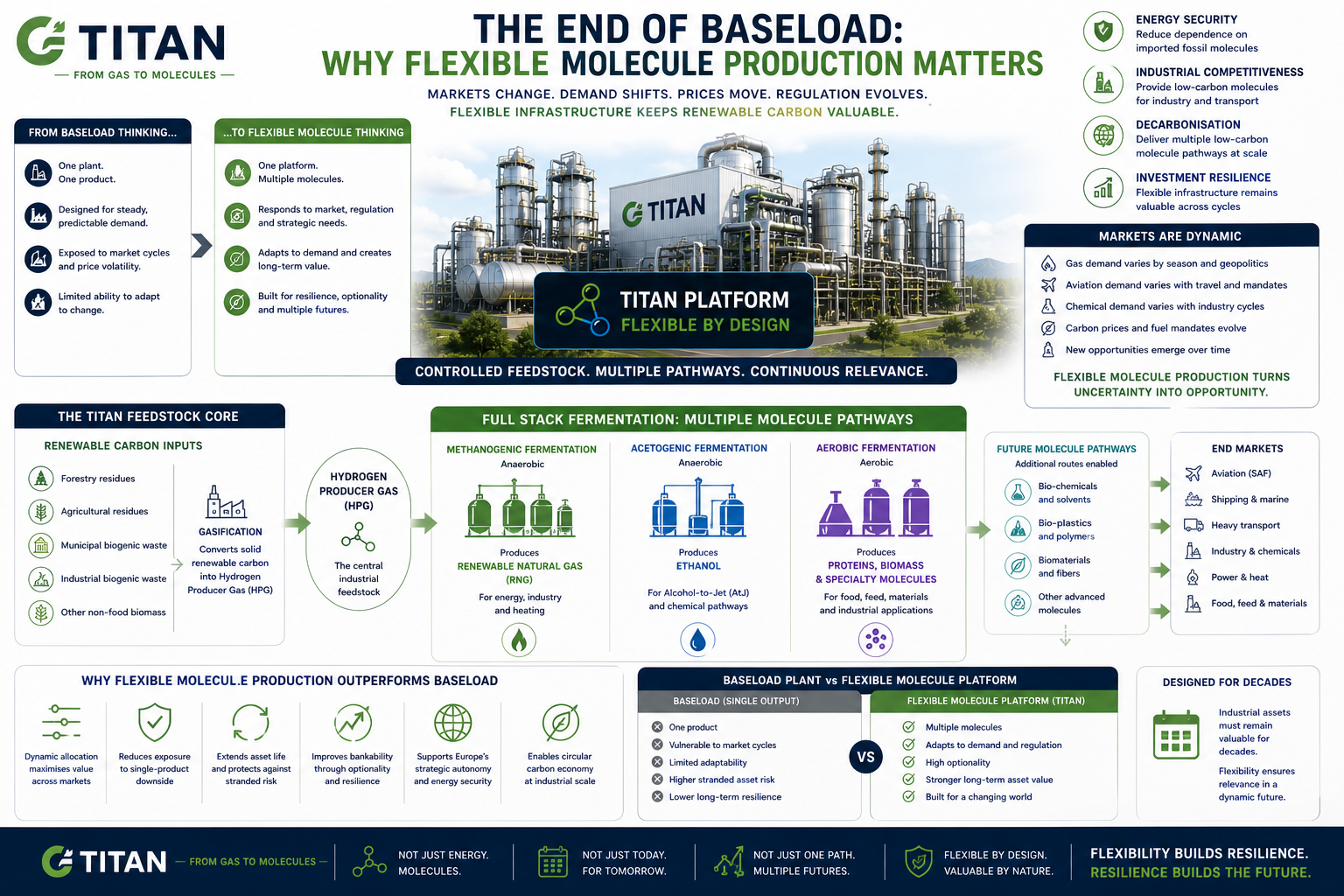
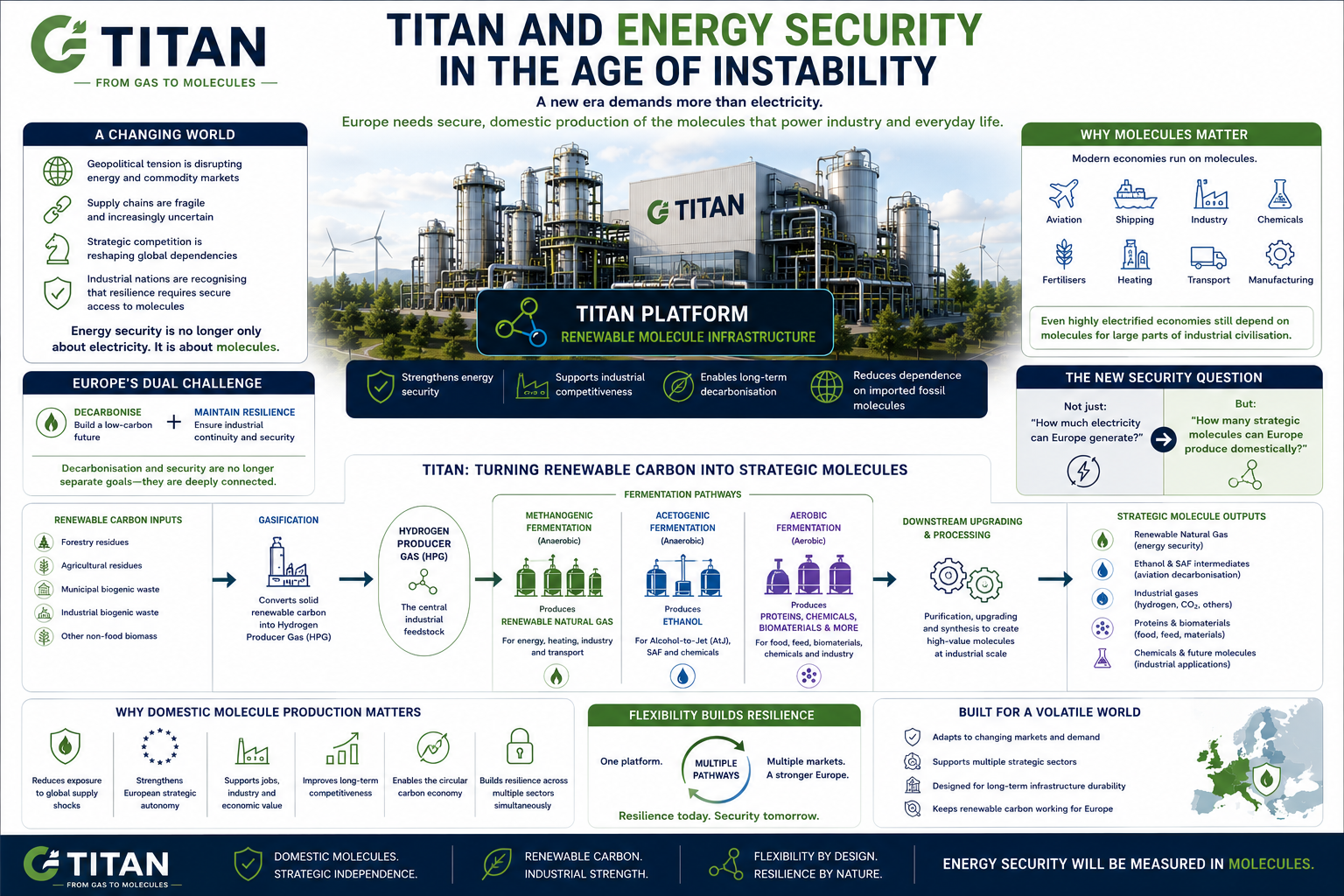
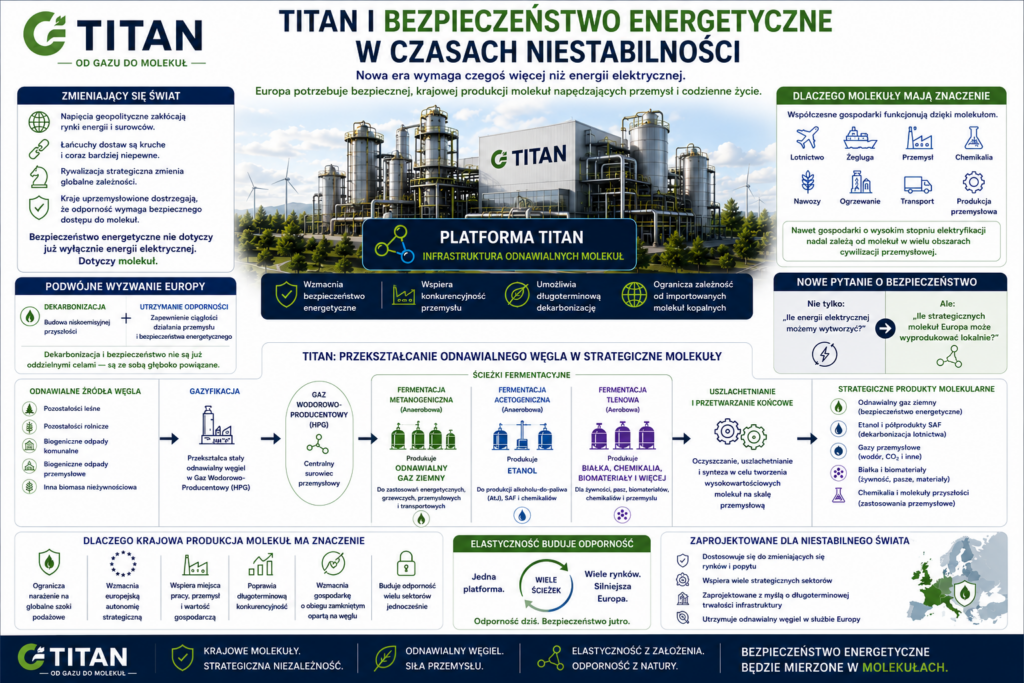
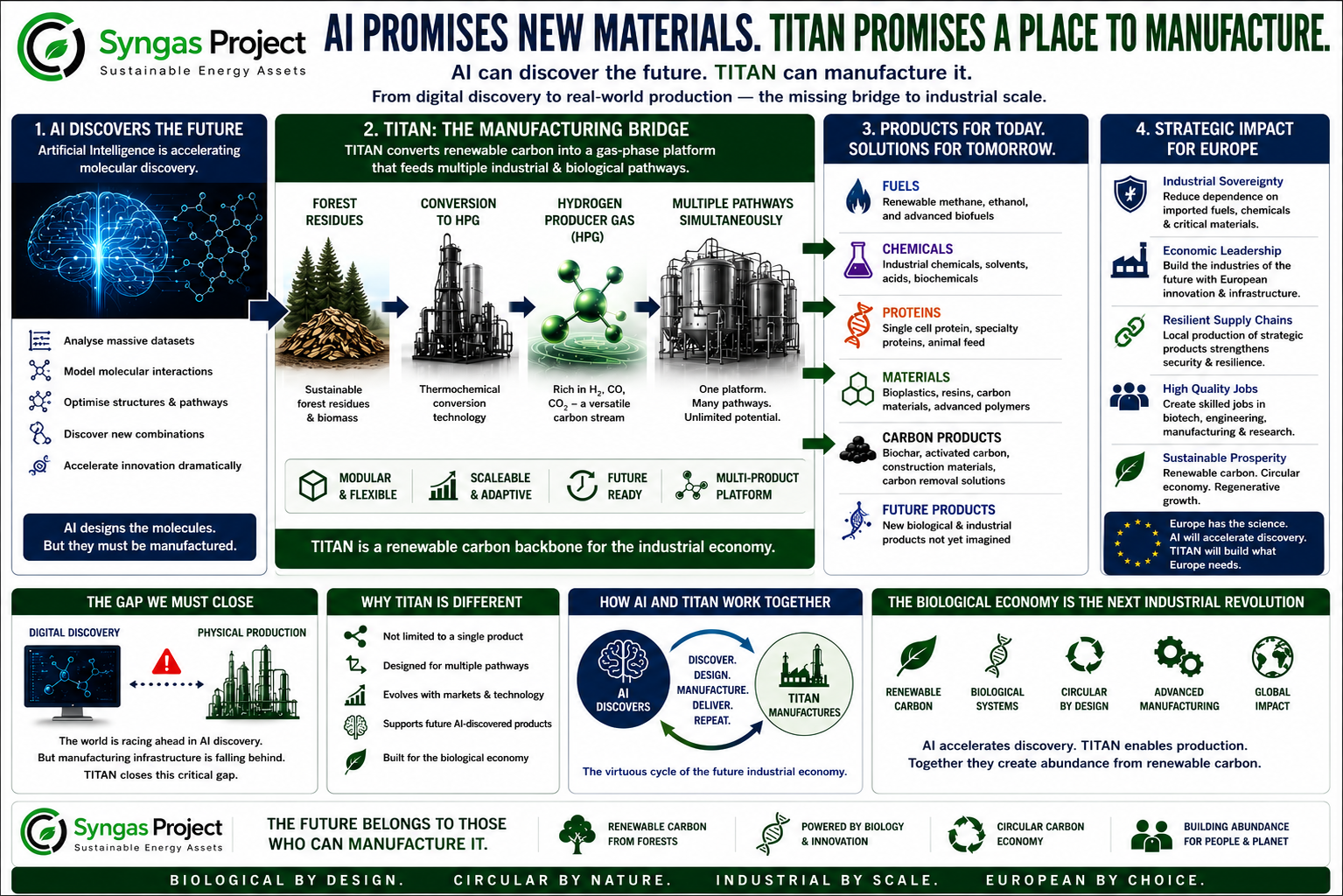
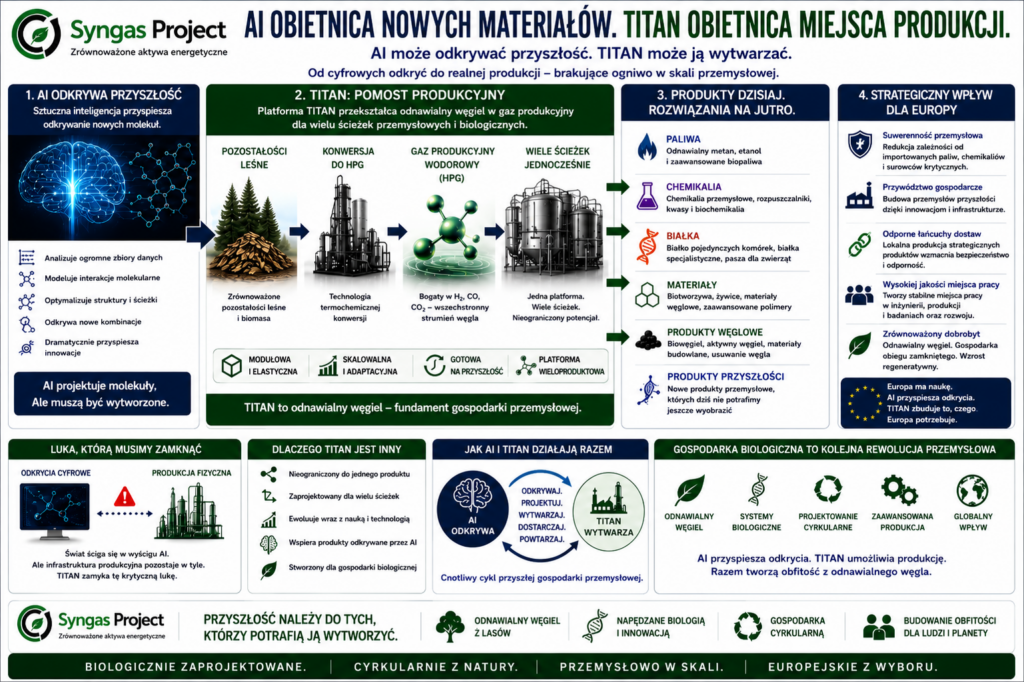
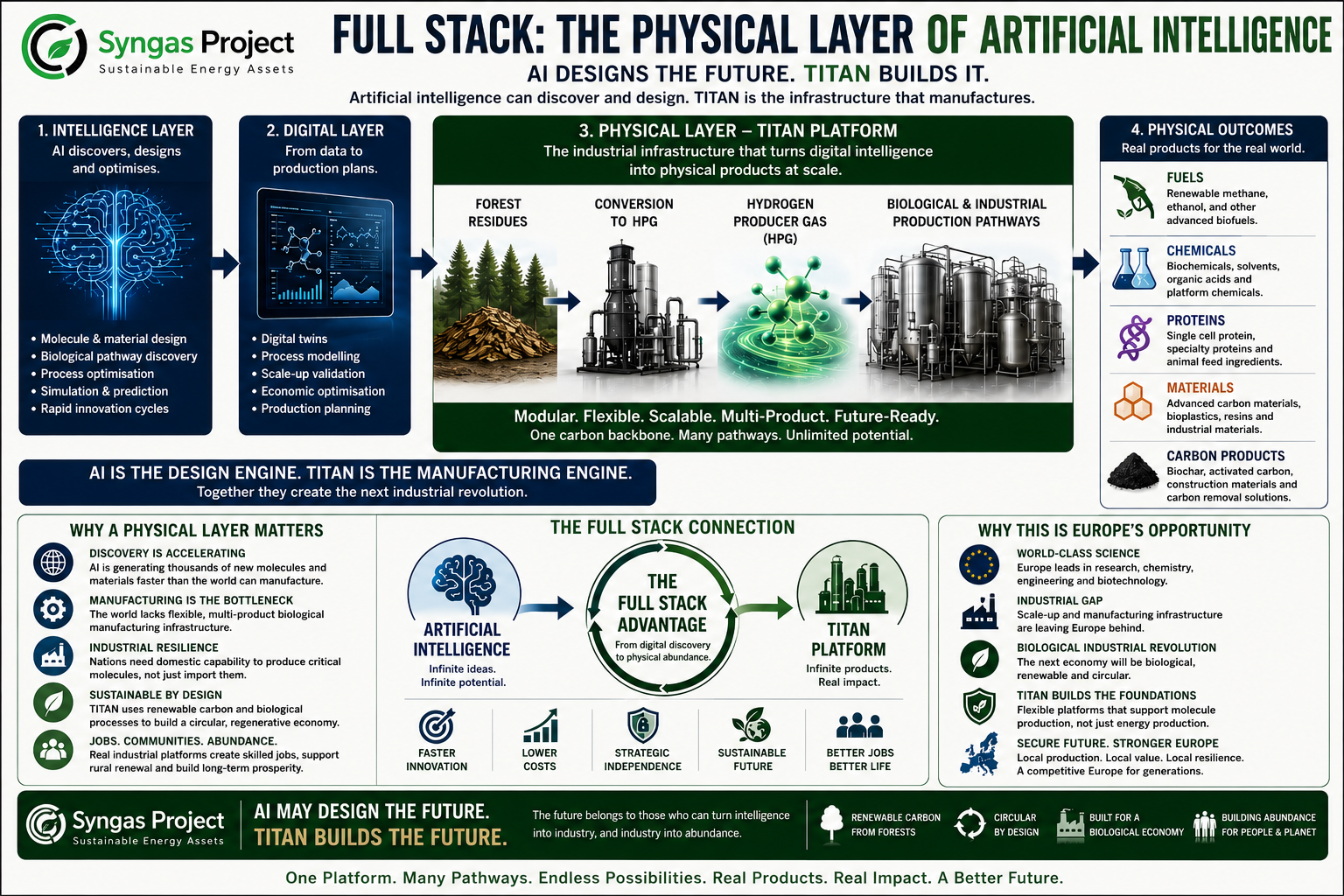
This is one of the reasons TITAN was never designed as a single-pathway platform.

It was designed around optionality.

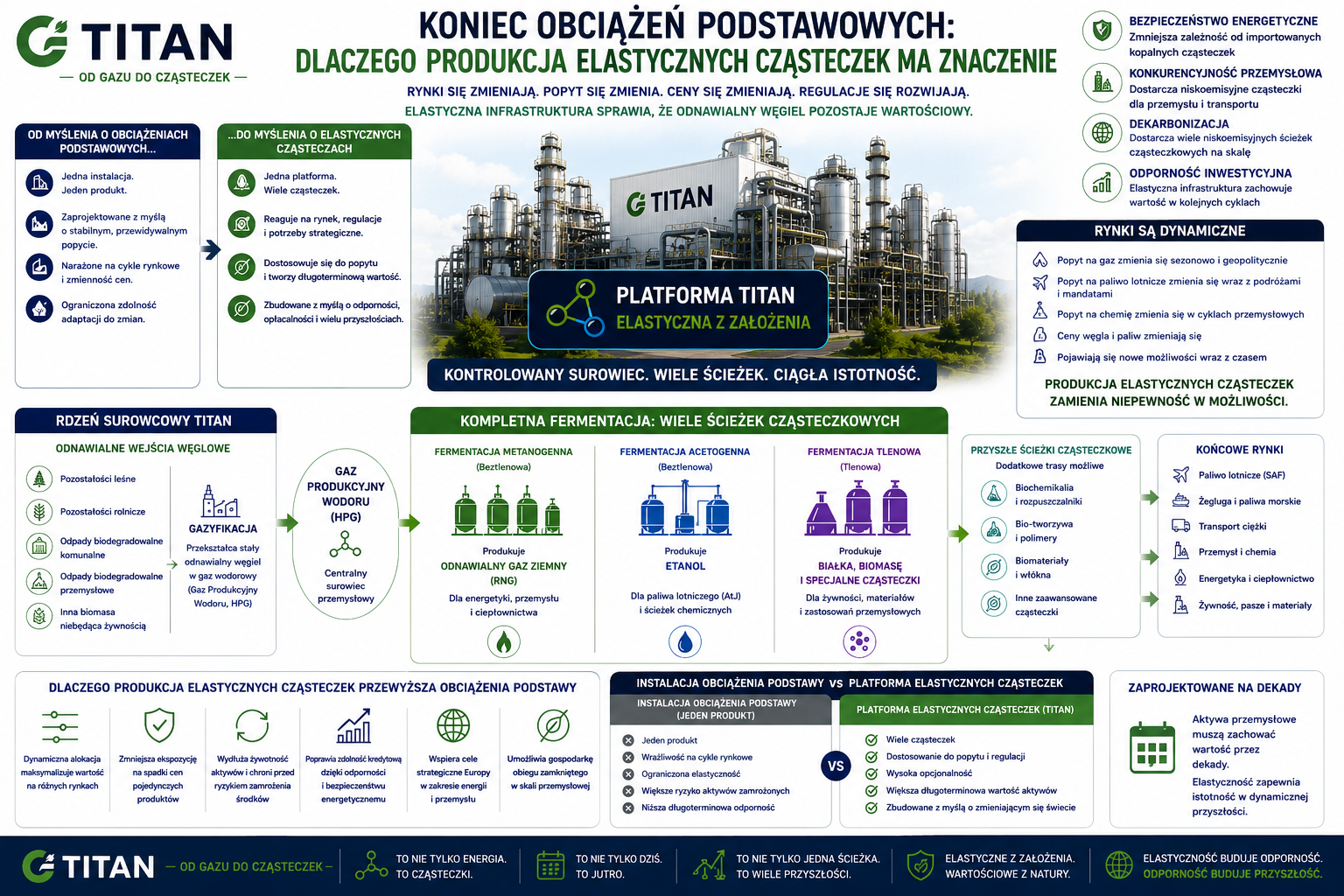
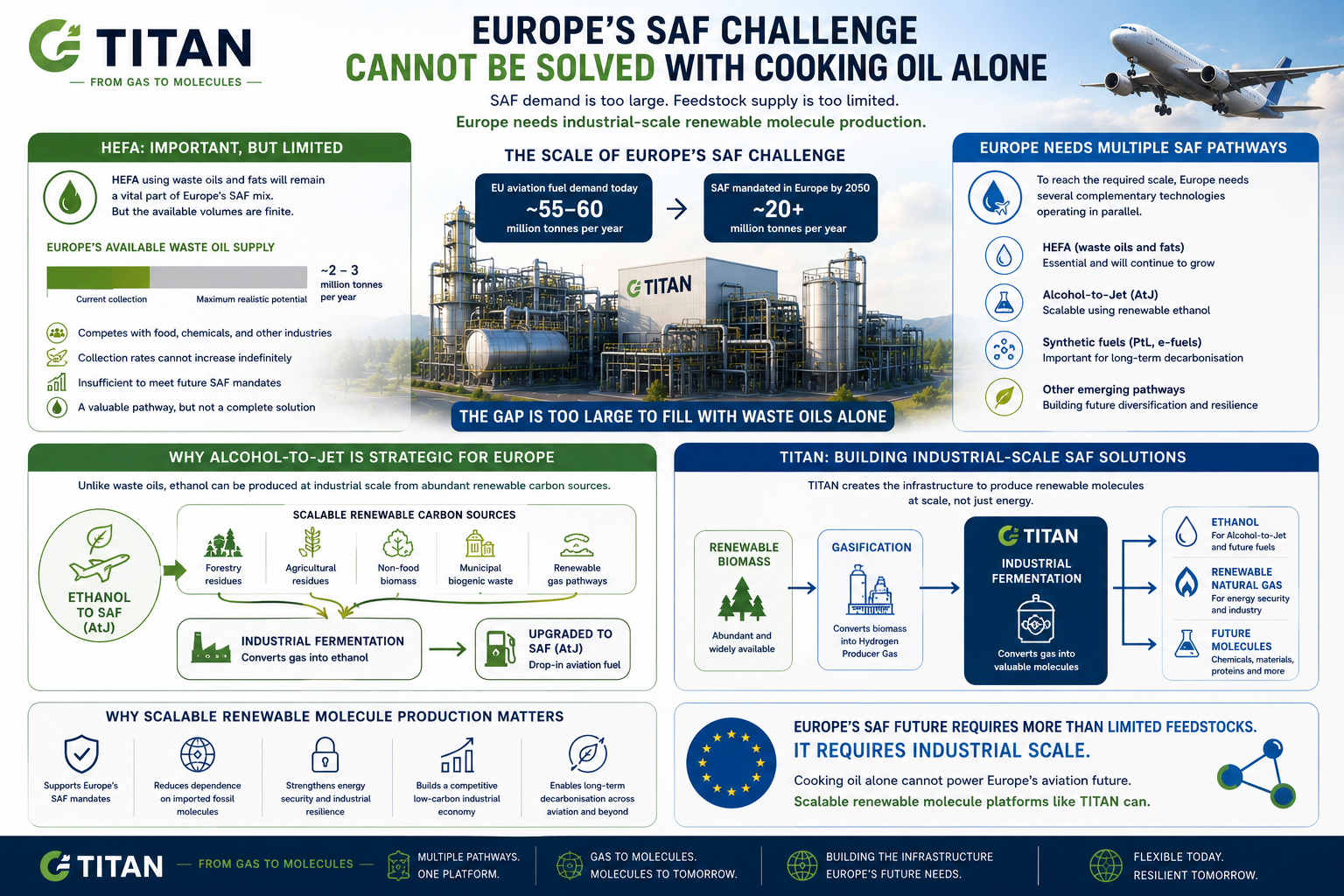
The platform already operates at industrial scale between methanogenic and acetogenic fermentation pathways. TITAN can dynamically allocate Hydrogen Producer Gas between Renewable Natural Gas production and ethanol production depending on market conditions, infrastructure demand and industrial pricing.

This is the first Swing–Swing capability.

But the long-term strategic opportunity may be even larger.

Why Carbon Recycling Will Replace Carbon Extraction

Publish date: 1 May 2026

(Przewiń w dół, aby zobaczyć wersję polską.)

For more than a century, industrial growth has depended on carbon extraction.

Coal, oil and natural gas were taken from the ground, refined, transported and converted into energy, fuels, chemicals and materials. This model powered the modern economy. It created mobility, manufacturing, aviation, plastics, fertilisers and global trade.

But it also created a structural problem.

The industrial economy became dependent on fossil carbon.

Carbon was extracted once, used briefly, and then released into the atmosphere. This linear model was efficient during the age of cheap fossil resources, but it is no longer compatible with Europe’s long-term climate, industrial and security objectives.

The next industrial era will require a different model.

Carbon cannot simply be treated as something to extract, burn and discard.

It must be treated as something to recover, recycle and reuse.

This is the logic of carbon recycling.

Carbon recycling does not mean stopping the use of carbon. That would be impossible for many parts of the economy. Aviation, shipping, chemicals, materials, agriculture, food systems and industrial manufacturing all depend on carbon-based molecules.

The real question is not whether society will use carbon.

The question is where that carbon comes from.

In the old model, carbon came from fossil extraction.

STRATA: Możliwość Pod Naszymi Stopami

Warsaw 01:05:2026 Steve Walker

Przez ponad trzy dekady część południowoamerykańskiego przemysłu miedziowego po cichu udowadniała coś niezwykłego.

Mikroorganizmy potrafią odzyskiwać rzeczywistą wartość przemysłową.

W Chile i innych dużych regionach wydobycia miedzi bioługowanie było wykorzystywane komercyjnie do odzysku miedzi z niskogatunkowych rud siarczkowych, których tradycyjne przetwarzanie często nie uzasadniało ekonomicznie. Materiał uznawany wcześniej za marginalny stał się ekonomicznie odzyskiwalny, ponieważ biologiczne procesy umożliwiły uwolnienie zawartego w nim metalu.

To ma ogromne znaczenie, ponieważ potwierdza jedną ważną rzecz.

Bioługowanie nie jest spekulacyjną teorią naukową.

To już rzeczywistość przemysłowa.

Sam proces jest pozornie prosty. Starannie dobrane mikroorganizmy są hodowane i wprowadzane do środowisk mineralnych, gdzie pomagają utleniać minerały siarczkowe i uwalniać metale. W praktyce oznacza to, że biologia pomaga odzyskiwać wartość z materiałów, które starsze systemy przemysłowe pozostawiały niewykorzystane.

Przez wiele lat tę zdolność postrzegano jako niszową technikę górniczą.

Dziś wygląda ona na znacznie większą od samego górnictwa.

Ponieważ świat zaczyna rozumieć, że epoka przemysłowa pozostawiła po sobie coś więcej niż tylko zanieczyszczenia.

Pozostawiła zasoby.

Hałdy flotacyjne.

Żużle.

Nadkłady kopalniane.

Popioły.

Odpady hutnicze.

Pozostałości przemysłowe.

Niektóre z nich stanowią ryzyko środowiskowe. Inne zawierają możliwe do odzyskania metale. Wiele zawiera jedno i drugie.

Właśnie tutaj zaczyna się STRATA.

Polska Niesie Podobne Dziedzictwo

Polska rozumie ciężki przemysł.

Węgiel.

Stal.

Miedź.

Hutnictwo.

Kolej.

Chemia przemysłowa.

Rozwój przemysłowy zbudował nowoczesną Polskę, ale pozostawił również materiały, które do dziś wpływają na krajobraz i lokalne społeczności.

STRATA: The Opportunity Beneath Our Feet

Warsaw 01:05:2026 Steve Walker

For more than three decades, parts of the South American copper industry have quietly demonstrated something extraordinary.

Microbes can recover real industrial value.

In Chile and other major copper regions, biological leaching has been used commercially to help recover copper from low-grade sulphide ores that conventional processing may struggle to justify economically. What was once considered marginal material became economically recoverable because biological workers helped unlock the metal.

That matters because it proves something important.

Bioleaching is not speculative science.

It is already industrial reality.

The process itself is deceptively simple. Carefully selected microorganisms are cultivated and introduced into mineral environments where they help oxidise sulphide minerals and mobilise metals. In practical terms, biology helps release value from material that older industrial systems may leave behind.

For years, this capability was viewed as a niche mining technique.

Today it looks much larger than that.

Because the world is beginning to realise that the industrial age left behind more than pollution.

It left behind inventories.

Tailings.

Slag heaps.

Mine spoil.

Ash deposits.

Metallurgical waste.

Industrial residues.

Some contain environmental risk. Some contain recoverable metals. Many contain both.

This is where STRATA begins.

Poland Carries the Same Legacy

Poland understands heavy industry.

Coal.

Steel.

Copper.

Smelting.

Rail.

Chemicals.

Industrial growth built modern Poland, but industrial growth also left behind material that still shapes landscapes and communities today.

The Polish Copper Belt remains one of Europe’s most important copper-producing regions. Facilities such as Żelazny Most demonstrate the sheer scale of legacy mineral and flotation material already accumulated over decades of industrial production.

The important point is this:

the material already exists.

And researchers already know biology can interact with it.